

I have been avoiding the subject of the AI bubble for a long time, even though I raised the question in a previous newsletter.
Everyone has an opinion on it, but this week several weak signals make it easier to understand where we are headed and, above all, the lines of thinking that are emerging.
This week, with AI news running at full tilt, I had the chance to give two talks that were completely orthogonal, at least on the surface.
The first was at the inaugural Government Tomorrow Forum, which brought together in Paris, rare enough to be worth noting, experts, politicians and government officials from around the world to think about where their sector is heading.

There, we talked about the geopolitics of intelligent machines and about the AI industry, which, as you know, is at a turning point in its ability to finance or refinance itself.
The second was organized by the Berlin gallery Stallman around a conversation with the Ukrainian artist Daniel Spikov on the intersections between art and AI. We had only 40 seats and, a pleasant surprise, the audience stayed nearly two hours to extend the dense conversation we had.

On one side, the explosion of infrastructure and its geopolitical consequences (data, energy, water...), and on the other, the object of fascination that is latent space (see my earlier newsletter).
I like to describe latent space as the subconscious of AI, trained by humans on human culture. For the artist, but also for each of us, it becomes a kind of extension of human creativity, whereas ChatGPT or Claude present themselves as an extension of our capacity for thought.

This space, invisible and incomprehensible to human beings, only appears, a little like a photograph developing in a darkroom, when we use tools like Midjourney, Nano Banana or, for sound, Udio.
In a previous newsletter, I talked about cross-entropy and latent space, and what they represent from a philosophical point of view.
 Tariq KRIM
This week, I wanted to get back to more down-to-earth matters, namely whether we are in an AI bubble or, to be more precise, in an AI infrastructure bubble.
Since ChatGPT's thunderous debut, most of the money raised, lent or traded has gone into infrastructure.
Let's not forget that part of Microsoft's "seed money" for OpenAI came in the form of Azure compute credits.
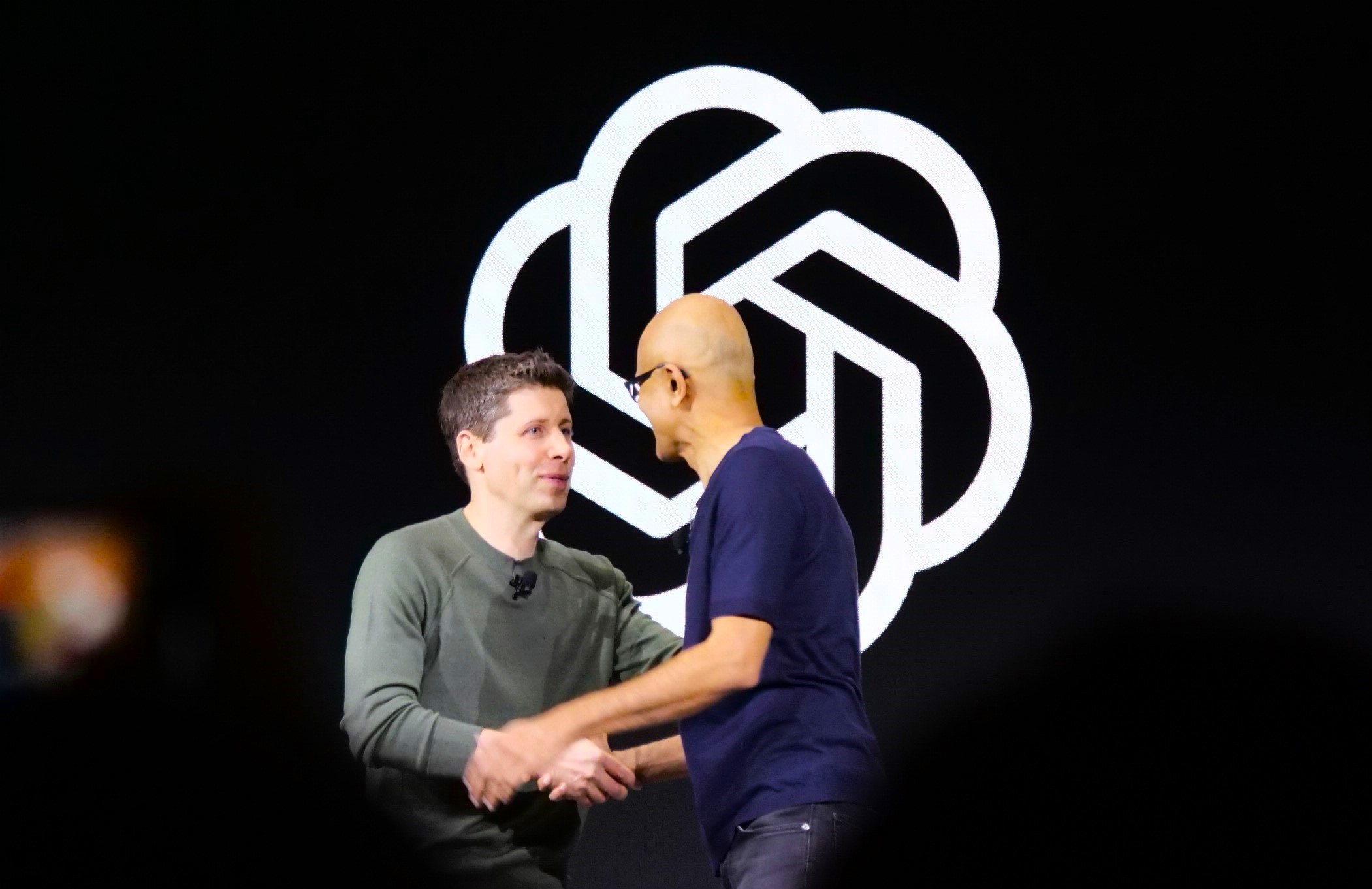
Compute credits are fascinating because they tie a company's fate to one specific cloud and AI operator. They immediately convert the investment into revenue for that operator. Nvidia, the big winner of this game, has made sure that a sizable share of AI investment gets converted into purchases of its own chips.
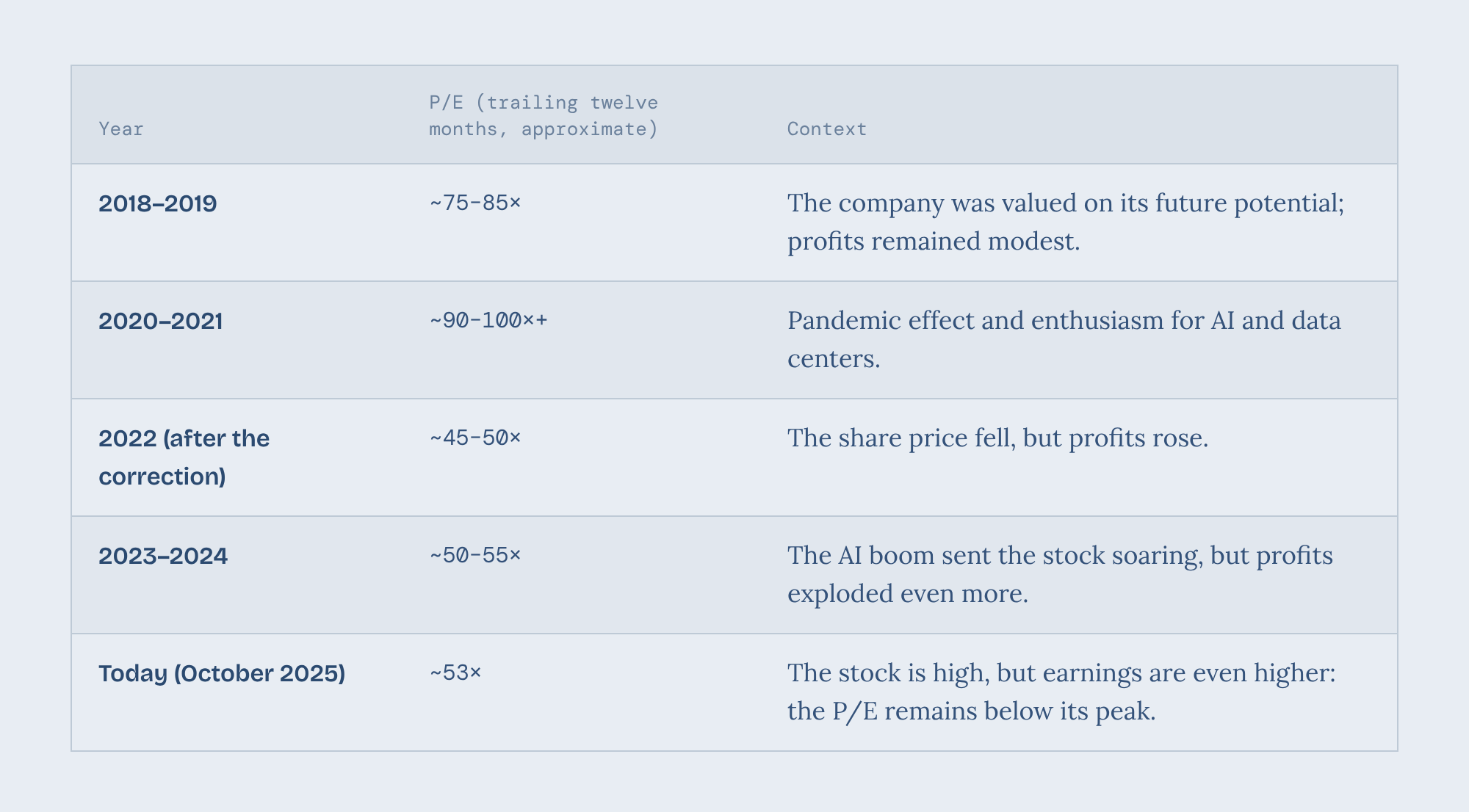
So much so that, despite its stratospheric market capitalization, Nvidia's valuation in terms of P/E ratio is lower than it was five years ago. In other words, its profits have caught up with its price.
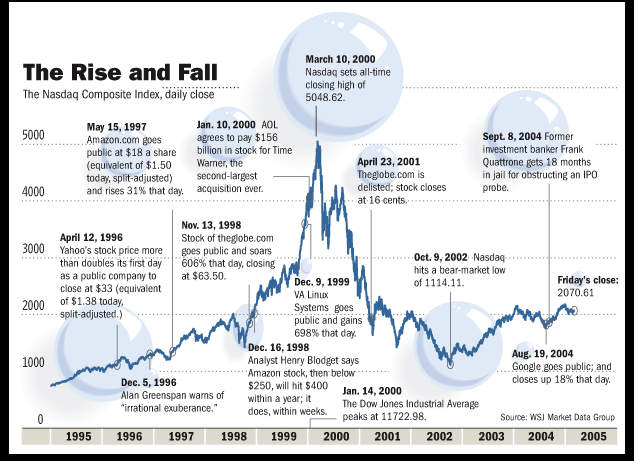
Naturally, the current sense of a bubble brings to mind the telecom bubble of 2000, which was not an Internet bubble, since the fall of the Internet was merely a consequence of the WorldCom crash.
At the time, I was living in San Francisco, the Ground Zero of that bubble.
I do see one big difference with today, though.
The telecom bubble was above all a dark fiber bubble. Although there was overinvestment and overbuilding at the end of the 1990s, that network of cables was perfectly usable years later, when demand arrived.

Today, the overbuying of Nvidia chips, whose depreciation period is very short, raises questions. What's more, like any product, as soon as you unbox them to install them (even if Nvidia chips are delivered by the pallet, already preconfigured, a cloud within the cloud, editor's note), they lose part of their value. If they are not used, it is a dead loss. But if they are used intensively, especially for image generation, it becomes hard to refurbish them later for Open Compute-type projects. It is a bit like buying a used rental car and hoping the customers took good care of it.
So this is where the real question lies: the colossal investment in chips has to be amortized over a short period, one year, two years, three years, five years. Is that possible?
Especially since Intel, AMD and others have no intention of letting Nvidia dominate these profitable markets. Interesting alternatives are now reaching the market, creating more confusion.
OpenAI has understood this perfectly. It explains why, one day, they cut a deal with AMD and, the next, with Broadcom, yes, the same Broadcom that bought VMware and now funds its AI strategy by squeezing its European customers.
Intel itself is back in the game.
But it is Ranjan Roy (Margin, Big Technology Podcast) who implicitly confirms that the deal between OpenAI and Oracle (as well as the one with AMD) was done outside the usual investment banking channels. OpenAI's recent agreements (with Oracle, AMD, CoreWeave...) are CAPEX deals, not product deals or traditional financing deals, and look more like swaps of compute, credits and stock options than conventional monetary transactions.
In other words, some deals were struck on the basis of direct relationships and headline effects, without going through full financial structuring. It is therefore very hard for analysts to grasp the reality of the deal. It is on this basis that OpenAI is said to have signed its staggering commitments (up to $1 trillion in infrastructure) without having the matching revenue, and that these arrangements look more like "paper" strategic cooperation agreements than genuine investment deals put together with investment banks or financial advisers.
Consider ourselves warned.
Two things are worth remembering:
- The abundance of supply and the compute capacity have never been greater in human history.
- But for it to work, you need water, fresh water obviously, which has to be taken from other industries and from everyday uses, and you also need energy.
A few weeks ago, when we watched all the tech bosses buttering up Donald Trump, showering him with gifts and compliments, my view was that the one real reason these companies needed him was not money (they already have it), nor power (they already have it), but access to energy and a fast-tracking of federal government processes to allow nuclear power plants to be built. With two plants built since Reagan, the United States has made the bet of funding a 21st-century technology with a 19th-century power grid (the line is not mine, but I find it so apt).
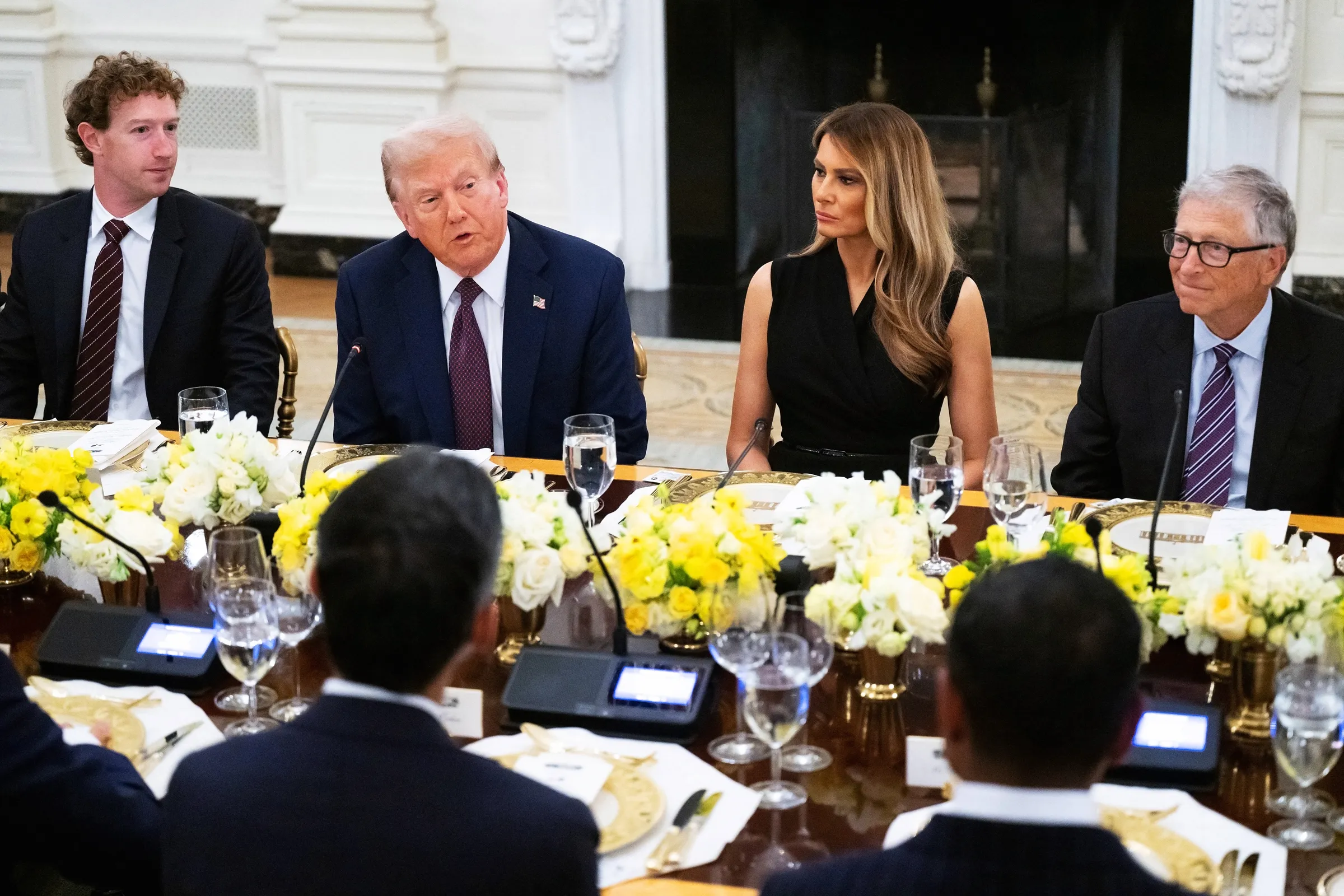
The tech industry is now not so different from the oil industry when it demands waivers to drill in Alaska.
One might think Donald Trump has the tech bosses in his grip, but in reality the AI boom in the United States gives Trump genuine political cover: Americans' pensions (and the French ones funded through the markets) remain, for now, underwritten by the surge of the NASDAQ.
According to George Saravelos of Deutsche Bank, without the massive spending tied to artificial intelligence, in particular on data centers, chips and the cloud, the US economy would today be close to recession, or already in one.
In 2025, AI investment is expected to account for nearly 40% of the contribution to US GDP growth, illustrating how tightly dependent the US economy has become on this investment cycle.
George points out, however, that this boom is not sustainable: it can only continue if tech spending goes "parabolic," a scenario deemed highly unlikely. In other words, if AI CAPEX slows, the momentum propping up growth will quickly run out of steam.
(all sources are available at the end for our paying subscribers)
Big Tech and the US administration now have each other over a barrel. The question is whether the viability of the US economy and, by extension, that of the rest of the world does not rest entirely on a bet with no plan B: the success of this strategy of conquest.
Will this bet implode or not?
Hasn't China, which now has its own chip technology (Ascend chips are not yet at Nvidia's level, but they are getting close), lower inference costs and quality open source language models, already won the war for consumer artificial intelligence?
And what if, for American companies, the only space left were AGI or superintelligence?
It remains to be understood why investment is accelerating so fast and why there are so few guardrails. Why do we live in a world where, on the same day, OpenAI announces it is working on erotic chats, in other words sexbots, while Google and Yale University use an AI to discover a new method that lets the body better detect and attack certain cancerous tumors?
Finally, one can also wonder how OpenAI plans to go from twelve billion to the one trillion in revenue that would be needed to cover its "debts" over the next five years.
An important question, because once again it is Deutsche Bank that flushes out the problem: subscription revenue in Europe is falling.
With 800 million users, ChatGPT stands as an immense success with the general public. Since chatbot technology is general-purpose, it remains hard to pin down precisely which of its uses can be monetized. A VC friend passing through Paris told me, however, that the monetization patterns of AI are now fairly well identified.
The rest is for subscribers
Read the full article
Sign up now to read the full article and get access to all articles for paying subscribers only.


