

Introduction
After a long break, and while waiting for this newsletter's new format at the end of the month, I wanted to tell you about what fascinates me and keeps me busy right now. There is no official name yet for the evolution of the network we are interested in, so I have given it one: the New Internet.
The New Internet heralds a reinvention of the digital architecture we are going to live in, but also deep cultural changes in a world that is searching for itself, geopolitically and economically.
This vision, which will define the next decade, convinced me to come back with a new project.
A much clearer world once again
At my first talk of the fall season, for Digital Summr, in front of an audience of software entrepreneurs, I set the tone: three years after the arrival of ChatGPT, and after the fog of innovation that followed, the digital world has not been this clear since 1994, when the web was becoming a reality and was about to drag the computing world into the biggest reorganization in its history.
With generative AI, it took me three years to understand and feel the same thing, though often for different reasons. While many celebrate a platform shift, what interests me most is the cultural vibeshift brought on by universal access to on-demand intelligence.
The parallel with the early days of the Internet is striking.
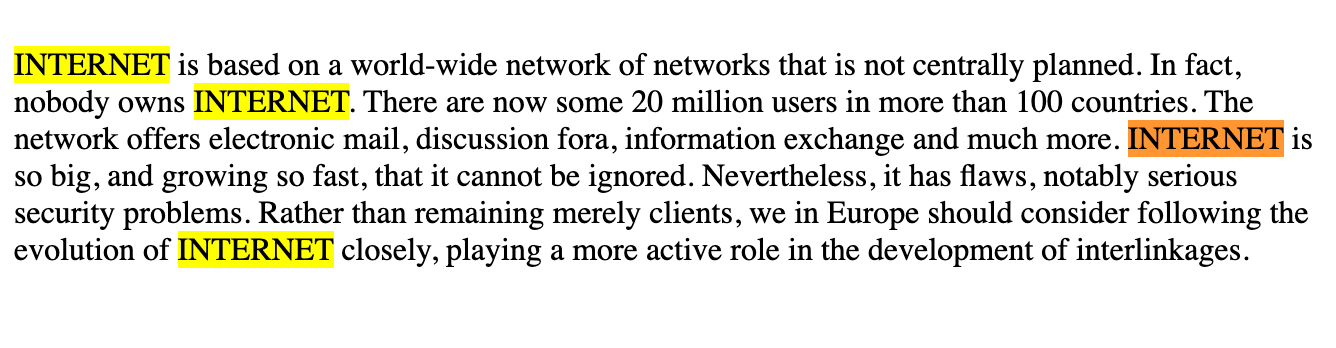
In the European Commission's 1994 Bangemann report on the information highways, there was one tiny paragraph where the internet was mentioned, in all caps: INTERNET. With this comment: nobody OWNS INTERNET. The net was already seen as an important network, but one among many.
I also remember that Bill Gates, in the first edition of his book The Road Ahead in 1994, had played down the role of the Internet, before rushing out a second edition dated 1995 to sing its praises.
He had understood that the Internet was not an extension of the computer he dominated, but a new playing field. Whoever dominated it would create even more value than Windows.
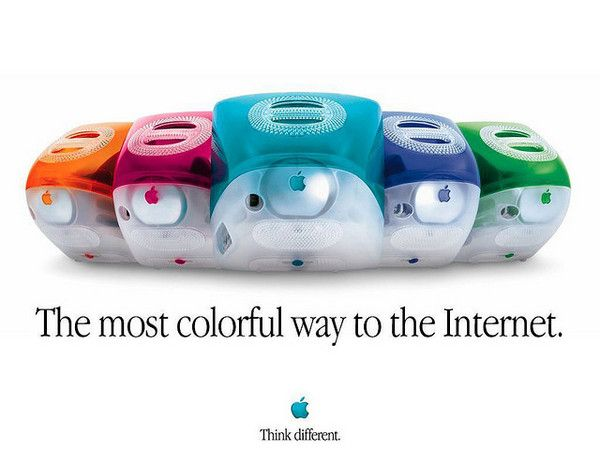
Let us remember that the Internet saved Apple from bankruptcy. By becoming the computer of choice with the first WiFi, Apple would become the preferred tool for surfing the Internet.
That is exactly what is happening with generative AI. Future value will no longer be created in mobile phones, nor in the cloud, sovereign or not. It forces every digital player to exist on its turf, or else disappear or become a mere gateway.
Here is what every Big Tech company understands:
- Apple knows that AI is going to take us into the post-iPhone era,
- Google knows that AI makes its search less necessary,
- Amazon knows that AI calls the value of its clouds into question,
- Facebook knows that AI is pulling users away from its influencer platforms,
- Microsoft already knows that tomorrow's work will no longer be done in Office but in ChatGPT and, they hope, Copilot.
⠀
Each of the Big Tech companies knows that the revolution underway puts it in danger, and must learn to exist on new ground. In this first phase, OpenAI is the one that has played its hand best.
The digital sovereignty of the past
This week, I dropped by one of the first cybersecurity conferences of the fall season, and I could measure the gap with the rhetoric on digital sovereignty.
It has become a fight to preserve the cloud and the digital world of yesterday. As if the transformations of the past three years and the impact of AI on cybersecurity did not exist. France is no longer a Gaulish village: it lives in a parallel universe, as in the series Sliders, where AI never existed.
I have never been a great fan of the cloud, even though I was one of its pioneers in France with Jolicloud as early as 2008, and of course in the 1990s at Sun.
The question, of course, is which software we are talking about.
- For teams of excellence, often from startups, the cloud made it possible to take products from a few million users to hundreds of millions, sometimes up to a billion. Netflix, Dropbox, Snapchat and Uber pulled it off. But they remain exceptions.
- For everyone else, the cloud mostly boiled down to a hosting platform, a way to cut engineering costs, bypass bureaucracy and test ideas quickly.
⠀
With the platformization of the cloud and the dominance of American platforms, what was an advantage has become a ball and chain. A subscription to innovation that every company and government has to pay. And which, if you listen to the American president, they will have to pay even more for.
That is the whole paradox of the cloud. When we think of the cloud, we see something hyper-sophisticated, capable of carrying us into modernity. In reality, it imprisons us in a form of technical simplicity.
Why we need to change the fight: from digital sovereignty to cognitive autonomy
There have always been two debates about digital sovereignty.
The first debate concerns the ability to create complex, ambitious things in a world where computing is becoming a commodity. The massive shift to the cloud cost Europe that technological edge. When everyone uses the same software building blocks, where is the value?
Yet the lesson of Apple, Nvidia or Tesla is clear: value is built in complexity that is fully embraced. What is true in computing is true in other fields.
Fortunately, things are changing.
The second debate, the one that absorbs all the energy, especially that of the lawyers, concerns the hosting of data on foreign clouds. It has become the sole fight of the "defenders" of digital sovereignty.
The overriding impression is that we are going around in circles. Today, rather than funding what will soon become computing's past, we would do better to focus our efforts on its future.
The New Internet
We are lucky enough to be witnessing a platform shift and a culture shift at the same time, which is rare. Even as we enter an uncertain, turbulent world.
AI is a technocultural revolution. Failing to see both sides of it is, in my view, a mistake.
We now live in a hybrid world where deterministic software coexists with the non-deterministic stack of language models.
This blending will not only allow new layers of services and intelligence to exist, but will totally change our daily use of machines and products.
AI made the smartphone dumb.
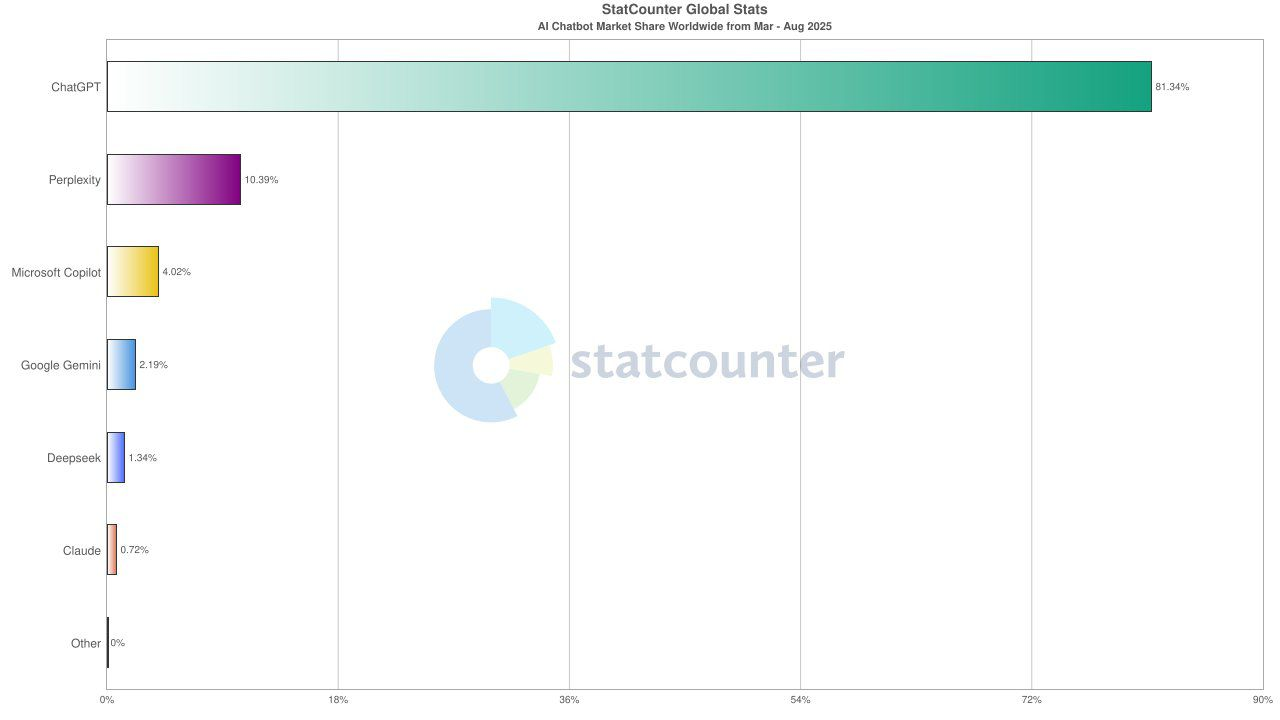
Mobile was the first to suffer the consequences. The perceived intrinsic value of a phone, without an AI service, has become negligible. For 700 million people, their chatbot is the app they use most.
⠀
But this goes far beyond perception.
Since ChatGPT, I no longer use certain applications, starting with my word processors and my spell checkers. The combination of research, editing and the co-formalization of ideas now happens in three applications, one of which is a plain text editor.
It is not impossible that 80% of the software we used to use no longer has any front-end value. With the connectors Claude is testing on its paying users, Office, our email clients and other software will just be data repositories meant to be connected to an LLM.
The end of Office?
Faced with this acceleration and this cultural shift, the AI industry faces a dilemma:
- push toward ever more intelligence, and count on it to fill the gaps in today's products,
- or stabilize today's tools and enrich them with features, on the grounds that their level of intelligence already exceeds what users really get out of them.
⠀
This dilemma explains why Apple is biding its time, why Google is worried, and why OpenAI and Anthropic are charging ahead.
Richard Socher, the founder of you.com, summed up the essential point: even if all LLM innovation stopped today, what we have created over the past three years is already a decisive step forward in our daily lives.
So the question arises: do we already have enough intelligence to do what we need?
Toward cognitive autonomy
This is also the paradox of the AI industry in 2025.
OpenAI is communicating more and more about products for scientists and research, trying to demonstrate the increased intelligence of its models. Meanwhile, open source has emerged with levels of intelligence equivalent to ChatGPT's 4o and o3.
It forces us to ask ourselves:
- What if we seized this intelligence, which is already more than enough for our human brain, whose capacities cannot be expanded?
- What if we built a system that let us take advantage of it in a far deeper and more structured way than an online service?
⠀
What happens if the Internet became a network connecting clients built on distributed AI stacks? If, instead of a web browser, we had a browser capable of intelligence, co-intelligence and co-thinking?
What if this were the starting gun for a new era?
After the pre-web Internet, the web, Web 2.0, then the monopolistic Internet of the past fifteen years, a new, more open stack is opening up. Not since the home computer have we had such opportunities to build things.
In this new world, the real question is no longer how to protect our digital sovereignty, but our cognitive autonomy.
The three intelligences
Three intelligences are available to us:
- Personal: on our own machines, they depend on the hardware and the software needed to install them, but that is evolving fast.
- On demand: through generalist intelligences like ChatGPT or Claude, which must monetize their soon-to-be billions of "free" users.
- Superintelligence: very quickly, driven by the scientific field and the military world, it will become a sector in its own right and a battle between a few big players. To create it, as Google cofounder Sergey Brin explained, in a world where freely accessible data is drying up, its future depends above all on future algorithmic feats, in short, hard coding.
If superintelligence is the new frontier of AI, it may not be accessible to ordinary mortals, since the prices being discussed range from $2,000 to $200,000 a month for a "Nobel Prize datacenter as a service."
But whichever intelligence is used, the question remains the same: protecting cognitive autonomy will become the main challenge of the decade.
Cross-entropy
AI ushers in a hybrid world. After the non-determinism of human thought, and after seventy years of deterministic software, we are entering the age of cross-entropy.
From a philosophical standpoint, we are entering a world of new knowledge. The cost of modeling reality badly becomes the new scale of value. To trust non-deterministic models, we will have to accept bringing approximation into our lives.
But as the founding paper of transformers, Attention Is All You Need, explained, all knowledge is an approximation, and the quality of an approximation can be measured.
Conclusion
The world we are building with "intelligent machines" forces us to confront the tension between perception and truth.
The only question that really worries me is our underinvestment in access to reality. Whether it is found in libraries, in our everyday observations, in the press or in what social networks feed us, it does not necessarily make for a solid enough foundation.
This may also be the future battle for states: learning to prize the real world in a world where everything will be approximation.
More on this soon. Think about becoming a paying member, not least to get access to our full intelligence feed.
Read the full article
Sign up now to read the full article and get access to all articles for paying subscribers only.


