

Not by working more. Not by sleeping less. By changing my method. By understanding that the question was not how to make AI productive, but how to make myself productive with it.
I built a working method that suits me, that lets me keep moving continuously, and above all, that no longer requires me to be behind my screen all the time. The machine takes over. I lay out this method at the end of this newsletter, for paying subscribers.
But before we get there, we need to state the real problem. Because Claude 4.6 is a revolution, yes. Performance never seen before. An unmatched world of productivity opening up to us. But with a dilemma nobody dares to raise.
That dilemma comes down to a simple question. The most important question for each of us in the year ahead.
What kind of superhuman do you want to become with these tools?
Either we hyper-generalize and do even more things that all look alike. A kind of leveling of our know-how. A rise in the average quality of our work.
Or we use AI as a tool for differentiating super-productivity: doing more of what we want to do, more different things, more creative things. And therefore fewer things.
Otherwise you fall into the trap: either you overcompensate and create differentiating value, or you turn into a caricature of yourself by becoming the same person doing the same thing, only much faster. I will not name names, but I have already started seeing people talk and write in exactly the same way, whatever the subject, whatever the context. They are like Agent Smith in The Matrix. They clone themselves but stay more or less as before, only faster.

I admit that this idea of becoming generic scares me a little. So I am trying to find another path.
It is also a good moment to announce how the paid version of this newsletter is evolving.
With this newsletter, I see myself a bit like a chef offering you starters (opinions on a subject), main courses (deeper reflection) or desserts, like the film clubs, which are much appreciated.
Since the launch, I have chosen to keep the price very low. Some of the notes alone are worth several times the price of a subscription. A consultant told me recently that a single one of our newsletters had landed him a year-long contract.
Choosing an affordable price also reflects a desire to reach audiences beyond my initial target, in particular students, but also small SMEs, and anyone who wants to think these subjects through with us.
💸 Worth noting: the price will go up very soon.
- If you subscribed at the €99 rate, as a cofounding member, your subscription will stay at the same price.
All our paying members are now members of the Club des Résilients.
A place where, on top of my daily monitoring and access to the articles and archives, we will share our best practices and discuss how to protect our personal clouds and use AI to organize our transition better and faster (social media backup files, for example).
ℹ️ As a paying subscriber, you already have access:
- to the site's entire archive,
- to all my monitoring via a private channel,
- to priority replies to your emails,
- to the events we organize,
- to the meetups of the Digital Resilience Council (Conseil de la Résilience Numérique), held on the sidelines of conferences where I speak.
To get to the subscribers' page, click here
Level-3 AI is finally here (the mini superintelligence)
Like many people, I read that ultra-viral piece by Matt Shumer, “Something Big Is Happening.” In it he describes the democratization of level-2 AI and the arrival of level-3 AI.
 Matt Shumer
The piece rests on an idea that has become popular: the models' “time horizon” (METR) is advancing so fast that people talk of a doubling every few months.


If you have read my previous newsletters, you know the three levels.
- Level 1 is immediate tasks, a few minutes to thirty minutes at most.
- Level 2, which requires structuring, is tasks of several hours or ones that demand sustained attention. Claude has become the leader at level 2, and has extended that know-how to code and to knowledge work with Cowork.
- Level 3 is what is now called continuous autonomous work in the United States. Automated knowledge work. Several tasks in sequence and in parallel, done without your intervention. You just give the outcome. The famous agentic AI.
In the most optimistic version, we enter the idea imagined in the film Westworld: AI writes a growing share of the software that is then used to improve AI.
Dario Amodei puts this tipping point on a short horizon (1 to 2 years) in his latest essay, “The Adolescence of Technology.”

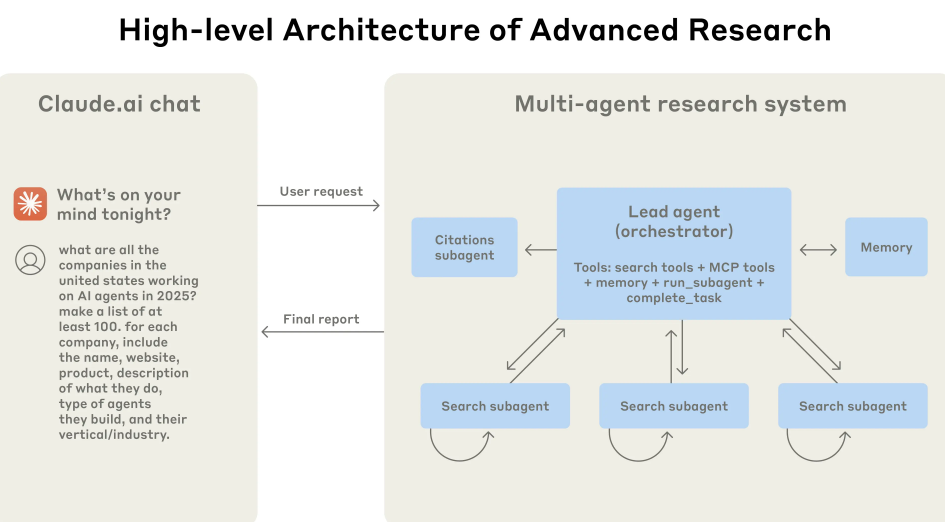
Claude 4.6 puts agents at the heart of the interface.

It is important to understand what separates agentic AI from classic AI.
Roughly:
- Classic AI: you ask for something, the result is immediate, even if it takes several minutes to arrive.
- Agentic AI: a coordination of tasks. First I will do this, then that, and finally this. Several agents divide up the work.
Before, I would unzip my code files, work out which one was the right one and edit it on my Mac.
Now, I upload the zip, say what I want and get the modified zip back without having to do anything. It is this chain of sequences where consistency, regularity and the absence of errors are decisive. That is often the problem with agents: trust. Because once you have it, you discover a new world.
The secret is the coordination between the creativity of non-deterministic AI and a reliable, maintained toolbox for reading, zipping, editing (and much more, obviously). That toolbox is itself connected to the agent ecosystem.
With OpenAI, where the AI has become temperamental, it is harder to let go. With Claude, you can feel the touch of Mike Krieger, who managed to build an intimate relationship based on the absence of stress.
What interests us here is not “emotion” but the drop in friction: the moment you start delegating without constant supervision, because the chain of tasks becomes reliable.
OpenAI vs Claude: two philosophies for the stock market
To prepare for the stock market, OpenAI and Claude have chosen two radically different approaches to creating addiction.
One bets on emotion (falling in love with your chatbot).
The other on productivity (the best co-brainstormer in the world).
This choice has a direct impact on my working tool, and probably on yours. Let me explain 👇
Read the full article
Sign up now to read the full article and get access to all articles for paying subscribers only.


