

Part of Silicon Valley’s symbolic power comes from the idea that science fiction is essentially American. Especially at the movies, which worked out many of the ideas now being exploited commercially.
Many of you have been asking me when the next film club will take place. So this week I have put together a selection of thirteen films, among them a few absolute masterpieces.
These are not “the thirteen best films,” but thirteen films that call for others. We will repeat the exercise: lists that run too long end up impossible to follow, as you often tell me. If your favorite film isn’t here, it may find its place in a future selection.
I am preparing a future newsletter on how American tech appropriated this imaginary to build a techno-expansionist narrative. We will come back to it, because that is not today’s subject.
Listening to political leaders talk about tech in France for three decades, I came to understand that what I took for cultural abandonment was sometimes a profound lack of knowledge of our own culture. Or outright ignorance.
If you read me regularly, you know how attached I am to this idea: there is a European vision of technology, a European counterculture, a French engineering culture that has its good sides too.
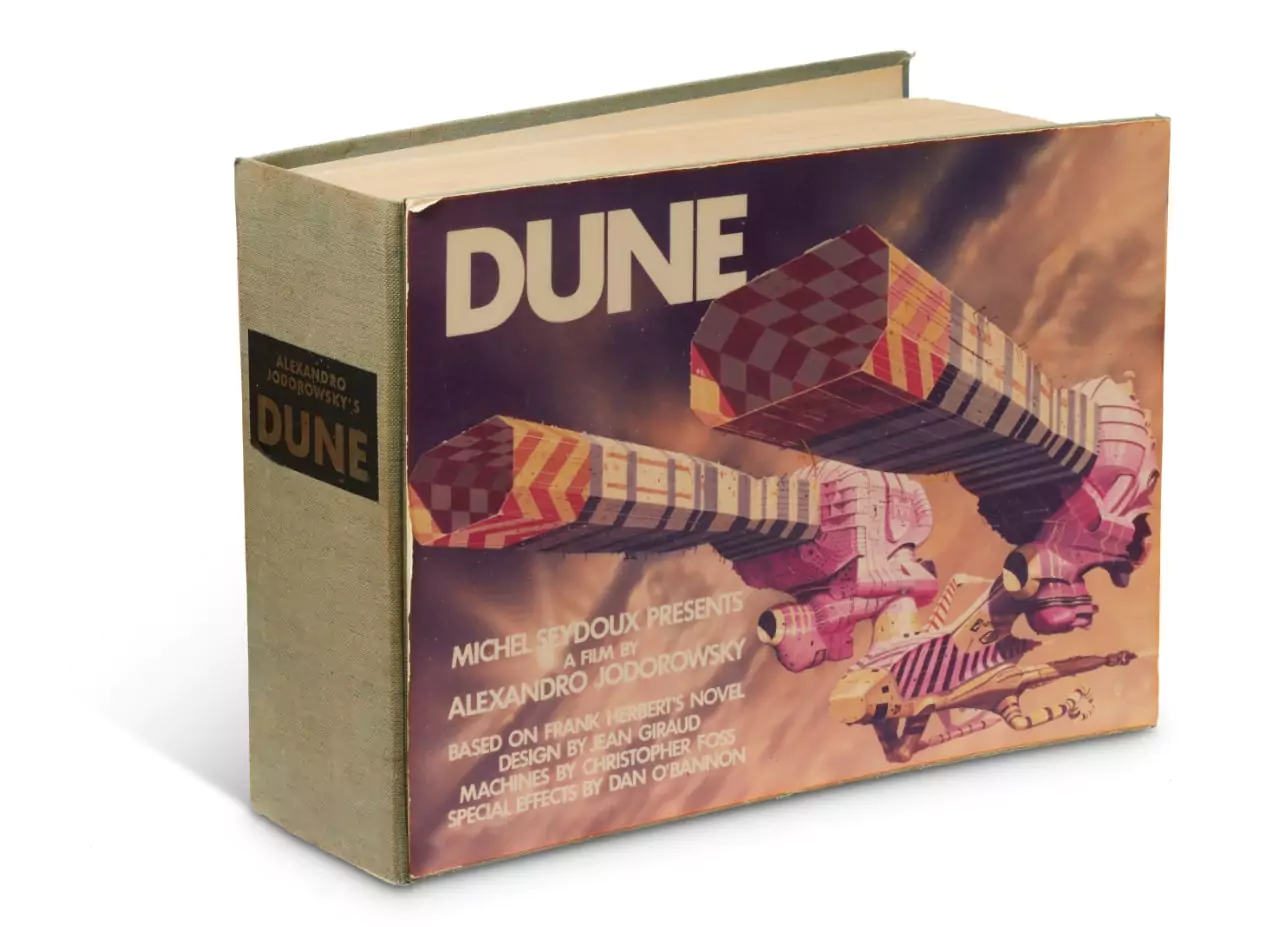
And, of course, a science fiction culture. The plundering of the work done on Jodorowsky’s Dune invites us to reclaim that heritage, the heritage of Mœbius, of Valérian and of a French way of imagining technology.
That culture was powerful enough, visually and conceptually, to impress an entire generation of filmmakers, from George Lucas to Ridley Scott.
- In 1976, Métal hurlant published The Long Tomorrow, a short story written by Dan O’Bannon and drawn by Mœbius while the two of them were working on Jodorowsky’s Dune. Ridley Scott has acknowledged what those few pages brought to Blade Runner.
- Jean-Claude Mézières, the artist behind Valérian, walked out of a screening of Star Wars in 1977 thinking: “It looks like Valérian.” He wrote to George Lucas, who never answered.
French science fiction certainly has its epic turkeys, but it also has masterpieces: films that were not afraid to experiment on ground where others would never have dared to venture. That did not stop the Hollywood machine from producing a number of smoother remakes of some of them.
In a way, there is no better brainstorm for understanding the future and its possibilities. All that remains afterward is to build the proofs of concept.
All of Musk’s companies draw on the science fiction of the 1950s through the 1990s. Heinlein’s, but also Iain M. Banks’s Culture series. He and Peter Thiel went so far as to lift the names from those novels (Palantir, Neuralink) without even trying to hide the lineage.
For a long time, science fiction was considered a minor genre in France. So what to make of French science fiction, which is considered nonexistent?
Our inability to imagine a sovereign future comes from our inability to understand that we know how to do computing at least as well as Silicon Valley or China, and that we have a vision of the future at least as interesting as Hollywood’s.
Because one thing is certain: the technological side is far less present in French sci-fi. I asked Enki Bilal about it years ago, and he gave me an answer that fascinated me. I’ll talk about that soon too.
But on to the films.
Read the full article
Sign up now to read the full article and get access to all articles for paying subscribers only.


