

In the United States, two things drive “Tech” forward: the first is the evolution of foundational technologies: minicomputers, microcomputing, the web, cloud, mobile, AI…, and the other is the permanent tension between counterculture and corporate culture.
In my view it is the most important engine of innovation, and curiously, the one that no European country (France in particular) has wanted to import.
I know something about it: to me, Netvibes and Jolicloud belonged to the counterculture startups of Web 2.0, and we were quite alone in a world where technology was always aligned with the ready-made thinking of the moment.
Startups are not just there to offer a new product or to build EBITDA out of thin air, they are also there to bring a vision and a different way of using technology.
When you look at the history of Silicon Valley, you realize that the counterculture, and what we call the counterculture, changes with the decades.
- In the '50s and '60s, disruption meant taking R&D out of the big corporations and demonstrating that building transistors, and later microprocessors, outside the large structures was going to change the way the world works.
- The idea that a small company had the capacity to build products that normally should have come out of the great laboratories like Bell Labs was astounding. And necessary, since cutting costs is easier when you don't have many engineers or much capital than in the big research centers with multi-year contracts.
- It is a model that microcomputing would adopt in turn, and which, let us remember, started in France.
François Gernelle built a complete, finished product, artisanal in its design, durable, since the Micral machines would remain part of the French landscape for nearly 20 years without a single technical problem.
It was Steve Jobs who understood that there was also a market for selling a finished product. His choice, as a man in love with the Cuisinart brand (and with the Minitel), was to manufacture computers like everyday consumer products, in plastic, and in a mass-production model.
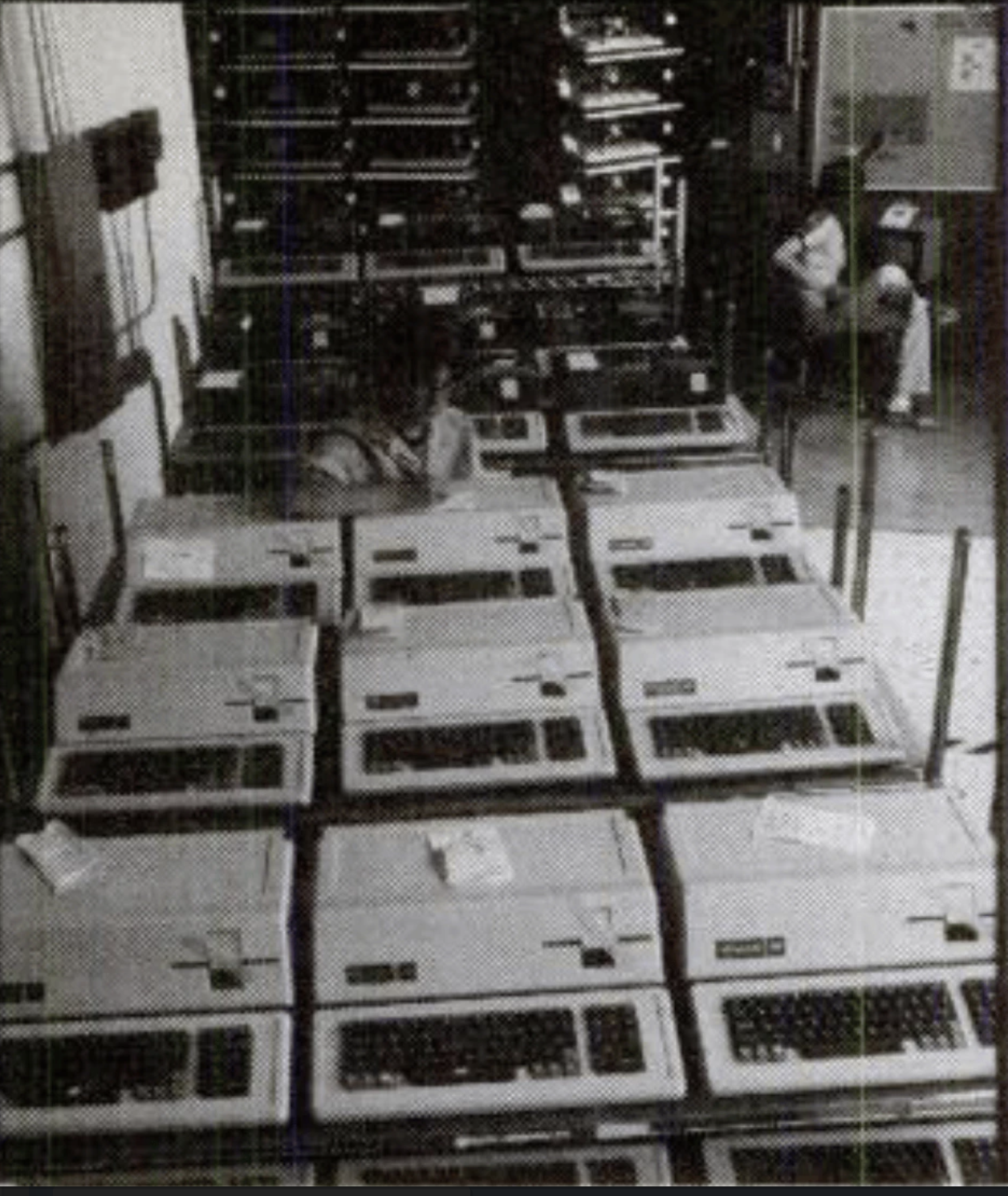
A paradox, given his very mystical cultural formation, built on the idea that the computer is above all a tool of emancipation.
Yet it was another legendary entrepreneur who would put into practice this idea of a computer in every home: Jack Tramiel, Holocaust survivor and business genius (he would go on to create the Atari ST, which to this day remains my favorite machine), flooded the market with a cheap and incredibly versatile machine: the Commodore 64.
It was also at that moment that I realized that the vision of an ideological counterculture adds romance to an industry, but that in the end, it is often everyday consumer products that the general public buys.
It is a dance that would repeat itself with the early days of the Internet.
The ideological engine of the Internet is the San Francisco counterculture. But most tech entrepreneurs of the era used it to make standard products.
Whether making hardware or software products, the soil of this counterculture was heavily used, including to sell products that were ideologically neutral, or even opposed to the values of the network counterculture.
From the arrival of e-commerce and of what would come to be called the dot-coms (not to be confused with the startups that actually built technology, such as WebTV), people built conventional tools and services.
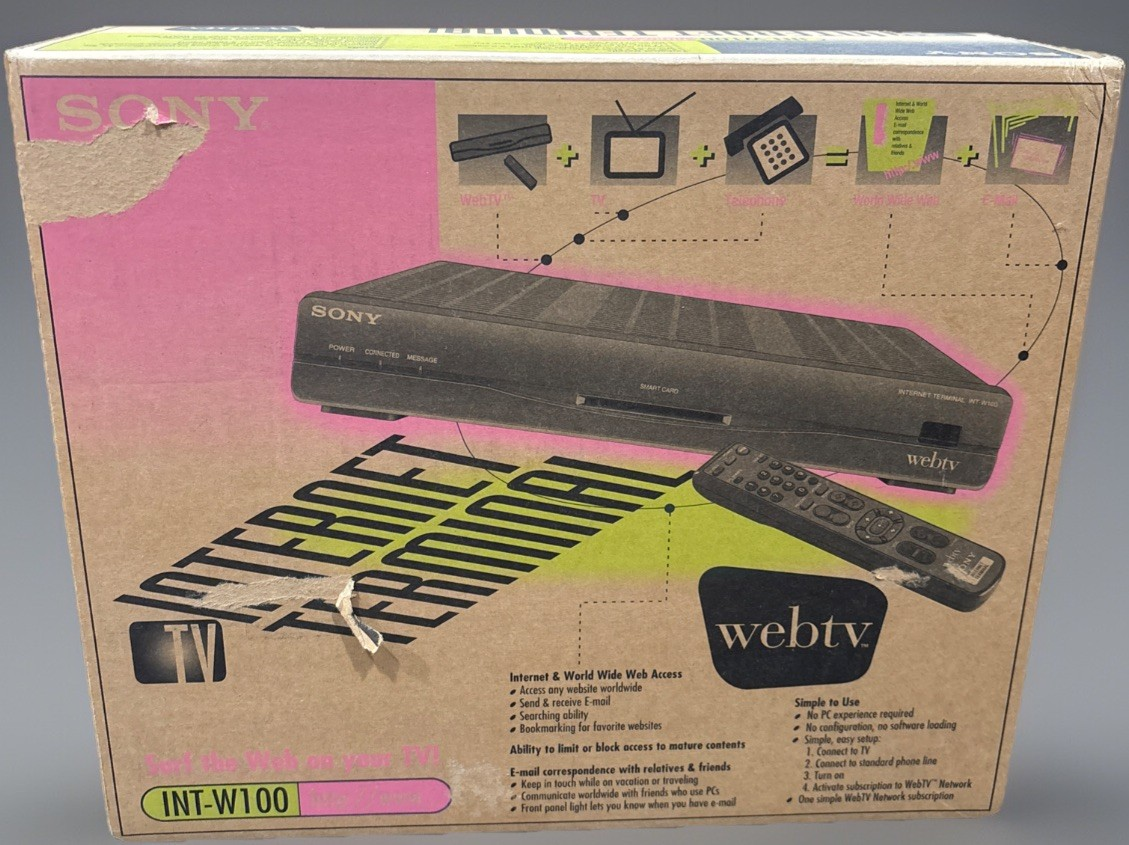
But beyond ease of use (which was not guaranteed in the age of modems), there were not many selling points. These products would fail en masse.
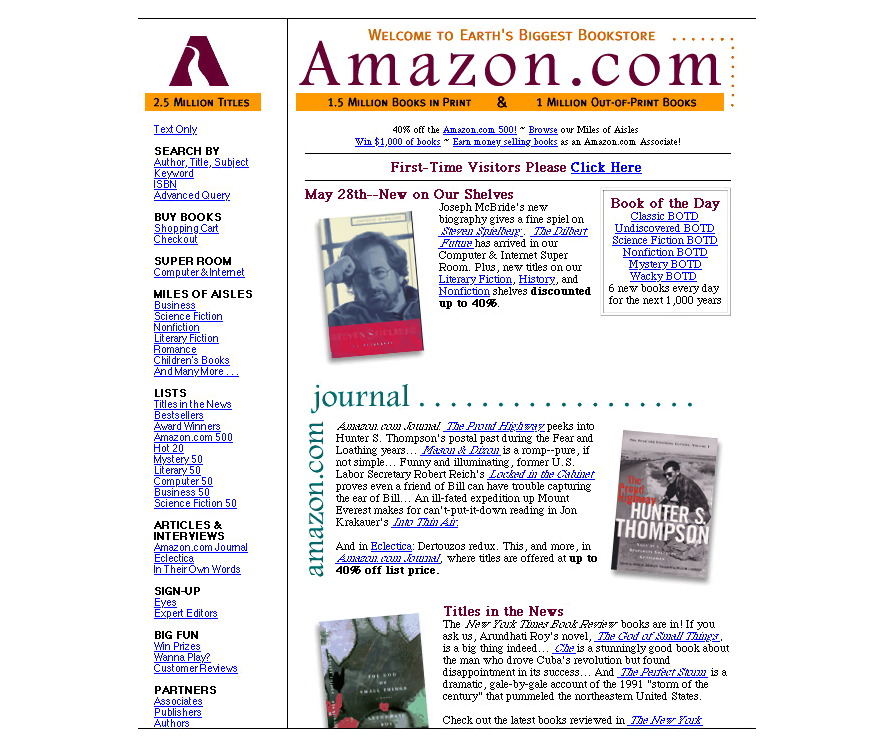
The only one to have understood this was Amazon, which decided, beyond the value of its e-commerce site, to build a complete process to make people's lives simpler.
As early as 1996, Amazon was far above the pack, but it also rode the idea of a global village in which the whole world has access to knowledge (books).
Having books delivered to France from Amazon, at the time, felt like an act of resistance. A counterculture, in a way.
Obviously, a lot has changed since then.
When the Web became standardized and soulless, especially under the stranglehold of Internet Explorer, which turned Web innovation into an ice age, the new counterculture would be that of Web 2.0.
That vision would not last long.
The key services were bought, absorbed, monetized. Web 2.0 would itself give birth to mobile and to the cloud, but also to Big Tech, which would take advantage of its control of cultural codes to become a form of corporate counterculture.
It was the era when an engineer at Facebook was called a hacker, when Google borrowed the codes of Burning Man to placate its critics, and when the metaverse (the collective hallucination of Gibson and Stephenson) became a denatured corporate space.
Web3 would also try to build itself on a vision of the cypherpunk counterculture, but would run into a very conspicuous money culture, and the absence of mainstream consumer products (apart, obviously, from the wallet).
American tech is thus constantly engaged in a double struggle: disrupt or commoditize. That is what drives it forward.
But curiously, in Europe, this tension does not exist.
Besides, as soon as you have a product that, in quotation marks, wants to change the world or transform how things are used, it is obvious that you first have to go to the United States. Because that is where everything happens and where you can benefit from this counterculture / establishment tension, even if the product was not conceived in the Valley.
In Europe, evacuating the cultural dimension means we only fund profitable products, and only position ourselves on services that are understood or made elsewhere. The countercultural risk of technological change remains rather underdeveloped, I fear.
But that is changing.
The idea of respecting privacy, and of building products that do not try to manipulate users, is now a form of counterculture.
Who, in your view, in Europe today truly takes on a posture of technological counterculture?
Are you ready for GPT5?
Summary: what we know so far:
continued for subscribers
Read the full article
Sign up now to read the full article and get access to all articles for paying subscribers only.


