

Many of you have asked me the question.
So I decided to answer it in a full newsletter, in two parts: one devoted to the stakes of digital sovereignty on the eve of the new year, and one dedicated to cognitive autonomy.
Between 2004 and 2021, raising these subjects made us “activists” who had to be silenced and kept out of the public debate. Then came Covid and the new American administration. Now digital sovereignty is on everyone's lips.
Which also means that my role has changed.
I am not here to reignite the battles between factions, nor to separate those who always believed from the last-minute converts. Even if I admit that, watching some of my most virulent critics turn their coats, I finally came to understand the meaning of the phrase “more royalist than the king.”
My priority lies elsewhere. Through this newsletter, my talks and the strategic advisory work I do with the team at The Sovereign Way, I want to help bring about a pragmatic vision of digital sovereignty: to separate what is actually feasible from what is dogma, and to identify what, whatever the speeches say, is structurally doomed to fail.
With this newsletter, I see myself a bit like a chef offering you starters (opinions on a subject), main courses (a more in-depth reflection) or desserts, like the film clubs, which are very popular.
Since launch, I have chosen to keep the price very low. Some of these notes are worth several times the price of a subscription on their own. A consultant told me recently that a single one of our newsletters had landed him a year-long contract.
Keeping the price affordable also reflects a desire to reach audiences beyond my initial target: students in particular, but also small businesses, and anyone who wants to think these issues through with us.
💸 Please note: the subscription price will go up before the end of the year.
So I wanted to offer you the option, if you wish, of keeping the current rate by subscribing before the increase. I know this is not a commercially intuitive approach.
- If you are subscribed at the €60 rate, as a founding member, that rate will not change.
- If you are subscribed at the €99 rate, as a co-founding member, and you subscribe now, that rate will not change.
ℹ️ As a paying subscriber, you get access:
- to the site's complete archives,
- to everything I track, through a private channel,
- to priority replies to your emails,
- to the events we organize,
- to the meetups of the Digital Resilience Council (Conseil de la Résilience Numérique), held on the sidelines of the conferences where I speak.
It's here
In 2026, sovereignty as an economic engine
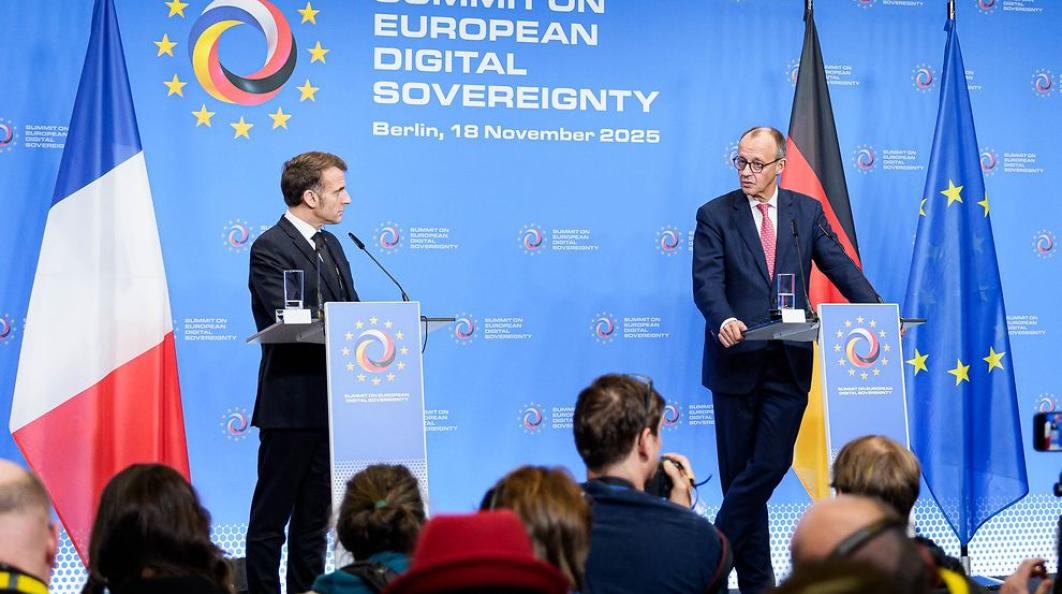
If there is one thing I have understood this year, it is that sovereignty is no longer just a buzzword. It is the main engine of digital growth in Europe in 2026. Even Big Tech has a sovereign offering, whether hybrid, like Google or Microsoft, or built on a legal construct, like AWS. The incumbents of the tech industry, the consulting firms, the developers and the open source players add to this overabundant supply.
The French sovereignty offering is designed above all for the local market. It will have to open up more to Europe. Because make no mistake: if France is not sufficiently present in Europe, it is the Germans who will grab every bit of market share in this sector.
The good news is that the market to be won is so large that entire swaths of it remain unaddressed. But for that, we need to stop repeating the mistakes of the past and finally put all our resources into clearing the right forest.
The first thing to do is to understand properly how the market has taken shape in France, its taboos, and how it will have to move upmarket.
A few points
Read the full article
Sign up now to read the full article and get access to all articles for paying subscribers only.


