

The transition to an AI Operating System is happening far faster than we thought.
Welcome to the new readers of this newsletter.
This newsletter, published weekly in French, presents my analyses of digital technology, its geopolitics, its uncertainties (and its opportunities), and its culture.
I have watched networks grow since the 1980s, between Paris and Silicon Valley, between my startups and the conference circuit, between the heart of the action and stepping back. Today, I position myself in the logic of the post-Web era, in a world gripped by three simultaneous disruptions:
- a geopolitical disruption,
- a disruption of the Internet and its services, with cyber, information (disinformation) and epistemic (AI) wars,
- a disruption with the arrival of AI.
And this week was the big AI week, which saw OpenAI, Google, Anthropic and Microsoft lay out their new vision and their new products.
It has to be said that the big winner in terms of publicity was Sam Altman, who showed he has two unique qualities:
- first, raising money,
- second, cannibalizing and parasitizing everyone else's announcements with an unrivaled sense of timing.
The goal here is not to list the announcements (if you're a paying subscriber, you have access to our WhatsApp feed), but to ask a single question: where are we headed?
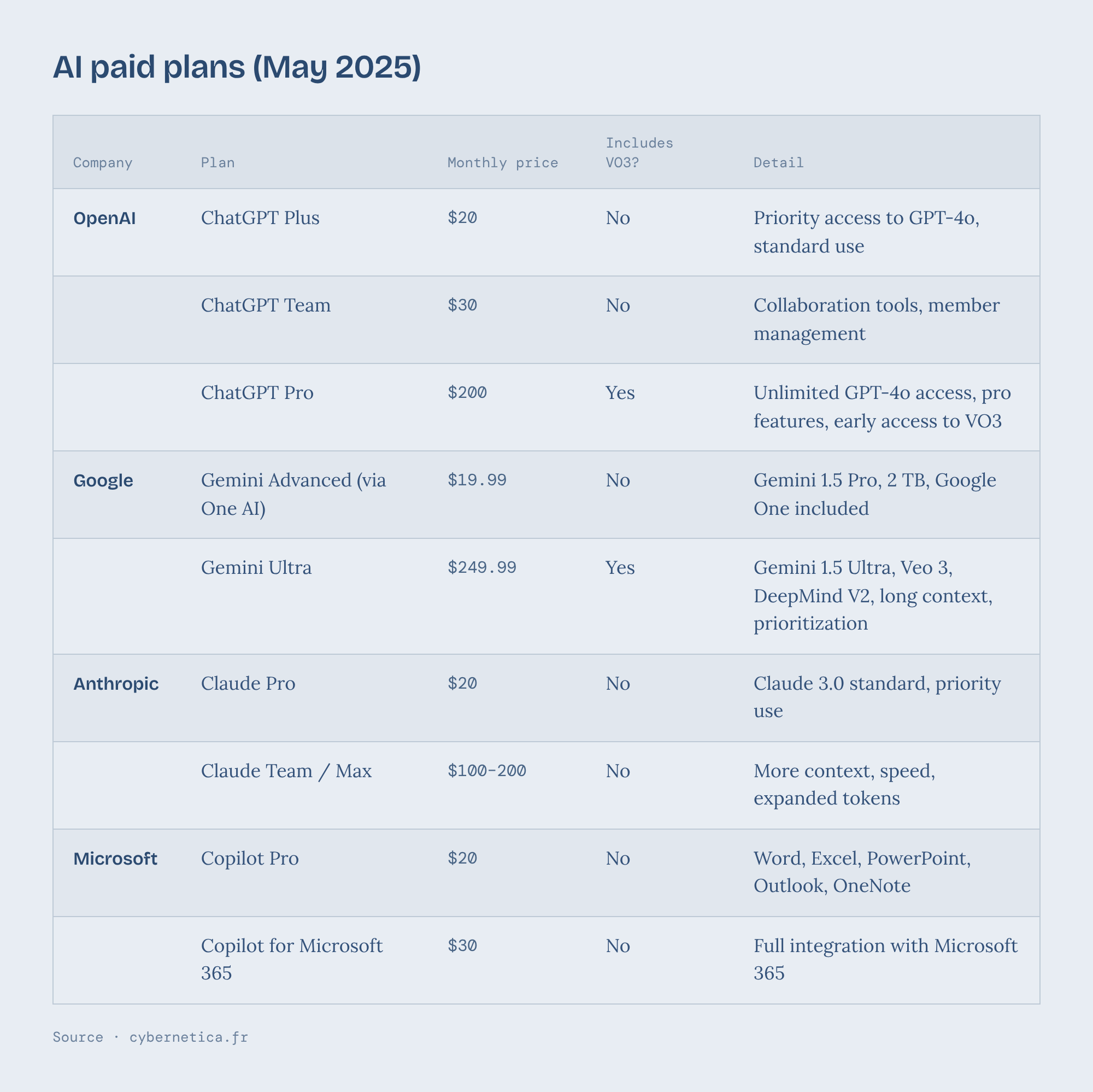
What is certain is that the paid offerings of all these players are taking shape, and getting more and more expensive. AI as a loss leader is becoming less and less attractive.
LoveFrom, io, OpenAI
The most symbolic announcement: OpenAI acquired the company "io" for $6.5 billion.
This startup, founded by Jony Ive, the designer of the iPhone, grew out of his collective LoveFrom.
This acquisition marks a turning point:
- OpenAI no longer wants to design only models,
- it wants to control the form factor of the AI-native era.
The AI-first, post-smartphone era
Two visions are clashing:
Read the full article
Sign up now to read the full article and get access to all articles for paying subscribers only.


