

Since Pavel Durov's arrest in Paris, social media has been in an uproar. Day after day, newspapers around the world drip out new details, and every influencer has a theory of their own.
Are we in the middle of an espionage affair, or simply a matter of social media regulation?
Was the invitation to come to France a trap, as Le Canard enchaîné (a satirical weekly) claims?
Did Paul du Rove (his French name) know that French courts had issued an international arrest warrant on July 8?
Why did the Kremlin, once Telegram's enemy, pivot to defending Durov after his arrest?
Why did the United Arab Emirates ask France to let them provide consular services to Durov? (Which he declined.)
A lot of questions without answers.
Pavel Durov has just come out of 96 hours in police custody, has had to post €5 million in bail, and is barred from leaving the country. This is a story that is only beginning.
In this post, reserved for paying members, we will look into the geopolitical implications of this arrest.
This highly publicized arrest has overshadowed another major piece of news: we learned that two of Elon Musk's main financial backers in the Twitter buyout have close, privileged ties to the Kremlin.
Elon Musk has complied after all and provided a list of X Holding Corp shareholders who helped the billionaire buy Twitter. And who do you think turned out to be the investors of the X platform? That's right, Petr Aven and Vadim Moshkovich. Now it is absolutely obvious where Musk… pic.twitter.com/qGE3p7FATk
— Denis Danilov (@DenisDanilovL) August 24, 2024
Much like the splinternet, the fragmentation of the Internet, social networks (which are also interpersonal messaging services) have their own iron curtain and their own spheres of influence.
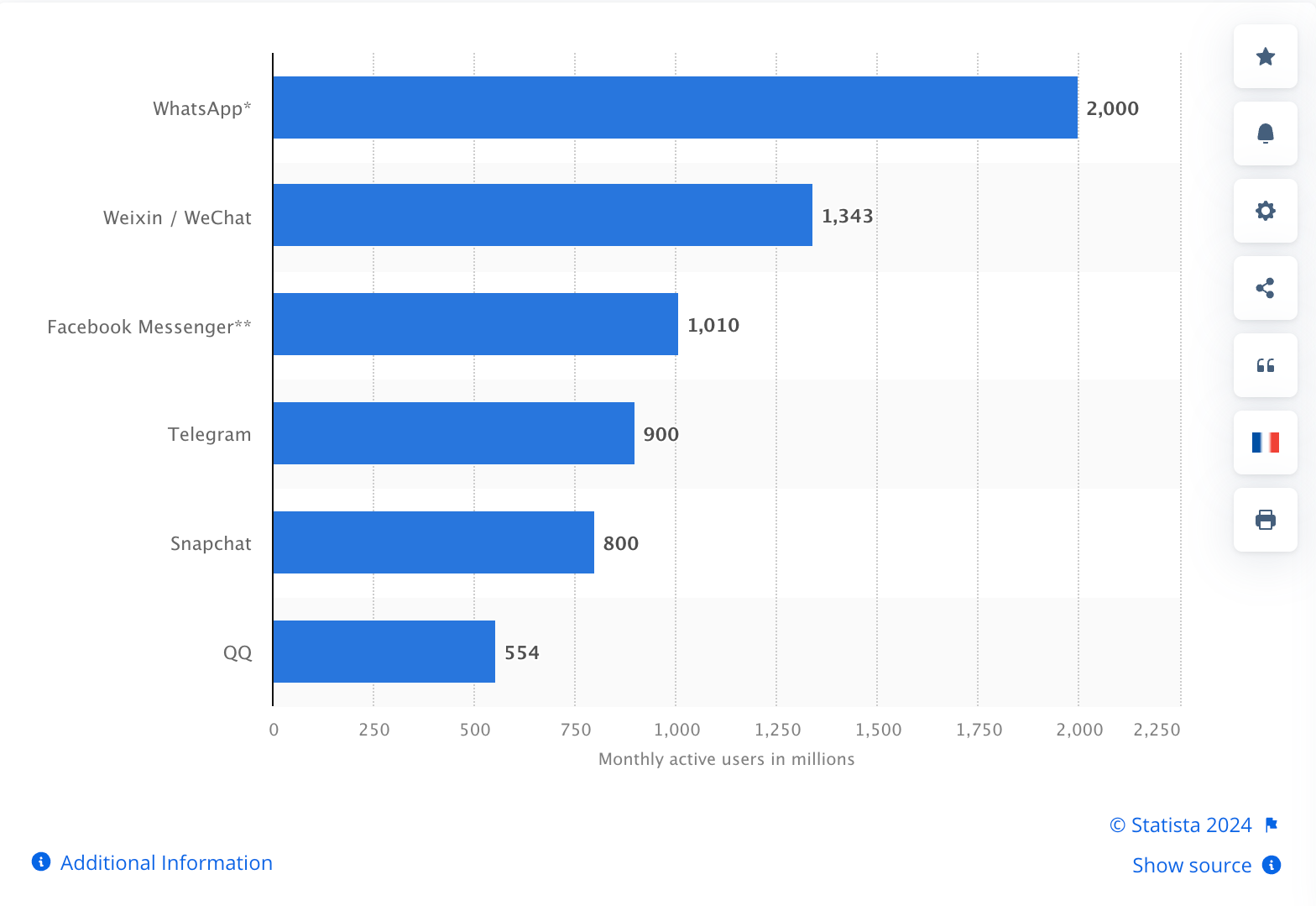
Facing the camp of platforms traditionally aligned with the United States (Google, Meta, Apple, Microsoft), there are two services used by Western populations over which the American government has no hold:
- TikTok: 1 billion users, 150 million of them in the US
- Telegram: 1 billion users expected in 2024
Then there is X.
- X (formerly Twitter): 540 million users
Although the company is American, Twitter has a long history of interference and influence operations. It is the favorite meeting place of the engineers of Chaos.
For years, Russian and Chinese oligarchs made fortunes from tech companies without having any direct political influence over them.
Everything went through indirect channels: many agencies, the Russian services among them, are said to have planted agents inside technical teams or bribed employees to get at certain trade secrets, such as ranking algorithms. The best-known case is Saudi Arabia, caught red-handed inside Twitter.
Read Saudi infiltration of Twitter
In the context of Elon Musk's takeover of Twitter, the point was to seize operational and informational control of the product. In the name of free speech.
China has gone even further by creating profitable tools of geopolitical influence. That is what makes TikTok so interesting. It combines tight Chinese control with substantial revenue (more than $16 billion in 2023). To my knowledge, it is the only "profitable" tool of interference on the Internet.
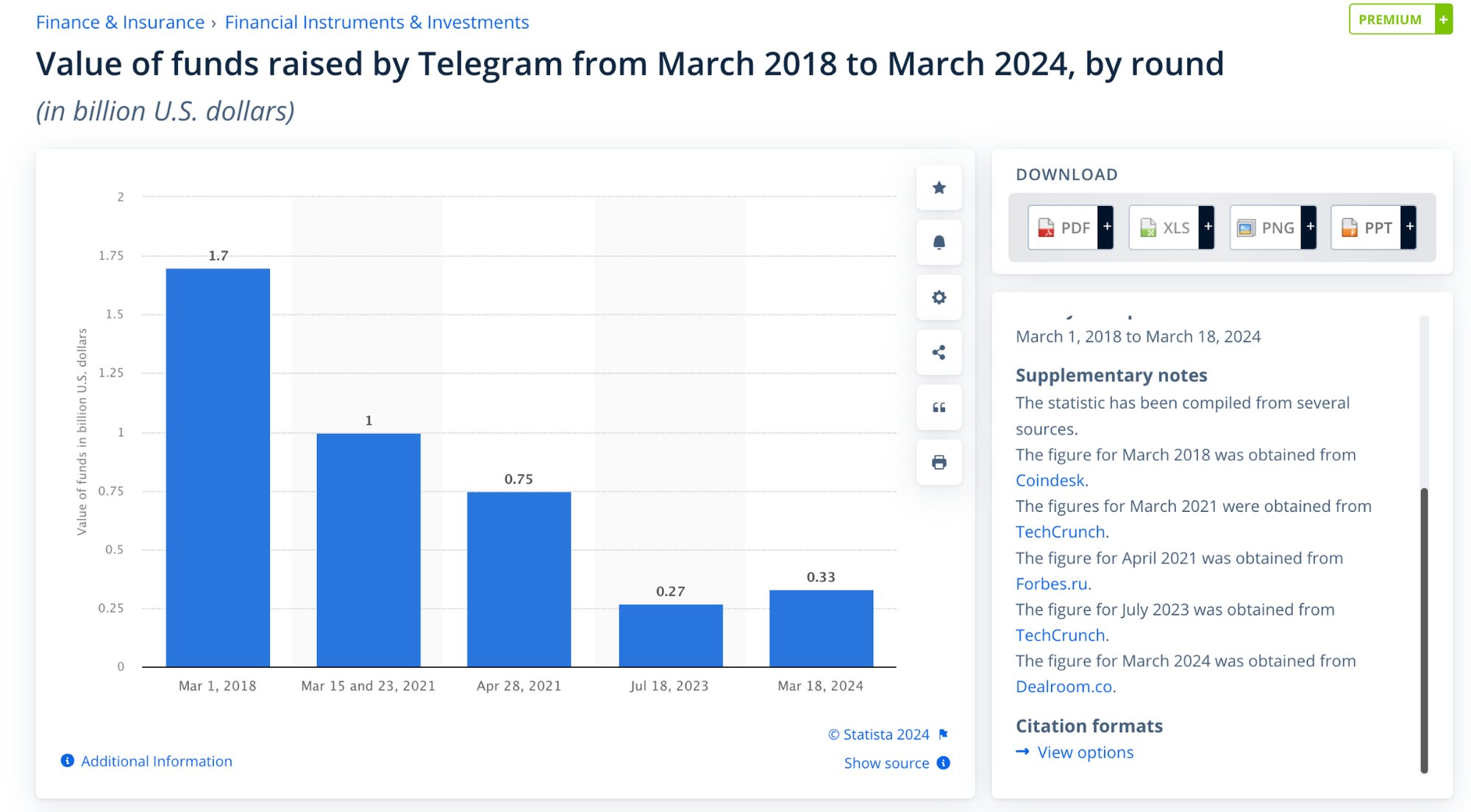
Telegram, on the other hand, remains murky. Unlike WhatsApp, which Meta can afford to keep as an expensive indulgence, Telegram can only lean on its modest revenue and the funding rounds it raised at the very peak of the crypto bubble.
PS: The Wall Street Journal reveals that the United Arab Emirates, Pavel Durov's adopted home, invested $75 million.
Despite its founder's self-centered pronouncements, Telegram does not have the same level of connections as the big American platforms, which have not hesitated to recruit intelligence bigwigs onto their boards. That opens doors, and offers a form of diplomatic protection.
What to make of Pavel Durov's arrest?
Many theories are circulating; here is the one I favor. Take it with a grain of salt.
Read the full article
Sign up now to read the full article and get access to all articles for paying subscribers only.


