

I'll come back to the bubble and the business model of artificial intelligence in a future newsletter.
As I prepare my slides for Web Summit in Lisbon, as part of the AI Summit, one question keeps coming back to me, and it worries me: the ideology of work without effort and without employees that AI finally seems to make possible.
I even wonder whether this idea isn't more worrying than the infrastructure bubble itself, since it opens the way to a form of compound mediocrity.
Discovering competence
I was lucky enough to start piano very young, at four and a half. At eight, I was selected for the conservatory's first prize. And at ten, I found myself giving my first public concert in the great hall of the town hall of Paris's third arrondissement.
No sooner had my name been announced than I found myself in an immense hall, terrified at the thought of having to play in front of so many people. Then, once seated, my fingers took over from the fear. Mechanically for the first few notes, and then human control returns to supply what technique does not control: the nuances.
I never knew whether it was synesthesia, the gentleness and rigor of my piano teacher, or the imposing yet discreet supervision of Monsieur Girard, the conductor who ran the conservatory of the fourth arrondissement, that had pushed me beyond my limits.
Because over the years you quickly learn one thing: if you want to play Chopin, Liszt, Scriabin or Bartók, there is no easy way. Only hours upon hours of practice build the muscle memory of a piece. The memory that gives the fingers both speed and precision, so that you can reach the Holy Grail: the nuances.
Having all three in a piece of staggering technical complexity borders on a miracle, and can only be acquired through a combination of relentless work on technical memory and emotional intoxication at the moment of playing. It took me years to understand what that discipline brings in terms of character building, endurance and one's relationship to reality.
And then, when you stop playing with that daily discipline, the fall is swift. The despair of watching your skills crumble at full speed. I don't dare imagine what an athlete must go through when giving up competition and training after being at the peak of their powers.
I understood this three years after leaving the conservatory. For the music option of the baccalauréat exam, I played again, painfully, very painfully, a piece I had played perfectly at 13. When the examiner told me my grade, I couldn't hide my shame; it didn't deserve it.
At the same time, I had realized that I had spent years living in a bubble that drew the best out of me. In three years, the muscle memory disappears, the ability to sight-read dwindles, and everything you know about music turns into scattered memories.
From one keyboard to another
At the same time, I had also traded one keyboard for another. Computing had entered my daily life, and the hours of Hanon exercises were swapped for hours spent disassembling computer ROMs to understand the magical, ingenious instructions their makers had slipped in for the most curious among us.

And in the world of music, plagal cadences were replaced by the patterns of the TR-808 and the 909, and by snippets of samples that seem badly chopped but whose repetition creates an inimitable groove, becoming a rhythmic melody in its own right. J Dilla being, in hindsight, the absolute genius of those inimitable collages.
J Dilla - sunbeams
Curiously, it was hacking that reconnected me with that discipline: understanding how things work, seeing their flaws, taking them apart and rebuilding them.
Because we forget it too often today, but in the 80s and 90s a single person could take apart a computer, a program or a calculator on their own to understand its inner workings.
A bit like Niels Bohr, who was the last scientist to have an encyclopedic knowledge of all of physics before the discovery of the atom forced physicists to pick a field of expertise.
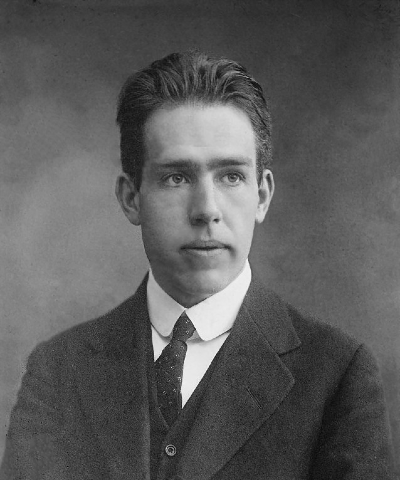
The break in computing for my generation was the arrival of a world where you can no longer understand things alone, only in teams. The documentary From Bedrooms to Billions tells the story of that transition for video games, with the arrival of the PlayStation, which would introduce a break in the way games were made.
When the first AI tools arrived, the first question I asked myself was whether we could regain that power. But alas, we are not working on the base material, the raw material, the raw data, but on a model that has absorbed it and spits it back out imperfectly.
In a world where what is hard becomes easy, what is hard?
And to wonder whether, in this world of abstraction, real competence, not the feigned kind, has ever been so sexy.
A world that no longer values competence
That is also why I absolutely loved Kathryn Bigelow's film A House of Dynamite, which reminds us how much expertise matters in a world as dangerous as ours.
Faced with the threat of a nuclear missile, we watch the human machine, its emotions up against security procedures, processes and reflexes, a reminder that even with the power of scenario planning and the greatest computing capacity, the human decision is priceless.
It was during Covid that we realized that many people who wanted senior positions because they looked good on a résumé did not want the responsibility when a crisis hit. And also that some who, on paper, had the skills lacked the human capacity to make the decisions.
This debate about competence, in a world of fake it till you make it, where a TikTok presence serves as a political platform and the staging consists of surrounding yourself with competent people to feign your own, will be at the heart of our decisions in 2027.
Because one of the things you learn is that competence begins with the drudgery, the invisible work, the part you cannot stage. Those piano rehearsals, before the chance, perhaps, of playing a concert for all of 30 minutes.
That is more or less what House of Dynamite tells us. Behind the 20 minutes of a nuclear attack lie years of thinking, years of design, of scenario planning, of effort to find the right people.
The only thing that's certain is that I'm not sure we would want our current politicians in Bigelow's film.
Because the world of AI is paving a royal road for average thinking.
We have already talked about AI work slop, that enshittification of corporate thinking, which is starting to reach the political class with 2027 on the horizon.
Kathryn Bigelow's film does more than ask whether we accept putting mediocre people in positions of responsibility. She reminds us that in a world where AI is changing the perception of competence (and of artistic quality), our tolerance for mediocrity in the ruling spheres is growing.
In her film, she chose to cast serious, competent people, which was taken as a scathing critique of the current American administration.
The reaction was swift: the US Department of Defense immediately disputed the success statistics for the United States' protective dome shown in the film, explaining that they were far better than what the film claimed.
 Anthony Capaccio

But competence isn't everything. In another of her films, Zero Dark Thirty, which tells the story of the hunt for Bin Laden and is currently available on Netflix, Bigelow puts forward a highly competent but controversial person whom she turns into a heroine.
This is, of course, Alfreda Frances Bikowsky, who joined the CIA in the 1990s and specialized in counterterrorism. She worked at Alec Station, the unit tasked with tracking down Osama bin Laden.
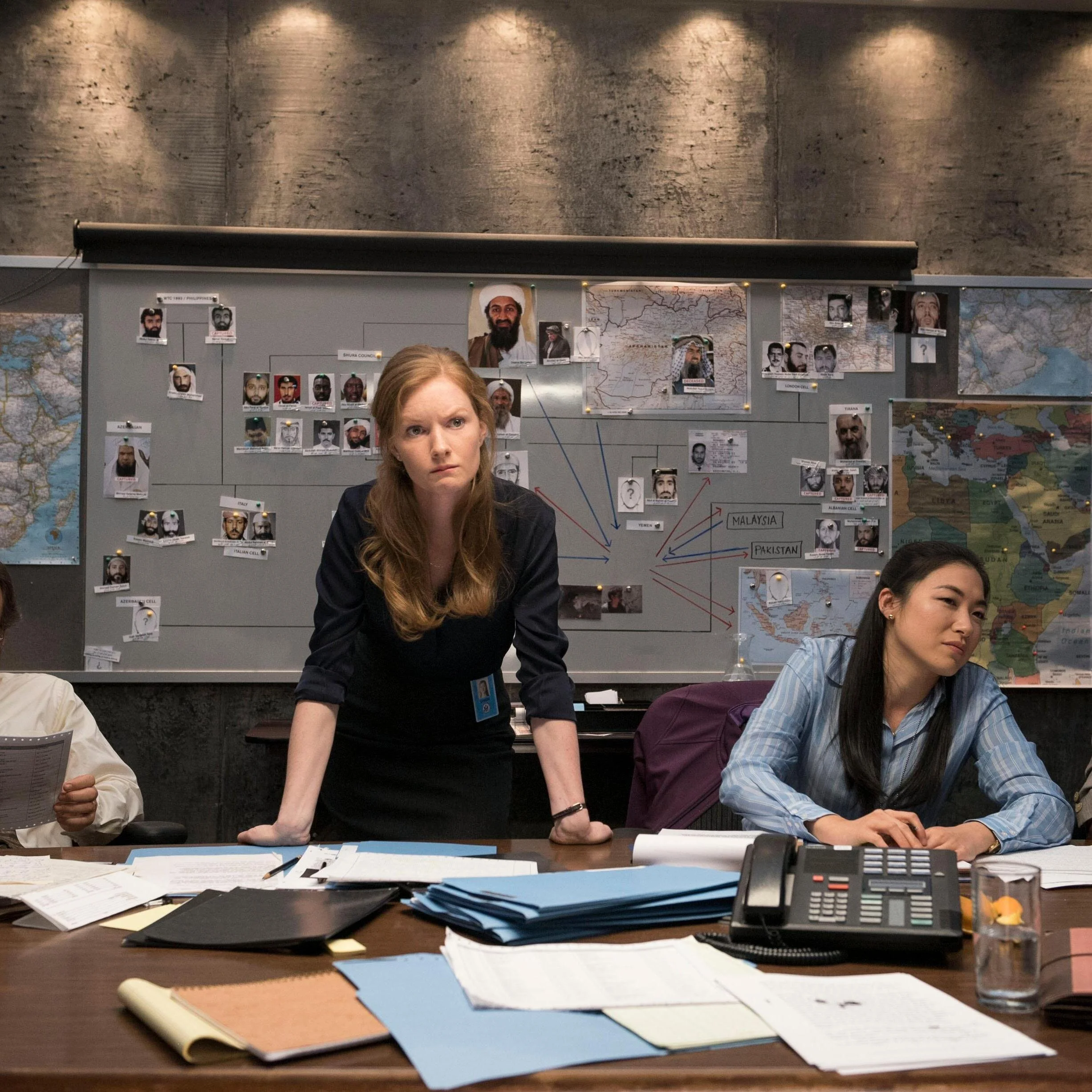
Her role was decisive in the hunt for Al-Qaeda, but also highly controversial: she supported and supervised the enhanced interrogation program (torture, basically) after 9/11.
Despite unforgivable mistakes, notably withholding information meant for the FBI before the September 11 attacks, she was rewarded under Barack Obama for her contribution to the operation that led to Bin Laden's death, receiving an internal CIA award.
Several works of fiction have drawn on her:
- In Zero Dark Thirty (2012), she becomes Maya, played by Jessica Chastain: the portrait of an obsessive analyst who leads the hunt all the way to Abbottabad.
- In The Looming Tower (2018), she appears as Diane Marsh, played by Wrenn Schmidt: a more political version, showing the tensions between the CIA and the FBI before 9/11.
- In the film Rendition (2007), she appears as Corrine Whitman, played by Meryl Streep.
Do we really have to choose between the cold competence of those who have no feelings, no empathy, and sometimes not even honesty, and the gentle incompetence of those who can't do much but seem likable drinking beers on TikTok?
A friend puts the question differently: for an operation, would you rather have a surgeon of absolute competence or someone pleasant whose background you know nothing about?
Put that way, the answer seems obvious.
Because the arrival of AI coincides with a profound generational change, a period of transition between those who built the postwar world, with its institutions, its economic models and its values, and those who, over the next ten years, will have to inherit it, understand it, maintain it or transform it, or even choose to let it collapse.
AI, laziness and mediocrity
Is AI a stopgap for the mediocrity of those who think there is no longer any need to learn?
How are we going to manage, when our demographics send into retirement every day those who still hold real-world skills? The pressure now shifts to Generation X, long stuck between baby boomers who still monopolize the attention and younger people already looking toward other horizons.
Generative AI and the products it promotes reveal a growing divide: between an ideology of effortless execution and one of work as a value and as a discipline.
Since ChatGPT arrived, the idea that one can, and even should, execute through laziness has taken hold. Vibe coding, vibe marketing: going with the flow has become a working method in its own right.
Combined with a certain lack of taste, this trend produces bland images to accompany texts that all seem to come out of the same machine. In less than a year, many consultants who rode that wave have completely devalued themselves on LinkedIn, victims of this compound laziness.
Because in a way, they more than anyone should have explored the other side of AI, the one of execution through work.
When every tool is designed to push us to do less, faster, it becomes almost a moral duty to use them to do better, with more depth.
To reach that optimum of creativity and productivity, you have to break out of the classic AI pattern. Writing a text purely from prompts seems totally unprofessional, unless all you need is to answer emails quickly.
Transforming your creative and working process to adapt it to AI takes time and effort. For my part, I start with a fountain pen and paper to formalize my ideas, I do my research both with AI and in books, and I keep, then edit by hand, my hierarchy of ideas. Without that, AI risks making me change my mind or lose the thread of my thinking.
To learn, because we are all learning in this new world, we should take inspiration from the artists who work with AI, able to blend production and creation tools while preserving the coherence of their vision.
Faced with the demographic collapse of skills, we will have to accept that working in the world of AI will take more effort, especially at the start, while you build your own baseline.
I also believe that the value of products and conversational interfaces will have to evolve to let everyone give their best. Most of the tools we used before AI are no longer really suited to what we have to accomplish. It's a rare opportunity to invent new products and new ways of creating.
I'll come back to this soon. What do you think?
The Club (paying subscribers only)
Read the full article
Sign up now to read the full article and get access to all articles for paying subscribers only.


