

“We shall not cease from exploration
And the end of all our exploring
Will be to arrive where we started
And know the place for the first time.”
T.S. Eliot
If, as T.S. Eliot writes, the real journey consists in seeing differently, does AI really help us get there? Or does it keep us at the surface?
This week, I wanted to talk about AI and return to a question that obsesses me: the relationship we have, or can have, with these machines.
- Last year, at a conference in Istanbul, I raised the idea that AI treats human culture like an indigenous culture.
- My intuition was that if we live in a world of summaries, syntheses or statistical approximations, the very representation of the world in its complexity changes. In the same way that we simplified indigenous beliefs and glossed over their complexity.
I cannot help thinking of the beliefs about ecology recounted in Adam Curtis's incredible documentary, and seeing a troubling parallel.
- For decades, ecology rested on an illusion: that of a self-regulating, stable natural world, capable of returning to equilibrium after every disturbance.
- This vision, carried by figures such as Arthur Tansley (who coined the word “ecosystem”) and amplified by the Odum brothers, imposed a mechanical framework on the complexity of living things.
- Ecosystems were reduced to circuits, to energy flows that could be modeled, to feedback loops. But this approach was a construction: a fantasy of stability projected onto nature.
- Later, researchers such as Daniel Botkin showed, empirically, that this stability did not exist and that natural systems were chaotic, unpredictable, in permanent recomposition.
It is this gap between the model and the real that finds a troubling echo today in our use of AI.
- Generative models like ChatGPT work on a similar logic: reducing the complexity of human knowledge to statistical regularities.
- They produce a smooth, self-consistent, but artificially stabilized textual world.
- That does not mean we should not use them, but that we need to feed on complexity outside of their use.
- Just as eating fresh produce, neither processed nor simplified, has an impact on our bodies.
As in ecology yesterday, we sometimes forget that thought does not follow closed loops; it forks, drifts, explodes. The illusion is not in the tool, it is in our desire to make it a substitute for complexity.
PS: I did a shorter version of this at MEDEF, in French.
For several weeks, I have been coming across (as many of you probably have) studies that, with a certain dramatization, explain that artificial intelligence, and text generation tools in particular, end up making us stupid.
But one of them seems to be creating a buzz, that of Nataliya Kosmyna, who until a few years ago was working on brain-machine interfaces (as in the film Firefox), and I think she drew on that for the MIT study.
 Nataliya Kosmyna

Basically, she had the real effect of ChatGPT on the brain measured. The study would show that it makes us more passive:
- Lower brain activity with LLMs than with Google or with no help at all
- Less memory, less creativity, less concentration
- We think less, we delegate more
- AI becomes a cognitive crutch
- By dint of being assisted, we would forget how to think
It is funny, because during my only appearance on C ce soir (a French TV talk show), for a debate about ChatGPT, I had pointed out precisely this intuition of mine: systematically using the same intellectual shortcuts ends up, over time, making us forget the old methods.
A bit like the Uber driver unable to find a route without GPS, the middle-schooler who can no longer do a division without a calculator, or all of us, now hard-pressed to recite our loved ones' phone numbers by heart.
There have always been two camps: those who think memory is something you train, and those who think it should be put to other uses and take advantage of new technologies.
That is more or less what we are living through today with generative AI tools: a permanent tension between the efficiency they offer and the gradual atrophy of the skills they induce.
We float in a gray zone, not far from mental paralysis when the tool fails, because we suddenly feel deprived of a basic reflex.
As with all tools, this impression of new power makes going back not only laborious but quickly unacceptable. It must be said that artificial intelligence has gone even further.
The first question I asked myself when using the early tools, before the official ChatGPT, was how to measure the time saved.
- Saving 5 minutes is not significant enough.
- Saving 30 minutes of useful work becomes more interesting. But you have to be careful to include the extra verification time.
- When AI promises to save a day, or even weeks of work, which is what AGI or superintelligence promises us, then we enter real disruption. Because at that level of cognitive acceleration, it becomes complicated to verify properly.
The other question, obviously, is how those who enter the workforce with these tools will react. I had proof of it again a few days ago at a dinner. In the world of public and private education, panic is spreading, because no one has yet managed to imagine solutions, and they foresee the complete destruction of their business models.
And what is true for education is true for each of us: there are important choices to make.
Between magic tool and unstable partner
The effects are not uniform.
- For someone who lacks bearings in writing, in structuring ideas, in technique, ChatGPT can look like a domestic demigod: fluid, fast, polite.
- But for those who already have a solid background and vast references, the experience is different: the machine becomes a partner, an amplifier, an advanced productivity tool. And in that case, going back to “pure,” slow, methodical production, without this AI assistance, seems not only counterproductive but almost absurd.
The new debate is therefore that of cognitive autonomy.
Is this new ease a lever, or the onset of a new kind of laziness?
I confess: I started out resistant. Then, on the advice of Romain Huet, I dove in head first with the goal of inventing for myself a true ultra-productivity workflow in which speech, voice and conversation structure my writing.
I think I have managed to make something that works, even if OpenAI's and Claude's often invisible updates sometimes undo the little tweaks I managed to put in place.
My great discovery was learning to create in a permanent dialogue with the machine.
Generation X is the big winner of this transition
Some generations may be better equipped to navigate this new form of productivity. Generation X in particular, which lived through the early days of the Web, rudimentary keyboards, command lines, the first search engines, and which above all has broader intuition and cultural references, as well as the ability to correct mistakes, is in my view the one with the most potential.
For me, AI is embodied in my new motto: think slow, execute fast.
It makes it possible to slow down thinking in order to test paths, explore formulations, try out scenarios, before moving to action. What I am talking about here is augmented preproduction, before even moving to production. I use the machine to push ideas, cross metaphors, break formats, and it takes care of the formatting.
ChatGPT, its bugs, its quirks, its contradictions
In less than a year, these tools have become spectacular. What I did not dare do yesterday, for fear of getting lost in too much text or for lack of a clear, structured method, has become second nature.
I ask the machine to rephrase a paragraph, clarify a line of reasoning, test a layout. But this proximity has also allowed me to rediscover the taste for more agile and more ambitious writing.
None of my newsletter texts is written by AI, but none of my texts has gone without its assistance.
Granted, ChatGPT's writing remains imperfect: recognizable style, unstable typography (dashes, annoying line breaks), haphazard layout. For many, these are mere details, but to the trained eye they betray AI's intervention. This forces me to go back over the edited text by hand. At other times, a rephrasing is too pompous, or on the contrary too casual, which drives me to despair.
But I sometimes find the solution by sending it an avalanche of question marks and exclamation points, just to shake it up. And then it reacts. Or it bugs out. Or, worse, it (the machine) starts addressing me with the informal “tu” again, despite my explicit instruction. And then, as if nothing had happened, it executes the task to perfection.
A bilingual AI… but an asymmetric one
The subtlest thing is the difference between French and English.
- In French, it is laborious at first, but the thread of the conversation improves its relevance.
- In English, it shines from the start, but declines as the conversation stretches on.
This gap should raise questions: is it a matter of model, of calibration, or of linguistic universe?
Creativity or an endless loop of déjà vu?
I make little use of image generators, and I remain fascinated by video generation. And yet, I get bored with the same rehashed styles, the formats warmed over from one creator to the next, the recycled effects.
It is a symptom: the tool works, but creativity is lacking. To stand out, you need a real archaeology of prompts, or to use your own models.
Then comes the essential question: is AI a preproduction tool, which is what it excels at, or can it become a true tool of creativity?
Yet creativity demands time, mastery, letting go, rewriting, re-exploring.
Preproduction, on the other hand, is fast and efficient. Many confuse the two, or hope the machine will take care of everything. That is not my approach: I use it to formalize what I care about, but I do not let the machine think for me.
What I find fascinating is that AI has already claimed a victim: I no longer use a word processor. I have gone back to paper or to my markdown editor .
Ethics and effort in an automated world
Are we allowed to do this?
I think AI is a fascinating tool, but that there are many peddlers of dreams. It also exposes the absurd sides of corporate life: a report written by no one that will be read by no one.
Because what intrigues and worries me is not so much preproduction as the changes in our ability to acquire information.
- What strikes me most today is not so much that AI produces, it is that it understands or reads before we have even read. Like Gmail analyzing our emails before we do (an ethical problem, in my view)
- I already know that many of us no longer read the original texts and settle for an automatically generated summary.
- But is access exclusively to compressed information, digested by the machine, really advisable?
Even this newsletter could be read through an AI prism before it reaches you. And that saddens me, because I put thought and precision into it.
Cognitive compression as a test for humanity
This phenomenon raises a broader reality: cognitive compression.
If Ted Chiang is right in his formulation, “ChatGPT is a blurry JPEG of the Web,” then we are losing substance, details, singularities.
 Ted Chiang
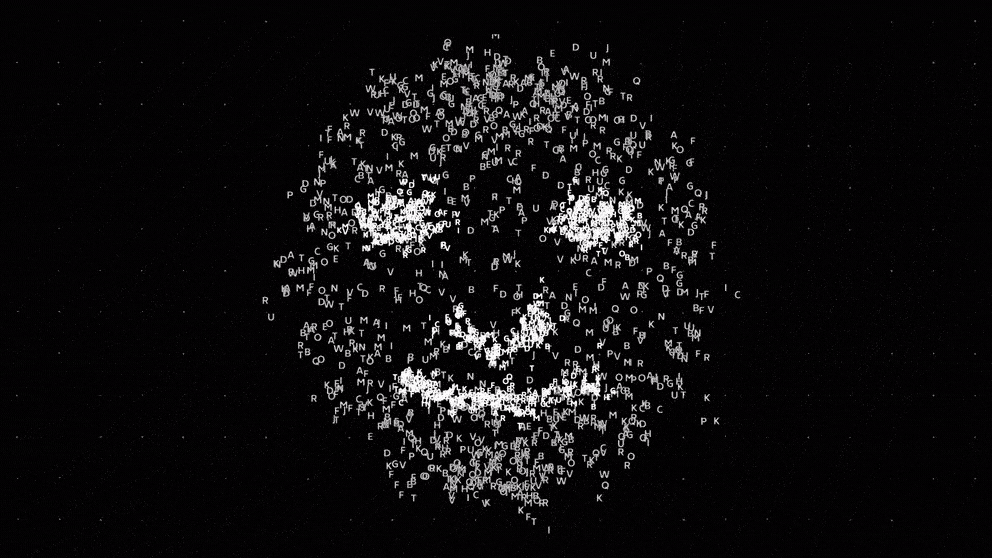
Like an MP3, we keep the music, but the depth, the harmonics, the resonance disappear. Can we really learn, understand, grasp nuance when we read only compressed versions of knowledge?
- Sometimes, in a book, it is a sentence, a word, something that resonates in us and makes reading that book change our life or our way of seeing things.
- In an AI summary, it is entirely possible that this sentence, this thought, never arrives.
- The journey matters; walking and hiking, for instance, are privileged moments of reflection and questioning.
- Reading is a bit the same thing, the same feeling of fullness, provided we agree to step out of the productivity bubble we are urged to follow all the time.
The trap of non-deterministic versioning
Beyond content, there is another challenge: non-deterministic versioning.
Each request generates a different text. You then have to keep track of the best version, copy it somewhere, otherwise it disappears. It has happened to me several times.
(continued for my paying subscribers)
Read the full article
Sign up now to read the full article and get access to all articles for paying subscribers only.


