

By flooding the market with generic strategies, they are not proving their effectiveness: they are destroying the value of their word. This "Consulting Slop" goes beyond mere corporate consulting. It seeps through society and promises us a catastrophic debate in 2027, when France's adaptation to a world of AI will be the main subject.
Faced with this risk, the only stance is to return to deeper thinking, to the roots of expertise.
It was while dropping in on the Adopt AI conference, held at the Grand Palais, that I felt the urge to write about this. The setting was radically different from Web Summit, rather Franco-French, and one where consulting had pride of place.
For the consulting world, the real danger is not the specter of an AI bubble, but that three years after the release of ChatGPT, the promises made about a new form of performance are not being kept and are starting to be questioned by clients.
I will set aside the idea of an AI-run corporate brain, which has always made me wince, to recall three promises that are hard to keep in the real world.
1. Automating customer service with chatbots
- Promise: mass replacement of call center agents for an immediate cost reduction.
- Reality: the systems failed to handle complex or emotional requests, handing frustrated customers over to human agents.
- Outcome: higher maintenance costs (AI licenses) and a degraded customer experience.
2. Industrial predictive maintenance
- Promise: eliminate unplanned breakdowns through sensor data analysis (IoT), guaranteeing maximum uptime.
- Reality: exorbitant infrastructure costs (sensors) and a lack of historical failure data to make the model reliable.
- Consequence: useless alerts (false positives) that wasted technicians' time and eroded trust in the tool.
3. Automated recruiting
- Promise: sort thousands of résumés fairly and ultra-efficiently to find the best talent.
- Reality: the tools, trained on the company's (often biased) history, simply reproduced and amplified past discrimination (algorithmic bias).
- Result: unjustified rejections of candidates and the risk of a major reputational crisis.
Of course, some implementations managed to find their niche, but that is because the rollout built in fail safes, and did not place blind trust in AI.
 Seth Fiegerman
The return-on-investment question is becoming the obsession of the US press
I have often been asked this year to step in, not to do consulting, which is not my job, but to help people define their requests and their needs. Because when you listen to the ambient discourse and certain gushing posts, it has to be said, making a choice gets harder and harder.
Someone in Silicon Valley rightly used to say: "An idea is worth nothing; what counts is execution." Curiously, AI has completely upended that paradigm. Today, the idea is everything, because pre-execution, the part that consists of building a prototype, has now been commoditized by AI.
The question is having good ideas. And to have good ideas, the first thing to do is to get your nose out of your AI and think further upstream.
That is what I try to do every week with this newsletter.
And this week, I am trying to work through, with you, a question that nags at me.
- Why do consultants spend so much time destroying everything that makes them valuable, in their communication and in their execution?
- How did we go from a field where the risk was an execution risk to one where the risk now lies in upstream thinking and strategy?
I have always appreciated the many consultants who err on the side of caution, and who had the humility to tell themselves that everything had to be relearned. And who value the human relationship.
Why do you think it took me so long to speak up on the subject?
Developing expertise is not enough; you have to develop an instinct, and that can only come through hands-on experience with the tools. That is hard, at a time when AI's runaway marketing machine has become difficult to resist.
This week, let's bust a few myths.
The myth of the one-minute S-1
I remember the scene, a few weeks ago. I had been invited to a very pleasant dinner of entrepreneurs and tech people. Among the guests was someone whose job is to set up companies and help them go public in the United States.
I have gotten into the habit of being careful, but I asked her what she thought of something I had read in the press: the idea that ChatGPT had been able to write, in one minute, an entire S-1 (the IPO filing) for a company.
 Paolo Confino

I saw her roll her eyes, then she answered my provocation with a smile: "You know, in an S-1, everything is written, read and reread dozens of times. The real issue, the real complexity, is not the writing, it is building the equity story and the whole narrative that goes with it. That is why investment banks get paid so much."
I obviously agreed with her, but if I had really believed it, I would have been the umpteenth victim of what I call Consulting Slop.
The urban legends of productivity
All these urban legends circulating to create the illusion that we no longer need people on critical tasks, especially in consulting, are rather troubling.
To reassure themselves, the latest fashion, it seems, is to explain that juniors are no longer needed, but that seniors have nothing to fear.
I am sometimes stunned when I see the energy being put into the desacralization of professional work: in consulting, medicine, research, and even in code. This thinking is built on myths that become the official ideology on which people then rely to advise companies.
Of course, despite the AI frenzy, Silicon Valley is doing nothing of the sort.
The Valley's forgotten secret: redundancy
For a long time, the capitalist view of performance consisted of "trimming the fat," meaning layoffs. That is the very essence of the private equity logic, which values a company on the shrinking of its payroll. In France, our big companies have found a modus operandi of their own.
We prefer not to touch jobs too much; on the other hand, we hand all the dividends to pension funds and other PE players. One of the reasons for our lack of sovereignty, it bears repeating, is that we work for foreign shareholders who impatiently await their capital gains every year. Not enough money is put back into R&D. (Reread the Draghi report.)
But in the United States, and in tech in particular, layoffs are a strategic tool that is often misunderstood in France. Remember after Covid, at the time of the mass layoffs that led many French journalists to declare that this was it, the end of Silicon Valley. In reality, companies were simply returning to headcounts closer to their pre-Covid levels and parting, without a second thought, with the extra workforce hired when we were all online and in e-commerce mode.
In general, Silicon Valley can afford to hire a lot, and often invests in redundancy. I remember visiting Drew Houston, the founder of Dropbox, a few years ago.
I took the opportunity to have lunch with one of our former designers from Jolicloud who was working there. I have always considered him one of the best in the world. But what struck me was that five of the most talented designers of the time were working at Dropbox.
I asked him: "Why so many designers? What is the point?" The answer was redundancy. You want to make sure you always have the best experience on hand.
Same thing at Foursquare back then. The two best specialists in the MongoDB database were there. If one of them left for a competitor, Foursquare's very particular infrastructure could keep running without worry.
But sometimes hiring is about competition: a given person, if they go elsewhere, becomes a danger. So they must stay with us, comfortable, building and letting us benefit from their knowledge.
ps: that is how Chrome was born at Google.
ps 2: the creator of Chrome is now at OpenAI, working on the launch of Atlas.
Another peculiarity, and I had already seen this at Sun in the 1990s: senior developers, those engineers over 50, are held sacred; in France, they are often forced to become project managers because the position simply does not exist. Google loves hiring this kind of profile. It also means having people of the very highest caliber to provide mentoring in-house. Dropbox, for example, had hired the creator of Python for these same reasons.
The Valley has bet everything on redundancy, to retain the best talent or let it go into controlled environments, for instance startups that are, in Google's case, funded by Google Ventures or allied funds. Because if the product works, they have no problem buying it back.
That, incidentally, is why many startups are acquired, sometimes at prices that seem steep, and then immediately dismantled because, in the end, what you are buying is the team, and you fold its work or its vision into new projects. It is a way to renew the company's technological fabric.
When Flickr was bought by Yahoo, Yahoo's teams actually spent almost all their time internally learning from the Web 2.0 model.
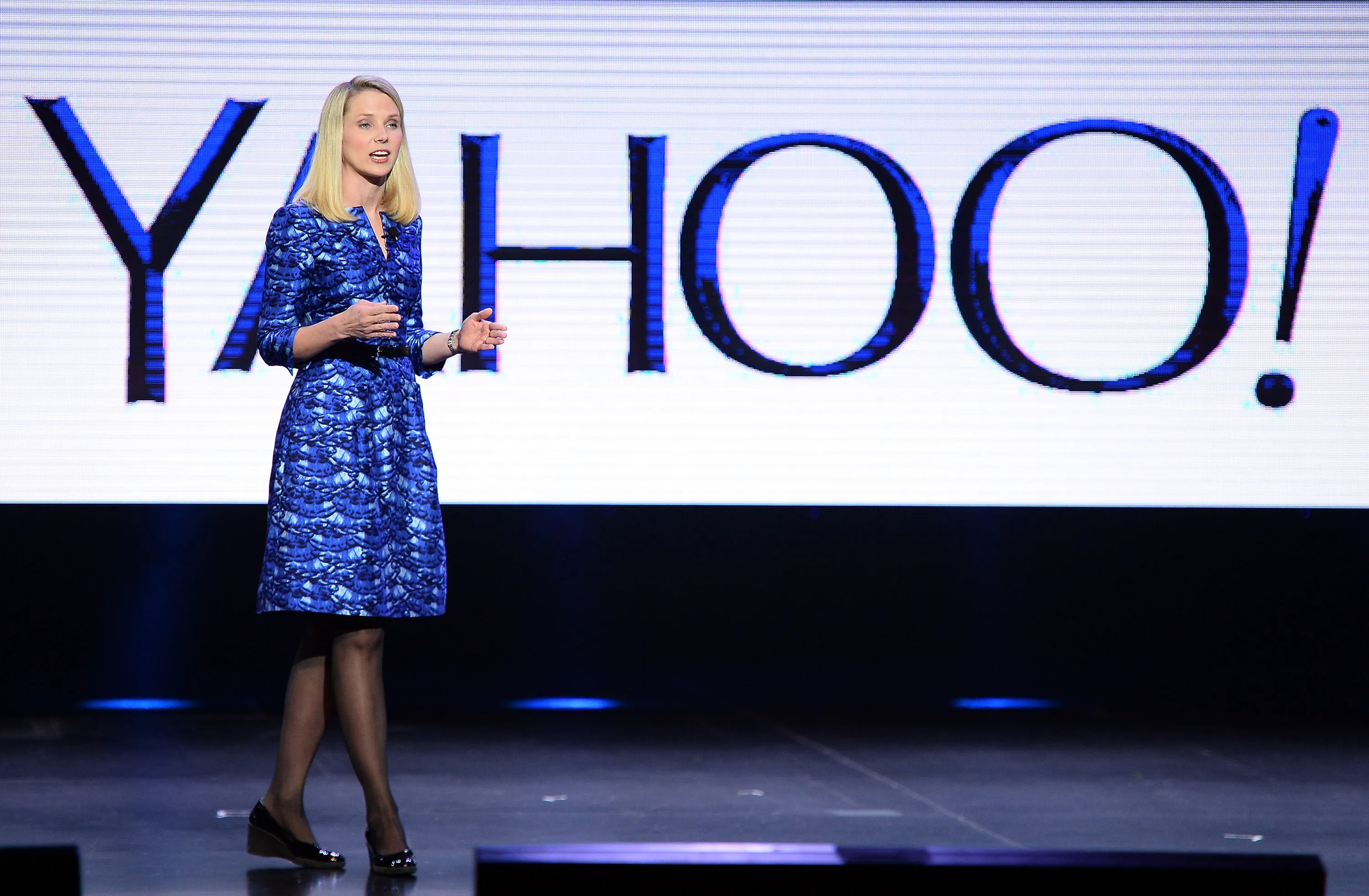
And when Marissa Mayer, the former product director and short-lived CEO of Yahoo, told me: "The reason I am buying all these mobile startups is that when I arrived, there were eight people working on mobile at Yahoo. And since nobody naturally wants to work at Yahoo, the only way we have to get talent is to buy it at a premium." She had spent, I believe, nearly three billion on acquisitions (M&A).
https://sg.finance.yahoo.com/news/burning-3-billion-marissa-mayer-020151942.html
In France, the logic is different, since we often buy companies that we want to be profitable, rather than paying top dollar for teams that could become the company's new technological lever. This is explained by the internal culture of large companies, but also by the fact that, once again, the main objective is the stock market valuation.
In the US, back in the Netvibes days, a product manager at Google could buy a company for 50 million without going through the board.
I am sure the amounts are even bigger today: hiring, acquiring, selling is part of Silicon Valley's operating model.
In France, it was explained to me that the gap in multiples between tech valuations and traditional industries meant that too large a purchase destroyed value in terms of stock, whereas a US tech company sees the rise in its valuation absorb its acquisition, which makes it almost free.
Yes, I know, it is completely crazy, and it has worked for 20 years. Amazon and Google have been the geniuses of this kind of operation.
Buy NVIDIA chips or trim the fat?
What has changed today is that, before, you trimmed the fat because you had over-hired.
But when Elon Musk took over Twitter, he had to lay off more people than usual because he had too much debt and had paid far too much. Over time, he showed that Twitter could be run in good enough mode with far fewer people.
That caught the eye of many CEOs; remember the Year of Efficiency at Meta.
In 2025, we are discovering that the two things that push a company's stock up are buying NVIDIA chips or cutting headcount. The strongest player at this game is Amazon, which announced it was laying people off in order to buy NVIDIA chips. That is playing both sides at once: a masterstroke.
But what is true in tech is never true elsewhere, and that is where the real problem lies.
To the question should we lay people off because AI will be able to take over? the serious consulting firms have no good answer.
And yet we are starting to hear from bosses who want to lay people off. Is it out of a kind of complacency toward the narratives of the moment, or because a culture of the easy way out is taking hold and going to some bosses' heads?
Without quite saying so, we are in a consulting crisis.
Having spoken privately with a few major buyers in the public and private sectors, they all told me something fascinating: "Before, when we chose a consulting firm, we had a pretty good understanding of their strategy. The real risk was not whether the strategy was sound, but whether this firm, rather than another, would be able to deliver what they promised us. Today, we are in a completely new situation. With this "Consulting Slop" and this way of oversimplifying, with conflicting and contradictory messages between the different points of view, we are asking ourselves other questions: is the strategy being proposed to me something interesting, or is it bullshit?"
Strategic risk now comes on top of execution risk. That is the first time I have heard that.
I confess that I myself am increasingly skeptical of the dueling studies and analyses. MIT itself has joined the fray and put its reputation on the line on these questions with Project Iceberg - Coordinating the Human-AI Future.
The goal of this project is to measure the extent to which the current capabilities of Artificial Intelligence are technically able to perform workers' skills.
To do so, MIT is creating a "digital twin" of the American labor market, meant to faithfully represent its 151 million workers, their skills and their professions. The model compares the 32,000 skills of Americans with the capabilities of 13,000 AI tools.
But are tools enough to replace jobs?
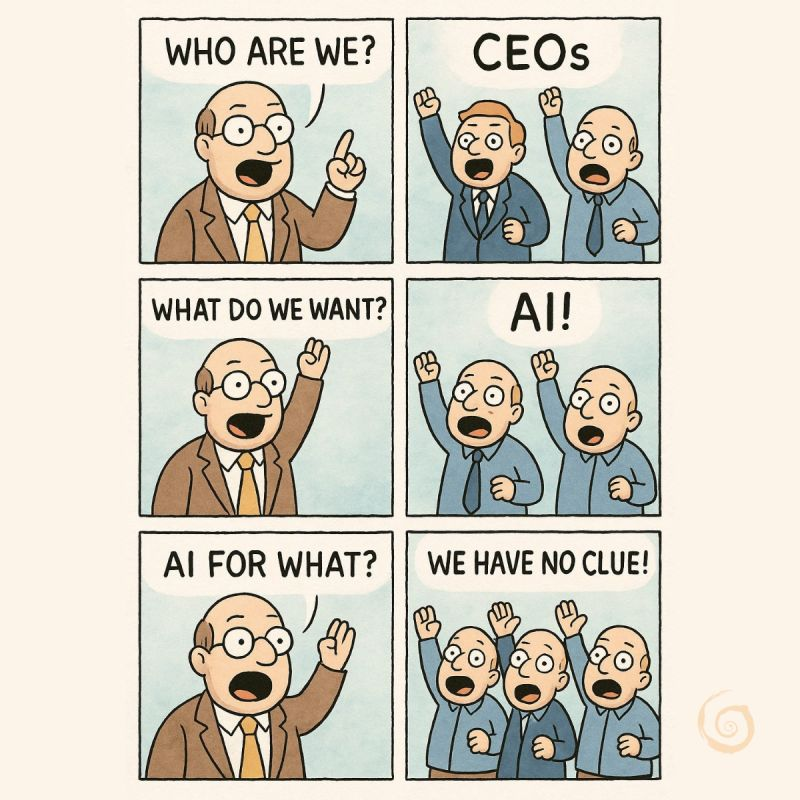
Isn't every company and every team different? When I watch the people around me taking up AI, I keep wondering whether all of this is moving too fast. According to several analyses, although 60% of Fortune 500 companies have at least evaluated Microsoft's Copilot, many organizations limit its use to small pilot groups.
The high price ($30 per month) is a brake. But above all, Copilot locks users into a single model, whereas productivity often depends on using the latest model in fashion.
What is more, the most productive employees are now demanding more expensive (unbudgeted) plans, which raises the question of whether to hire juniors or reallocate those budgets to the best-performing AI.
All of this forces me to ask a question:
Who is advising the state between now and 2027?
- Who is advising Emmanuel Macron on AI?
- Which ideologies are being put into practice a year and a half before the presidential election, when digital will be the existential question of 2027?
- What do we do if, in France, know-how goes either into retirement or into LLMs?
- Is that a good thing?
Because AI also forces us to remember that we have two Frances in competition:
- The one that lived through the Trente Glorieuses, the postwar boom, and enjoys the gains of its era, notably good pensions.
- and the one arriving with all the system's disadvantages and the pressure of AI on the value of work (and its pay), as well as the need for a substantial AI budget to be more productive.
Over the past ten years, algorithms have structurally driven down the price of labor (Uber, Amazon) and therefore the value collected for pensions (a subject never raised in the discussions, incidentally, as far as I know).
Today, AI can potentially destroy the value of education.
Will the efficiency of an entire generation be correlated with the competence of models and LLMs rather than with the knowledge it has acquired?
People are terrified at the idea that the post-2027 administration will seek to do away with civil servants and replace them with chatbots that never answer the questions asked.
A state hiding behind code is a latent political bomb (no pun intended).
If on top of that we add the waves of AI-related layoffs we are being promised for 2026, then we are not out of the woods.
Dear friends, consultants, developers, politicians and senior civil servants, it is time to pull ourselves together and think seriously about the question of AI and the working society we want in France.
Because we will not escape a society-wide debate on AI, on work, on education, on digital and physical security, on our ability to exist in the world, to make our language, our episteme, exist, and so on.
The quality of that debate will depend directly on the amount of nonsense and fear-mongering we put into circulation today.
It is time to raise the level, both at the heart of companies and of the state.
What do you think? More on this soon
Subscribers' section (The Club)!
the week's must-see links and information
a bit of humor to start
Read the full article
Sign up now to read the full article and get access to all articles for paying subscribers only.


