

This week in the newsletter, we are talking about AI and jobs.
For our paying subscribers, I have added at the end of the newsletter a special film club on bureaucracy, along with all the sources cited in this newsletter. Enjoy!
So I wanted to offer you the option, if you wish, of keeping the current rate by subscribing before the increase. I know this is not a commercially intuitive approach.
- If you were subscribed at our first rate of €60, as a founding member, that rate will not change.
- If you are subscribed at the current rate of €99, as a co-founding member, and you subscribe now, you keep that rate. (Invoice on request)
ℹ️ As a paying subscriber, you get access:
- to the site's complete archives,
- to everything I track, through a private channel,
- to priority replies to your emails,
- To the events we organize,
- To the meetups of the Digital Resilience Council (Conseil de la Résilience Numérique), held on the sidelines of the conferences where I speak.
Member benefits page: here
A rising panic
This year, 15% of the most highly educated workers now fear for their jobs.
A muffled panic is running through the American labor market right now. The reason, obviously, is the use of artificial intelligence in business.
But behind these figures lies a far more pernicious mechanism, one whose scale we are still struggling to grasp. AI is not replacing work. It is exposing what was never work in the first place: the pockets of unproductivity that human interaction creates. And some large organizations and some fields are more affected than others.
A study produced by Perplexity tries to understand how AI promises a hunt for pockets of unproductivity inside companies, the new trend of the moment. But also how nobody will really come out of it unscathed.
What we are seeing with the arrival of AI is the unbundling of human tasks. AI is doing to work what the Internet did to the press, to music and to many other sectors.
Since the advent of the Internet, we have let the physical world be dismantled because it was technically possible, and sometimes economically profitable.
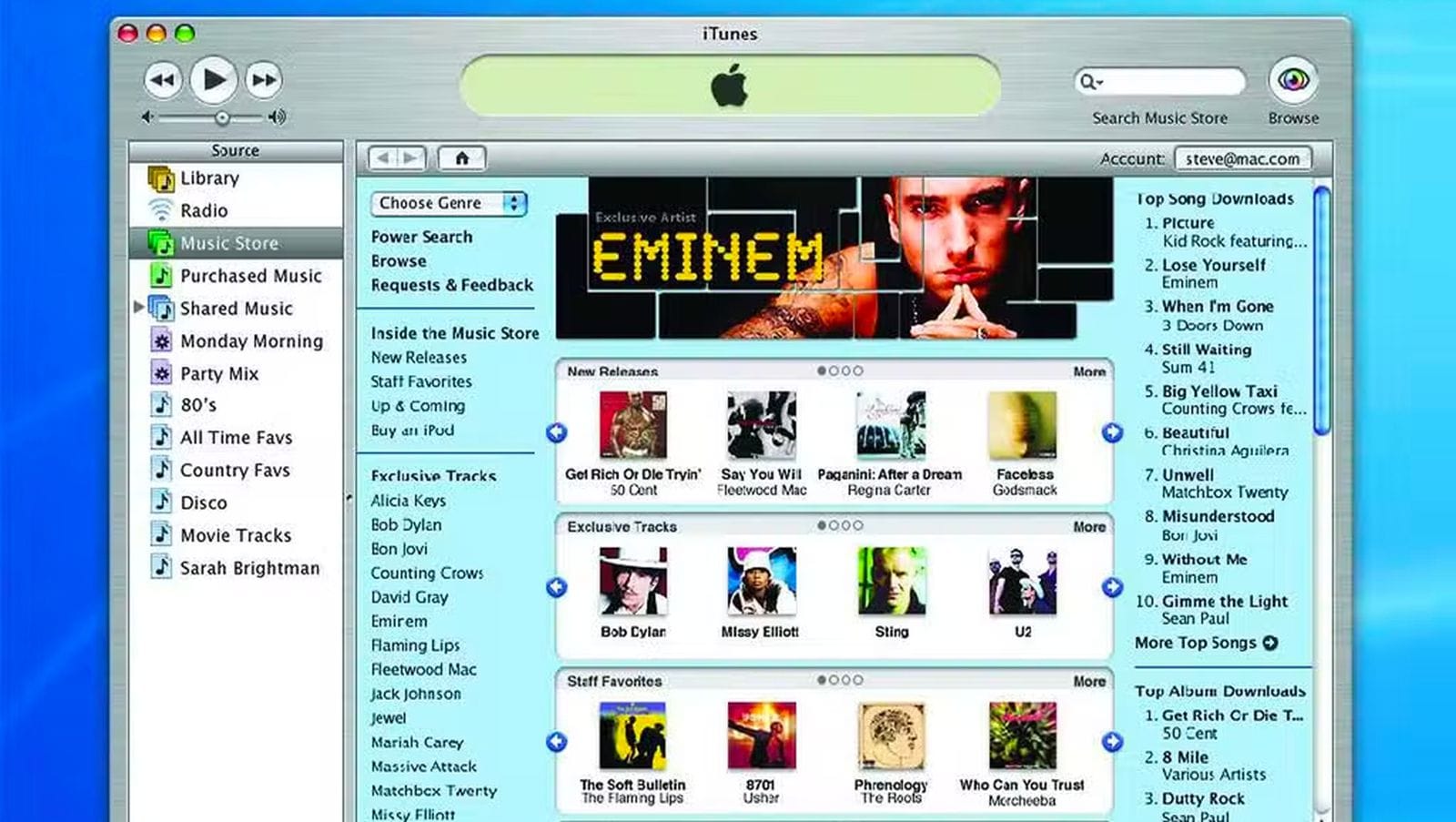
Newspapers now sell articles individually. Albums, tracks to listen to or buy one at a time, ever since the advent of the Apple Music Store and MP3 files.
As I point out in my talks, a large part of the model has been to “unpackage” and then repackage experiences. Netflix presented itself as an alternative to cable, but today the sum of online streaming services, taken separately, costs more than a cable package in the United States. These offerings are not viable, and that is why Netflix is eyeing the HBO catalog (and a price increase)
The corporate world has gone through its own digital disruptions too: the move to personal computing, business intelligence and now the cloud. But the internal organization of work has not fundamentally changed: internal processes, sign-offs and decision circuits have stayed in place.
Not because they were well designed, but because conventional software did not know how to do otherwise.
A large share of what we call “workflows” was never designed as a system. They are successions of people passing information along because the tools could neither read a document, nor understand its content, nor decide what to do next.
You sent an email, then another, then you waited for a sign-off. And we called that a process.
These patterns can create considerable complexity. In tenders, for instance, where a technical document passes through four departments for no structural reason; in claims handling, where a request bounces between agents without any of them having the full context; in legal review, where each line of a contract calls the previous lines into question; in customer operations, where the lack of a unified history forces everyone to ask for the same information again.
But it is in compliance that this architecture shows its most fragile foundations.
A compliance file at a bank does not follow a workflow. It follows a procedure. The difference is crucial: a procedure exists because regulation imposes it, but also because humans are needed to turn that regulation into decisions. An auditor reads a file, puts it in context with years of experience, spots the anomalies that appear on no checklist, and approves or rejects based on a judgment that cannot be scripted.
At least, that is what we long believed. Except that this judgment rests on a series of interconnected steps: extract the relevant data from the file, compare it with the applicable standards, identify the gaps, consult the regulatory precedents, assess the residual risk, document the decision.
Each of these steps was split between different roles (junior analysts, senior analysts, risk officers, compliance managers), not because specialization was necessary, but because humans were needed to pass the information from one step to the next. Fragmentation created the roles. The roles justified the fragmentation.
Today's language models can read a file in its entirety, keep the context from one step to the next, assess the risk directly within the flow, and produce traceable documentation.
This means that many compliance-related jobs (DPO, cybersecurity, financial compliance, ...) are at risk, and if they do not disappear outright, they stand to see their prestige and their value diminish.
The rest is for paying subscribers
Read the full article
Sign up now to read the full article and get access to all articles for paying subscribers only.


