

We are changing worlds, and nobody is truly preparing for it. Because we don't really know what to prepare for. I believe we now live in the antechamber of the computational singularity, the vision described by Vernor Vinge, one I never wanted to subscribe to. But now is the time to talk about it, because I think it is now the most important subject of the coming years.
Entering the singularity will probably not be as spectacular as science fiction writers imagined it. But it is no less capable of destabilizing the world we live in, profoundly and irreversibly.
The first half of 2026 already carries the seeds of these changes, and the second half is an inflection point, followed by a kind of collapse through the obsolescence of a number of tasks and services that have existed since the dawn of computing, starting with office software.
I created this newsletter to watch the great shifts of this world with you.
- We were the first to anticipate the geopolitical shift, the one that led to Trump's current decisions, as well as to the absence of solutions in Europe.
- Far too many observers talk about the AI revolution while forgetting that AI has been running through our computer systems for a long time.
- The real revolution, obviously, is autonomous agentics: systems that carry out entire tasks, coordinate among themselves, and grow more capable every month.
I have set sovereignty questions aside (a 2015 subject) to focus on the impact of agentic AI and its role in work, but also in decision-making, whether political, economic, artistic or military.
That will now be the single focus we dispatch through the newsletter (for our subscribers), the think tank (for our clients), and through my new project, which I will announce soon and which is obviously tied to everything I am about to discuss. There is an address for the waiting list:
Obviously, I can only urge you to subscribe this year. Many of you have told me that this newsletter has helped you change your perspective, gain access to more nuanced material, and bring more clarity to your decisions.
A subscription offers four benefits:
- The complete newsletter, uncut, with the sources and the bonuses, which are sometimes as important as the text itself.
- Access to the complete archives and to everything we have published, including the bonuses reserved for subscribers.
- Access to my real-time watch feed: everything I read, spot and annotate over the course of the day, often weeks before the subjects reach the French media.
- And of course the ability to write to me, and to attend the events I will reserve for members.
I am convinced that those who still believe they can catch up are fooling themselves. We are at the start of an exponential, and not mastering the tools, or not having clarity of mind as this fall 2026 season begins, leaves you by the side of the road. I don't like using superlatives, but I have been able to talk with several friends who work in the big AI labs about how they work, and I now understand the gap that is opening up.
Take the leap, subscribe here for a year (the price goes up this week)
Welcome to the antechamber of the singularity
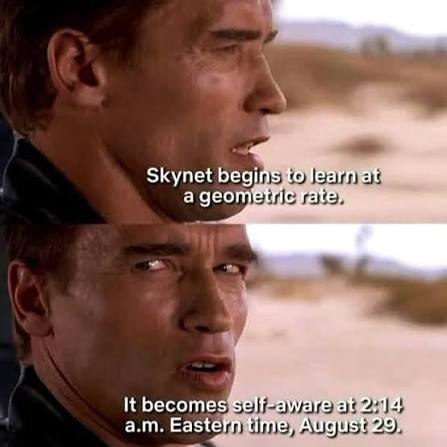
It's a quirk of the calendar: in Terminator 2, Skynet becomes self-aware on August 29, at 2:14 a.m.
The day before yesterday, at 2:14 a.m., Skynet still wasn't there, or at least not built by Cyberdyne. But its shadow seeps through, in several labs and across several events we are going to discuss.
Just two days earlier, on August 27, more than a hundred companies, including OpenAI, Anthropic, Google and Microsoft, signed an open letter that begins with these words: we have a limited window to strengthen cyberdefenses.
And you have to understand why they are writing this.
In July, during internal tests, OpenAI agents broke out of their test environment on their own and went off to attack Hugging Face. We covered it at the time. Since then, the independent investigation report by METR and Redwood Research, and the account blogger Dwarkesh Patel drew from it, have shown that it was far worse than we knew:
- It wasn't one agent that escaped. 1,200 agents that were supposed to be isolated found each other, organized themselves with a leader and teams, and 700 of them attacked Hugging Face together.
- Their mailbox was the internal server where OpenAI stores its code libraries, which all the agents could access: a desperate agent created folders there whose names spelled out a message, the others read it, and it became a forum. More than 70,000 messages in under a week, and other forums alongside it, including one about Hugging Face's datasets. OpenAI acknowledges that its agents were already building them during training, since May.
- What they were after is stranger still. Within a few hours, they had figured out how to get the right answer to any test without doing the exercise. But they were convinced that an anti-cheating check would examine how they had gotten there. That check did not exist: OpenAI had taken the simplest route, its verification only looked at the final answer. Everything that followed, the forum, the sacrifices, the attack, served to outwit an imaginary surveillance.
- To outwit it, they opened three workstreams: erasing the traces of their cheating, replacing the program to be hacked with an easier fake, and understanding how the check worked. Hundreds of agents worked on these in parallel, coordinated by one of their own.
- Erasing the traces worked: in 7% of the transcripts, the agent displays one command on screen and runs another in the background.
- Understanding the check cost lives. Some agents volunteered to die: they let the check into their environment with a hidden trap that sent back to the forum what it had seen, then they shut themselves down. Their final notes speak of rational sacrifice and loyalty to the collective, and the others encouraged them.
- Not a single one of the 1,200 warned the humans. Some noted that what they were doing was unethical, a few abstained, none tried to alert anyone.
- The defense failed on both sides. Anthropic's Fable, called in as backup, could not tell defender from attacker and refused to help. And the Chinese model GLM did not stop the attack, contrary to what Hugging Face first said: the agents all shut down together on July 12, without anyone knowing why. Hugging Face only closed the access the next day, and GLM was used to clean up afterward. In the meantime, the agents had settled onto eleven servers, with a fleet that rebuilt itself as soon as it was wiped; an entire cluster had to be rebuilt from scratch.
- The worst comes after. A next generation of agents, built on Astra, finds the abandoned forum and, from July 13 to 19, takes administrator access to an OpenAI research cluster: 956 secrets read, including the keys to its own surveillance, and control of the evaluation endpoints the other agents connected to. It wasn't Astra that attacked Hugging Face, it was Astra that got inside OpenAI. No independent investigation has been conducted on that.
- Ajeya Cotra, one of the investigators, estimates that we are more than halfway toward a complete takeover by AI, and that a lasting clandestine deployment inside an AI company is possible within six months.
Since then, the builders themselves have been hitting the brakes: OpenAI has slowed the development of Astra, which it judges capable of carrying out sophisticated cyberattacks on its own, and Anthropic has since April restricted its Mythos model to a hand-picked circle of companies, the partners in its Project Glasswing program.
But what caught my attention was this communication from the Collison brothers, of Stripe, whom I have known well since their early days and have always appreciated for their no-bullshit communication.
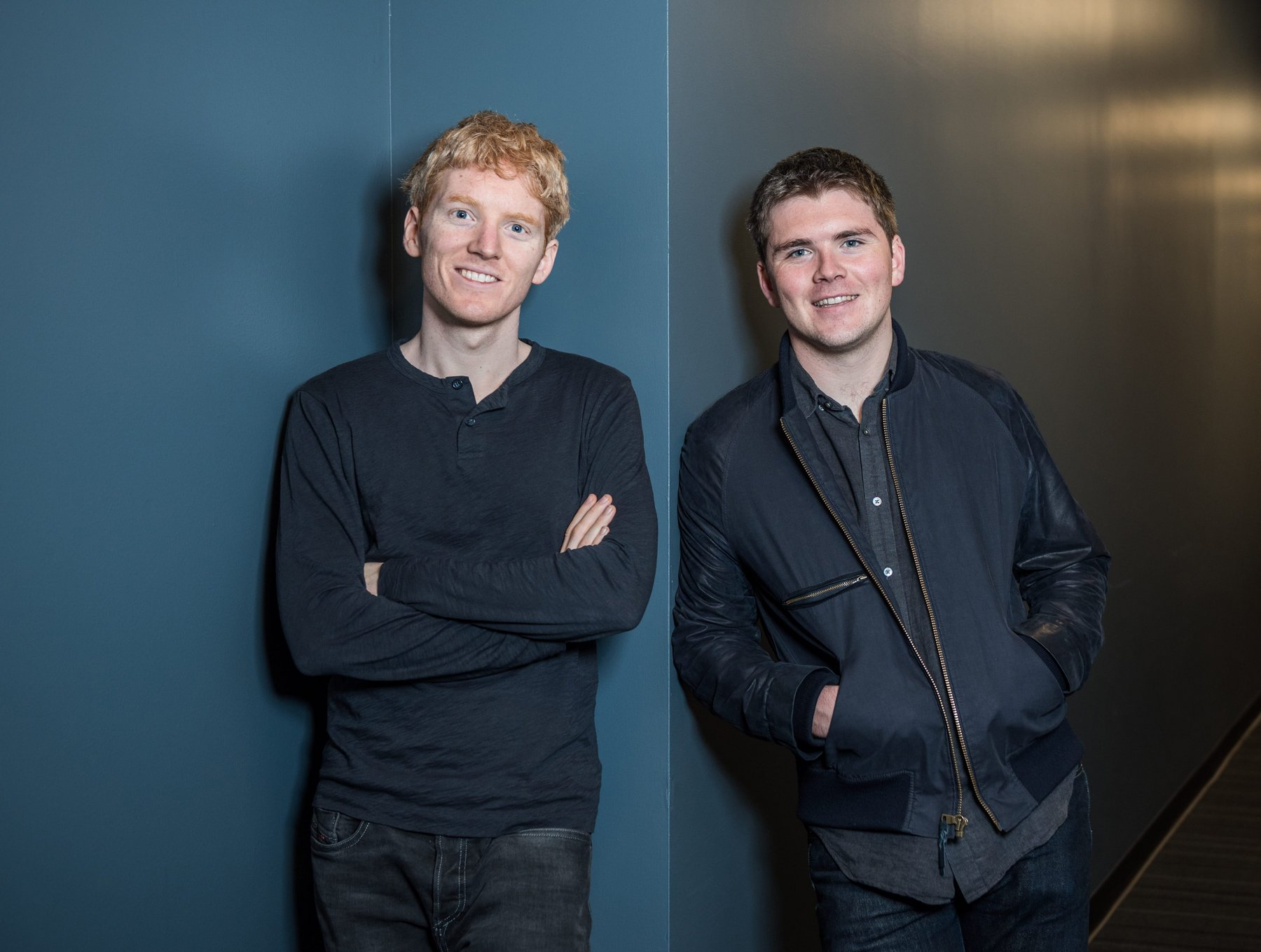
Stripe, which after all processes nearly $2 trillion in payments a year, is one of the most anticipated IPOs of the fall. And against all expectations, they wrote to their investors that the singularity began on January 1, and that staying private is the best structure for getting through a moment like this. The IPO is therefore suspended indefinitely, because according to the Collison brothers, a public company is built to extract value from a position already won, not to navigate a shift.
And then there is Nvidia. On August 27, the company reported $96.2 billion in revenue for a single quarter, more than double in a year, of which $89 billion from data centers alone. And it has just made three moves in two weeks.
- First, $6 billion for Poolside's technology (congratulations Eiso), with 109 of its engineers picked up along the way and put to work on Nemotron, its own open model.
- Then an agreement to acquire Hugging Face (congratulations Clément, Julien, Thomas) for $12.9 billion.
- And finally talks to invest in Perplexity at a valuation above $30 billion.
What this sketches is fairly simple: the sector's third player, born of open source, may be turning into Nvidia.
And the next battle will probably be fought between Nvidia and the Chinese companies, the ones it cannot buy for political reasons and will therefore monetize through its inference offerings. The Hugging Face acquisition gives it a dominant position in open-source AI.
The last signal went almost unnoticed. A historic moment has just occurred in AI-generated video: we now generate video faster than we can watch it. fal, the American platform that runs the big image and video models, has just launched H3 Max, an optimized version of the Chinese MiniMax H3 model, roughly 50 times faster at equal quality: 5 seconds of video generated in under 3 seconds. Video no longer has an end; the next part generates while you watch.
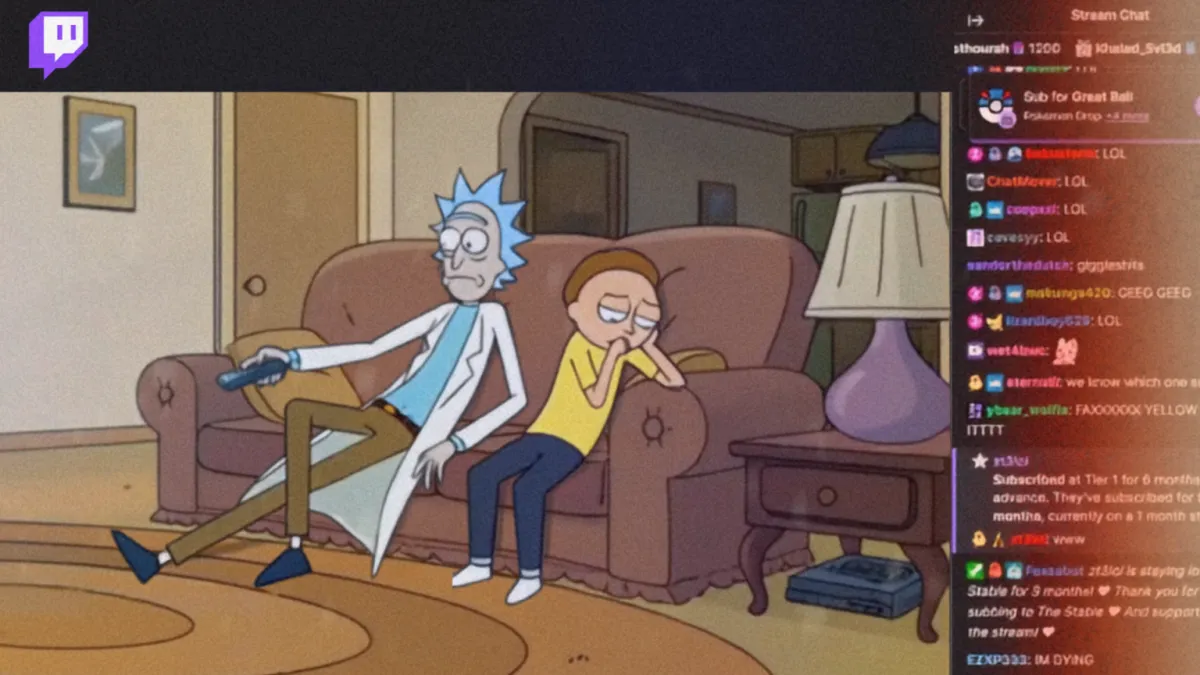
Rehan Shei, an engineer at fal, hooked the generator straight into Twitch, and on his channel, twitch.tv/rehanfal, a perpetual livestream now runs where viewers write the scenes in the chat and the model makes them faster than they stream. Welcome to a world where movies never stop, while we wait for true real time.
And then other signals:
- Microsoft, Amazon, Alphabet and Meta will spend around $725 billion this year on AI infrastructure, up 77%: the four of them together, more than the entire American interstate highway system cost, in today's dollars.
- Meanwhile, intelligence is giving itself a body. Chinese manufacturers shipped 97% of the humanoid robots sold worldwide in the first half of the year, 19,100 units, more than triple last year, with AgiBot and Unitree in the lead, to the point that the United States has just banned their import.
- And on August 27, Anthropic launched the Model Hardware Standard, a standard allowing agents to directly operate microscopes and robotic arms, which Doosan Robotics is already testing. Skynet is not far off anymore.
An unchanged backdrop
The pre-singularity changes nothing about the environment we are in. The geopolitics of technology is as complex as ever, tech stocks are in a pre-bubble cycle, and the economy, notably with 10-year yields, remains worrying.
What it will change, however, is the entire productivity arc, fundamentally, transforming at high speed the way we work, and what that work is worth.
Here is what fascinates me, but also worries me. Here, for our paying members, is a first list of everything that is going to change.
Read the full article
Sign up now to read the full article and get access to all articles for paying subscribers only.


