

- We love to talk about disruption in computing, because it is what sets the rhythm of the technology world. Contrary to received wisdom, the digital world adores “disruptions.”
- Since the PC landed on our desks, we have seen the emergence of Windows, corporate networks, the Internet, intranets, e-commerce, client-server, business intelligence, big data, mobile, artificial intelligence 1.0, the cloud, and now generative AI.
- Even though nobody yet knows how to recoup its development costs, its practical uses have spread very quickly.
- The next steps are already known: local AI inside companies, agents to multiply what employees can do, and Vibe Coding, the “prompt to code” tools that let you build directly usable products.
But among many professionals, there is in 2025 a feeling of unease, born of the fact that the world we thought we were heading toward has given way to a world we do not want to live in.
We have been disrupted, not by technology, but by geopolitics.
The real revolution in the digital world is not a digital innovation.
To understand the world we have been thrown into, it is essential to measure the impact of three geopolitical disruptions that long remained outside the field of vision of most of our leaders.
1. The US-China rivalry has disrupted the dominant/dominated relationship in the digital world
- The coopetition that had long existed between the United States and China has turned into brutal technological competition.
Nobody can say exactly when it went from implicit to explicit; the hacking of Google in China was probably the trigger. - Technology embargoes pushed China to develop complete technological autonomy and to invest massively in fields Europe still considers secondary: operating systems, hardware, chips, AI.
- China is now a near-autonomous, sovereign player.
It is reportedly on the verge of competing with ASML's extreme ultraviolet (EUV) lithography machines.
If Europe really wants to become technologically sovereign in a world that will no longer do it any favors, it will have to take inspiration from the Chinese model by training a solid pool of engineers and moving faster on concrete software projects.
2. The Pandora's box of information conflict was opened during the war in Ukraine
- The conflict forced Russia to strengthen its offensive cyber capabilities and to expand its information-warfare arsenal.
- If some consider the Brexit vote and the 2016 American elections to have been a test bed for everything that followed, that strategy has since been refined and, above all, extended to the corporate world.
- Nobody is safe anymore.
But hybrid warfare is no longer Russia's preserve alone.
- China, in a more discreet but determined way, has begun to fold this dimension into its strategy toward the United States, curiously without any visible reaction from the Americans... for now.
One obviously thinks of the Salt Typhoon operation, which you know about by now if you read us.
- But what is new since 2025, when you watch the way Musk operates in Europe, is the first signs of a form of hybrid warfare that doesn't say its name, and which embarrasses some of the European allies.
Against hybrid warfare, there are no guardrails and no possible Maginot Line in a configuration where attacks can come from anywhere.
3. The Ukrainian battlefield, prototype of the factory model
- The real disruption of the war in Ukraine is that it showed that war, once founded on men and strategy, can now only be won through the collection, analysis and understanding of battlefield data.
- And, paradoxically, it is collection that is the most complex part.
- This upheaval makes part of the traditional arms industry obsolete, if it is not connected to military clouds, and if its weapons cannot work together in a unified digital environment.
- Obviously, Peter Thiel and his network had understood that this evolution was irreversible, but they had no testing ground... until Ukraine.
- While the Western allies, having never experienced these new forms of warfare, sell traditional weapons (still formidably effective), Ukraine, like Russia, Iran, Israel, Turkey or Armenia, has had to invent new ways of fighting, suited to homegrown weapons and to these next-generation conflicts.
- During an appearance on France 24, I was with Yaroslav Azhnyuk, a Ukrainian drone maker, who explained to me just how far costs had fallen.
- No Western country is capable today of producing drones at Ukrainian price levels.
Because innovation is no longer enough: you need drones that are disposable, easy to produce, and (the big novelty) built directly in the field, by the operators themselves.
The factory, an ultra-agile development model
What Chinese sovereignty, Russian hybrid warfare and Ukrainian military innovation have in common is the factory model: continuous, non-stop iteration, which is now the only effective way to defend yourself in cyberspace, in the information space and in theaters of operation.
Attacks have become permanent and ever-evolving. Defense must follow the same logic.
Every military player is asking itself the same question: the world they knew no longer exists. And they are not sure they have, in house, the talent needed to adapt.
And that model is now also inspiring the digital world, which is setting up factories outside the combat zones.
The concept of “factory”
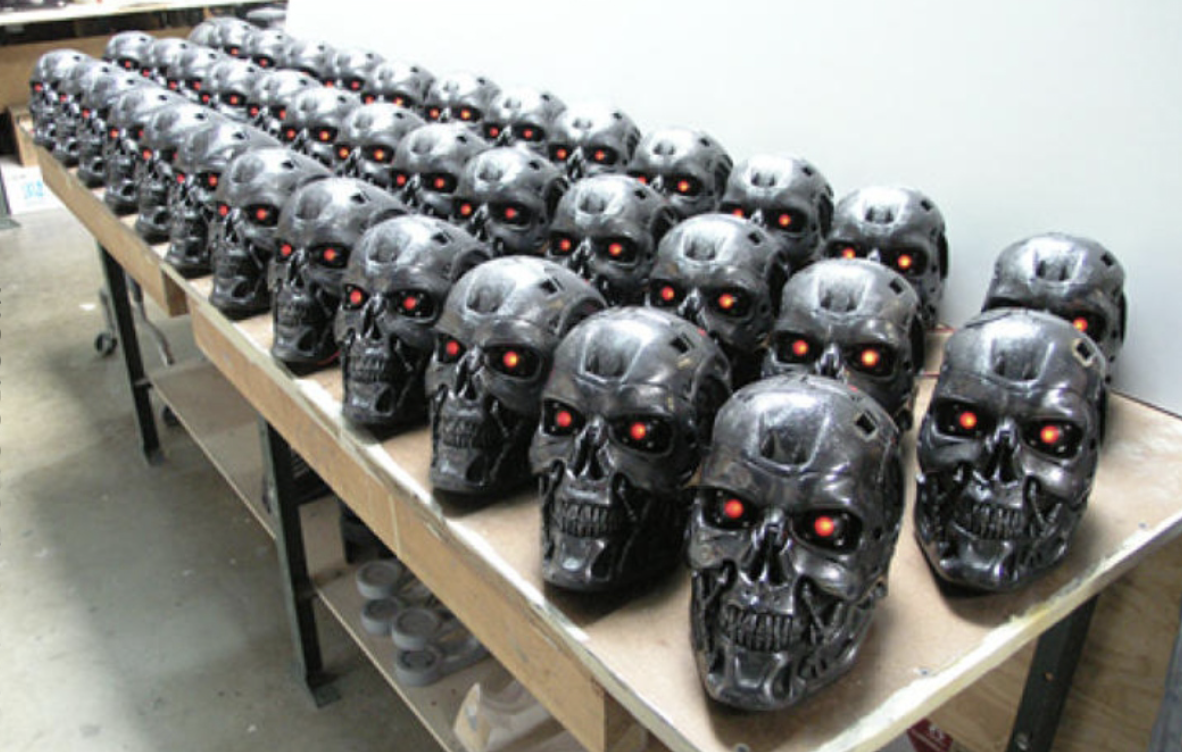
A factory is much more than a simple agile team.
It is a complete infrastructure (software, hardware and people) designed to produce, train, test, deploy and evolve digital systems at scale, continuously.
We move from agile to ultra-agile. (continued for subscribers)
Its fundamental principles:
Read the full article
Sign up now to read the full article and get access to all articles for paying subscribers only.


