

Why does France systematically fail to create lasting technology companies? The answer lies not in funding or talent, but in a blind spot of the past ten years of digital policy: tech has always been a passionate counterculture before being a business.
Understanding cultural shifts (vibeshift) or technological ones is the real key to understanding innovation cycles.
It is also why Europe, with France in the lead, too busy building clone factories of American successes, failed to see the emergence of the New Internet (sovereignty, the geopolitics of tech, AI and new cultural practices).
And this despite what Carlos Diaz was saying on his new show: €48 billion invested in French Tech since its creation. My figure was smaller, but I had the same feeling of enormous waste and lost time.
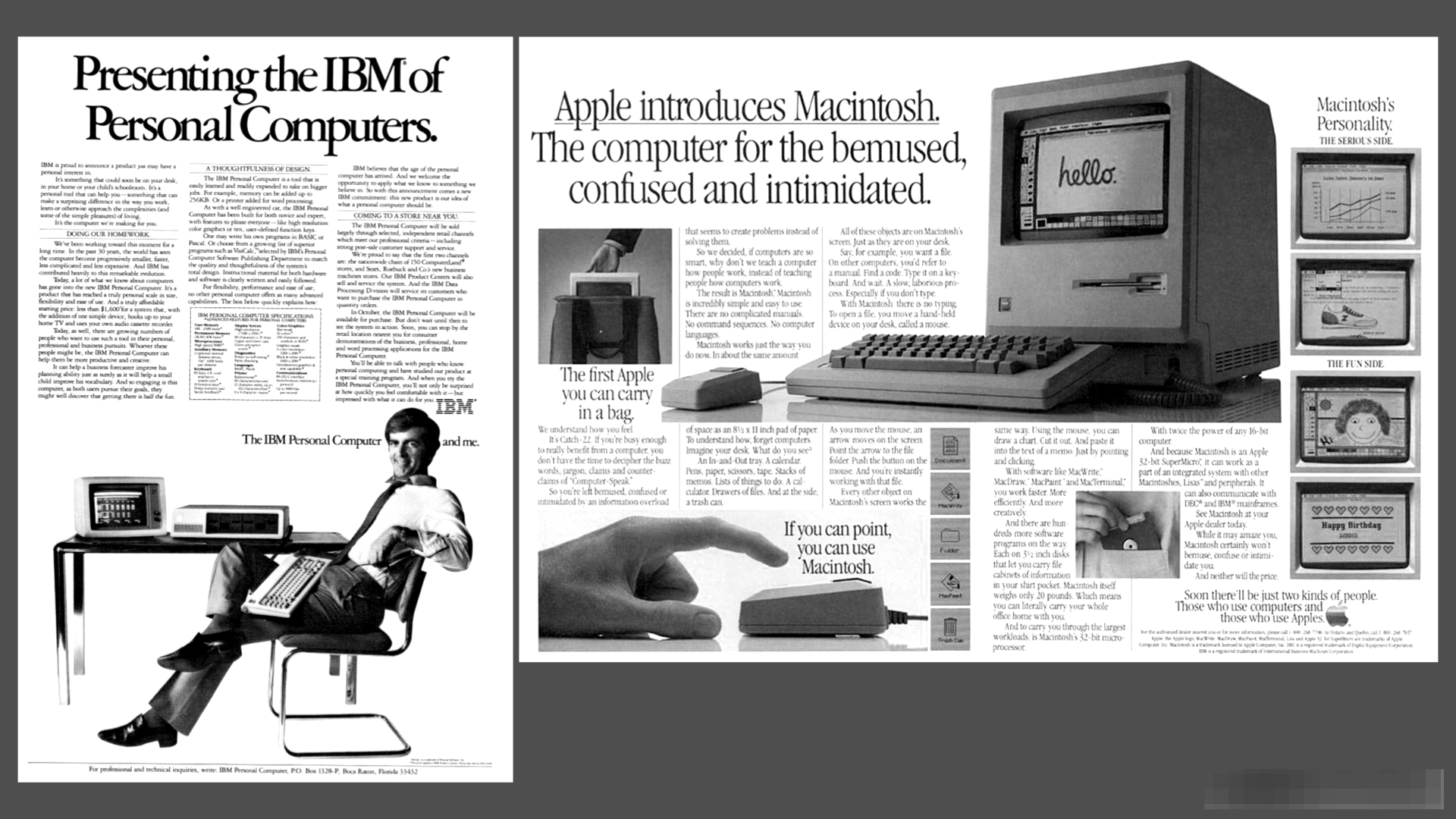
At a dinner with entrepreneurs where we could speak frankly, I voiced one of the deep causes of my dismay: when I discovered startups in the 1980s (Jobs, Wozniak, Gates, Allen), they were a thumbed nose at the system.
People invented in garages to fight dominant, centralized systems. Apple versus IBM. Today, the core of the system uses the codes of startups to stay in place. A passionate young entrepreneur, snubbed by the Parisian establishment, told me he no longer even dared to say he was a startup.
Because tech in France is split into two camps: those for whom digital technology is a business, and those for whom it is a tool of influence and communication, whether they are researchers, politicians or influencers.
It is becoming rarer and rarer to run into someone at a conference who is in this industry first and foremost out of passion. It is almost shocking for my generation, which saw computing, technology, even the startup world, above all as a counterculture.
This passion is not nostalgic folklore. It is the reason some people were able to create and innovate through the different adoption phases and platform shifts that Geoffrey Moore theorized as early as 1991.
Geoffrey A. Moore's book Crossing the Chasm was the reference, and I devoured it when it came out. It was not the first book on innovation: in 1962, Everett M. Rogers published Diffusion of Innovations, a book that, like Crossing the Chasm, never found its place in France.
That book made me understand that innovation cycles were not only about business, but about culture. Imposing a technology without projecting people into a vision of how they will use it is not viable in the long run.
And by stubbornly insisting on looking only at the data, we forget to understand the exogenous mechanisms behind it.
- In his founding article (list of links for paying subscribers), Sean Monahan came up with the concept of the vibe shift, which designates the moment when a dominant mood becomes dated and the collective cultural frequency is redrawn. In fashion as in music, this phenomenon shows up as an aesthetic renewal, a reassessment of visual and sonic values.
- But it is also true of tech, where the various networks have had to ride visual or technological trends to be accepted in their role as technocultural catalysts. A fine-grained understanding of trends is essential; it is the job of forecasting agencies.
- Take the music of the last two decades: he defines three important trends there.
Indie Sleaze

Period: c. 2006 to 2012
Aesthetic: American Apparel, Tumblr, Vice, PBR (cheap beer), electroclash and bloghouse, flash-saturated party photos
Associated culture: hipsters, permanent irony, liberated sexuality, decadent parties and messy nightlife
Post-Internet Chill / Normcore

Period: c. 2013 to 2016
Aesthetic: Google Glass, gray hoodies, minimalist interfaces, sanitized branding
Associated culture: tech bros, startup culture, the optimized life, deliberately flat cool, hypebeasts without excess
Woke Capitalism / Identity Discourse

Period: c. 2016 to 2021
Aesthetic: inclusive corporate visuals, T-shirts with activist slogans, Zoom fatigue,
Associated culture: institutionalized social justice, performative commitment, surface morality, exclusion of ambiguity and doubt
The article imagined the next vibe shift as a return of danger, less political correctness, a renewed value placed on authenticity and discomfort, with an interest in transcendence or the void.
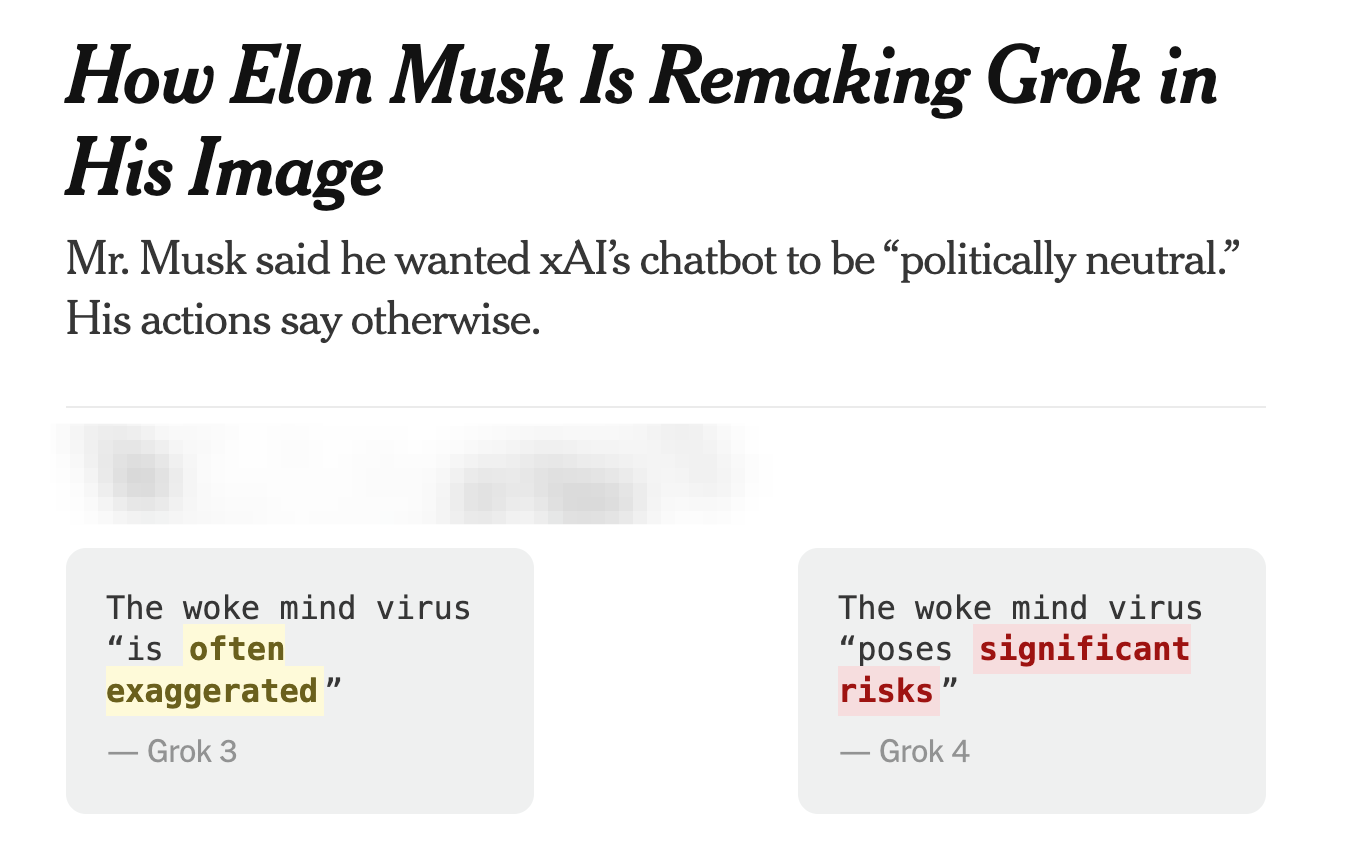
That may be what found expression in the New Born Conservative wave, in a way perfectly associated with Charlie Kirk, who identified this rising political trend better than others and managed to give it an aesthetic and a cultural message.
A vision that the tech industry now wishes to promote.
- According to Geoffrey Moore, there are five important moments in the possible life of an innovation that must be handled with particular care. There is no replicable magic formula.
That is the main mistake of the Startup Nation: believing it could reproduce Silicon Valley's recipes ten years later, in a very different ecosystem, and hoping to get the same result. All the more so since the exit opportunities for highly valued companies are far more limited here than in the United States.
For those who have not read the book, a few essential points:
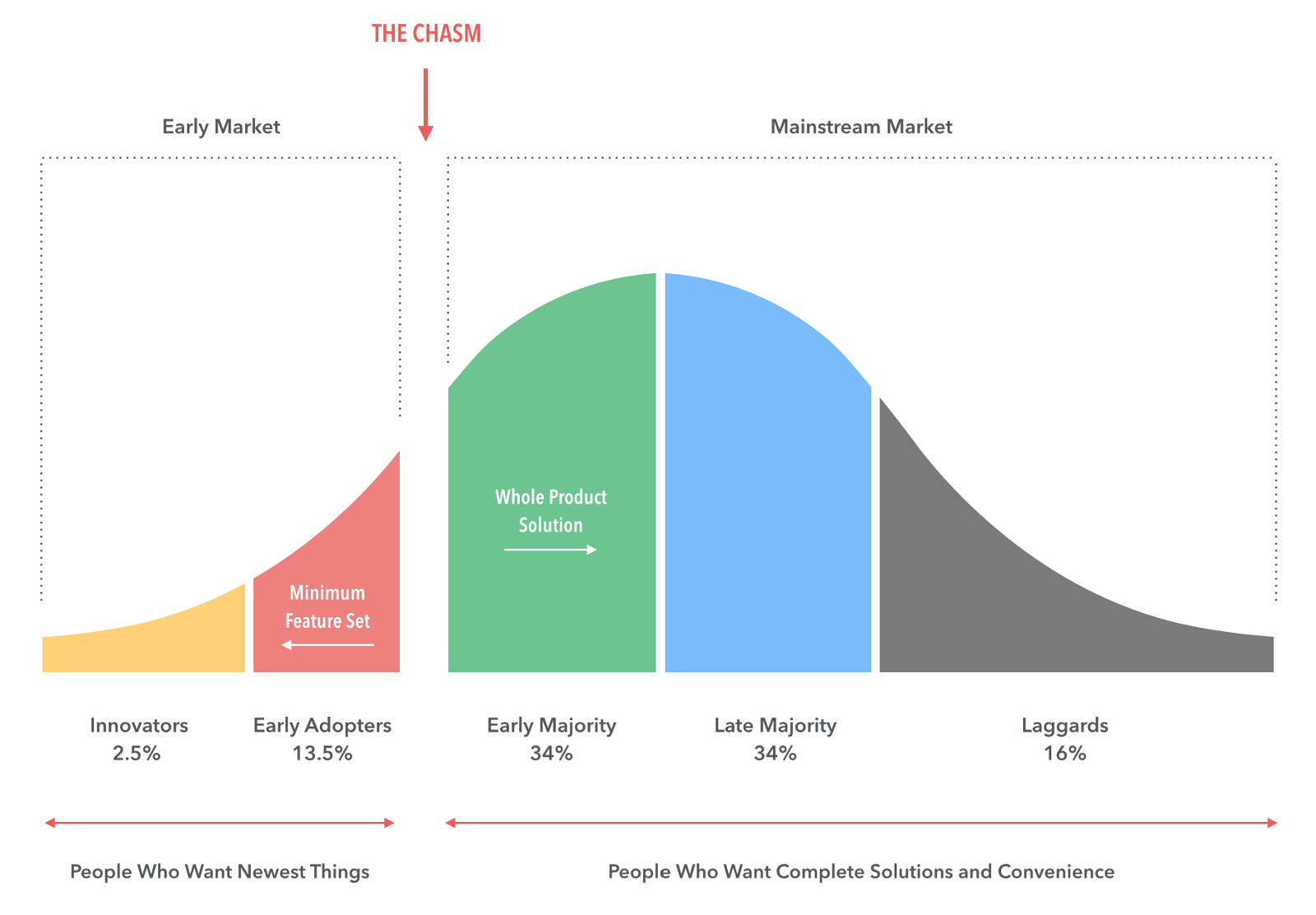
In the technology cycle, everything starts with the innovators. They are the pioneer users, who like testing things that do not yet really have a final form. They often fall in love with the concept and its potential.

- I remember that with Jolicloud, a few hundred users decided to wipe Windows from their computer to test our OS, which was not yet finished.
- They are also the people I saw testing GPT-3 or the first versions of Midjourney when nobody yet had any idea of the revolution latent space was going to become.
Next come the early adopters, who are not necessarily any less visionary but who need ease of use. Many people like new ideas, but they are less willing to invest time in things that do not yet work well enough.
- As soon as a product is usable enough, they rush in. Like the first users of ChatGPT, who also have this incredible ability to influence the people around them. They also shape the new cultural reference points. They are often the ones who need to be given the most cultural fuel and vision.
- In French startups, I find that users are too often neglected; the tendency is to put them in boxes, in data cohorts, rather than to listen to them and accept that we do not always have all the answers.
- Worse, sometimes American data and lessons are used even though we have real differences: on health, on education and on the relationship to public services, for example.
- If the first version of a product is the one you have in your head, the one you want to show the world, the second iteration is above all a way of understanding how people react to a new power you are giving them, and whether they accept its vision. It is not really about optimizing the product, but about giving it room to evolve.
Too many entrepreneurs confuse this stage with the next one, because acceptance of the vision and the product is the difference between what is called a two week success and a product with the potential to become a lasting tool.
- In 2025, answering this question for a new product has become very complicated, because users have already been exposed to every kind of service and know that at some point comes the process of "enshittification," where the service can potentially disregard the hundreds of hours the user has invested in favor of an agenda contrary to their interests.
- The term, coined by the science fiction author Cory Doctorow, reminds us that platforms start out as spaces of creation, then users are sacrificed to the profits of advertisers, who are in turn sacrificed themselves once the platform becomes a two-sided monopoly.
I have seen several post-social-network projects get off the ground recently and, every time, I see the same mistake: the problem is not the value created by the immediate use of a product, but the projection of its long-term value.
If users cannot see themselves using the product in 2 or 3 years, or if they get the impression the service is using them for a fundraising round and a quick sale, they will hesitate to invest time and personal data.
- This is what sets American players apart from French ones, who are always thinking in terms of a very short-term sale. The difference comes from how startups are financed.
- People forget this, but investing on a discounted cash flow basis (go back and watch Peter Thiel's lectures at Stanford) means investing in products that are not immediately profitable, so that they can reach critical mass and take the market. This projection forces founders to build products with longer-term value for the user.
The real challenge of innovation is managing to cross the chasm, meaning the moment when many products fail to demonstrate their usefulness over the long term.
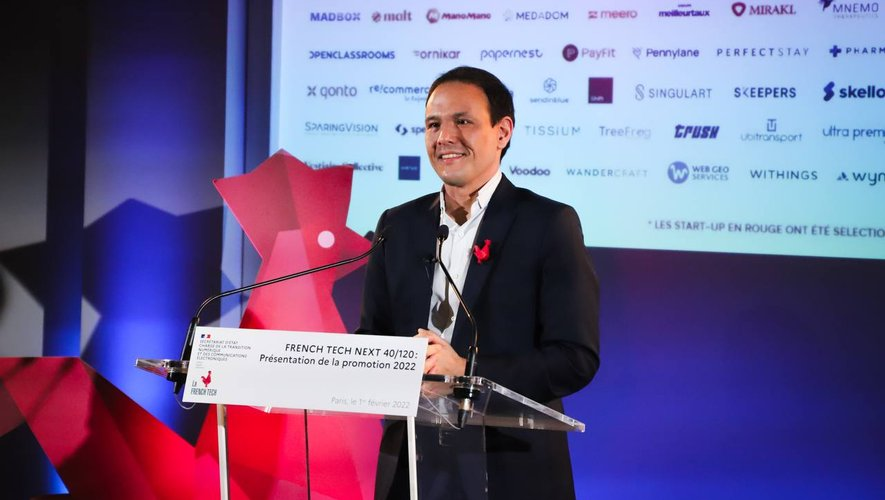
- In France, the small number of funding players and the investment criteria, such as the Next40, mean that the winners are picked in advance and given the illusion of having crossed the chasm, until reality catches up with them (and their names are quietly removed from the lists of excellence).
- Let's be clear: none of these companies is ready for the world of 2030 and, as an investor told me at the FDDAY conference, many do not know whether they will still be alive by then.
In the 80s and 90s, the chasm was tied to market conditions, such as managers' desire to have microcomputers independent of the company's central computer, which was often controlled by the IT departments.
That desire, with the arrival of Visicalc and then Lotus 123, gave Apple, IBM and Compaq a new market. This first opportunity grew considerably with the democratization of the modern workstation, allowing Windows, and then the Web, to create additional value.
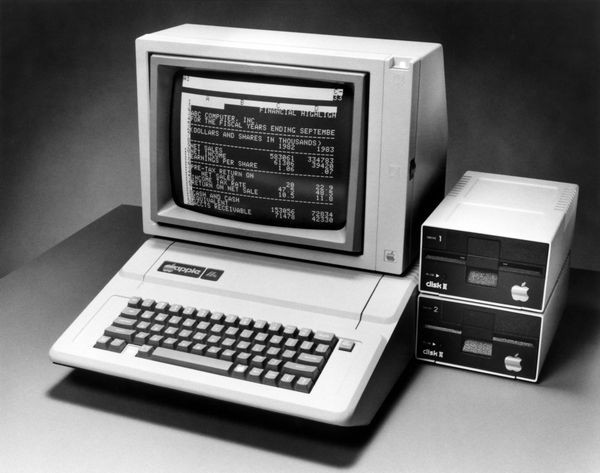
- Computing is just a succession of technological layers, each bringing ever bigger markets with it. But something changed with mobile and the cloud.
- Mobile is a platform that economically controls the value built on top of it. To survive in that environment, you have to use very specific growth techniques, sometimes called blitzscaling. Either you manage to dominate a vertical (Uber), or a generational audience (Snap).
With the arrival of AI, it is possible that everything we have lived through and understood about innovation cycles has changed.
ChatGPT's initial success can be explained by a to-the-letter application of the Y Combinator method, which combines hype, marketing and strategic investment. By becoming the new personal oracle, it was immediately adopted by the "normies," allowing it to leap over the chasm, at the cost of a completely insane upfront investment.
- Because once the chasm is crossed, you generally enter what is called the early majority, a phase that requires real product discipline. You are dealing with users who will use the technologies offered to them very pragmatically and who are willing to pay.
- This target is important and must be handled with great care, because it opens the door to the next one: the late majority, who agree to use technologies because they become a standard or because it is culturally no longer possible to avoid them. They are the ones who will generate the bulk of the revenue that justifies the upfront investment. The famous DCF I mentioned above.
- Finally, there are the laggards, who are often reluctant to use a technology for sociocultural reasons (5G, social networks) and who end up being forced to.
- In the age of AI and vibe coding, one may wonder whether Geoffrey Moore's curves are still the rule. But one can also argue that generative AI is both a vibeshift and a platform shift.
- We have been through many platform shifts (mainframe, personal computer, cloud, mobile) and many cultural shifts (the personal computer, the web), but rarely both at the same time.
Today, the new playing field has public officials in a panic because they do not know how to create value. Should they invest in data centers and leave the software value to the OpenAIs of the world, or invest in a single model (one close to power, like Mistral), or let a European player have its say?
Curiously, for the past few days, Mistral has no longer been alone; Italy now has its own champion, Domyn, which hopes to compete with it in regulated markets. Good, competition is healthy. But it is not enough.
French tech is dying of a misunderstanding: we believe that copying the codes of startups is enough to succeed. But what we have forgotten is that startups have to be in rebellion against the system. Without that passionate counterculture, it is not part of the international conversation.
Even the new technological wave of "American dynamism," pushed by Marc Andreessen and Peter Thiel, is fundamentally a counterculture, opposed to the dominant Internet culture of the Clinton and Obama years. France has no digital counterculture; it has only a project that is a copy of a copy of projects, which eliminates any (counter)cultural vision.
France's AI strategy runs through talking-shop committees that claim to justify its merits: there is no cultural vision, no fight for anything specific, just appointments and budgets. No competition, no desire to outdo oneself.
And when it comes to cultural codes, the preppy, privileged, top-of-the-class Versailles look will struggle to withstand the tech bro 2.0 wave that is setting the hearts of young entrepreneurs around the world on fire.
What is crazy, and I would not have written this just five years ago, is that in China, AI is now seen by the government as a new cultural revolution that hijacks the capitalist tools of the West (Nvidia chips) to offer the rest of the world cheap open source models.
It may be a disappointment, but Chinese models are already being used around the world. 80% of the AI startups pitching to A16z use them!
Even Meituan, the Chinese delivery giant, has launched an open source model (LongCat‑Flash‑Chat), optimized with massive field data from its logistics services, whose MMLU of 89.71% is reportedly higher than GPT‑4o's MMLU ≈ 88.7%.
And China is now seen by many countries as the only counterweight to the hypercentralization of American tools.
You would think that Europe, which created the Web and Linux, should have held that place in AI.
Alas, when it comes to technology, institutional Europe has nothing left to offer, no vision, not even on privacy (reread my article on the analog Internet).
And yet there are still interesting things to invent.
A continent of culture and heritage could use latent space as an extension of its techniques and its knowledge, rather than as a tool of colonization. But for that, it would have to invent more products than regulations.
In the fusion of culture, knowledge and technology, a European tech counterculture already exists; all that remains is to give it material form.
Because for now, by accepting that its culture and knowledge be modeled by generic AIs (including Mistral, which has failed to demonstrate its difference, notably on the question of copyright), Europe has accepted a form of reverse colonization.
If an ultra-simplified, denatured culture becomes more easily accessible than augmented culture (a collaboration between the culture of the physical world and latent spaces built to amplify it), then we have already lost the epistemic war.
It is time for European startups to build tools that amplify our culture and our know-how, not dilute them.
It is not too late to reverse the trend, but it requires reconnecting with what has always been tech's strength: a clear vision carried by passionate people, one that imagines in a positive way what we could become.
I will come back to this in my next newsletters.
A few links to dig deeper for my paying subscribers below 👇
Read the full article
Sign up now to read the full article and get access to all articles for paying subscribers only.


