

Preliminary remark.
Hello to all our new subscribers
This week, I was going to continue my series on hyperproductivity, because some of you have confessed to feeling overwhelmed by all these new tools.
Part of what we learned last year by prompting ChatGPT is no longer enough. With agentic AI, Claude, Manus, OpenClaw, Kimi, Twin and Perplexity Computer are becoming tools for managing agents that do things for us: build a PDF from scratch, analyze data, create applications you can use right away. It is a productivity revolution that is still hard to grasp for those who don't have the max versions of these tools.
Following a few messages, I am putting together a short guide to hyperproductivity to share the way I work. An unorthodox way, but then again, each of us will find our own way of doing things.
As you know, a few minutes before I started writing my newsletter, the war in Iran officially began. A war with missiles, but also one of the first wars assisted by LLMs.
The Wall Street Journal confirms that Claude, despite its "ban", was used by U.S. Central Command in the Middle East.
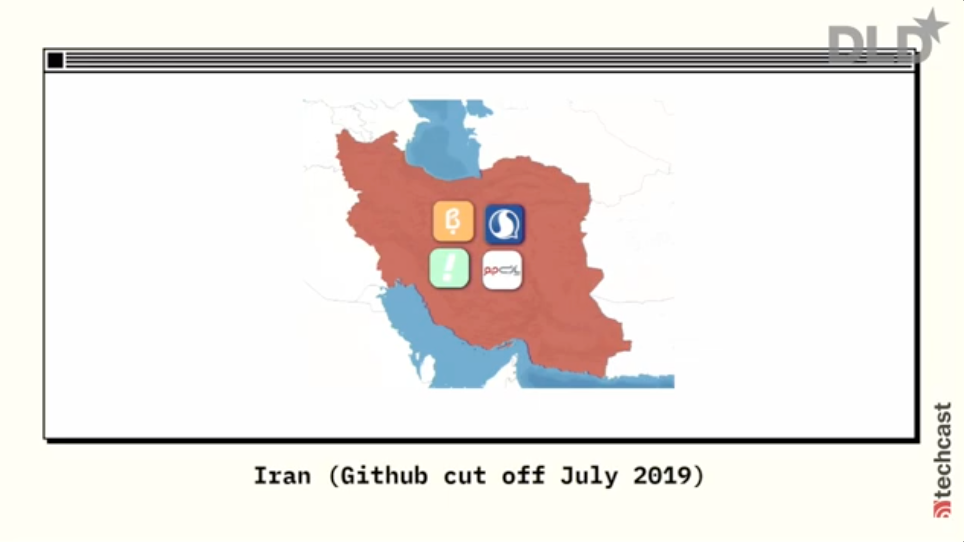
According to Numerama, there may also have been the use of a digital kill switch that cuts off the entire Iranian Internet.
 Amine Baba Aissa

If this were confirmed, it would mean that a kill switch has been technically validated on an entire country. In my talks six years ago I spoke about this scenario, which has now been validated in practice. The consequences are dizzying.
All paying subscribers will now have access to the Club des Résilients, a space where we are going to learn together to do two important things:
- Protect your personal environment in a world that has become turbulent and unpredictable. That is the decoupling guide
- Reinvent your professional career and your capabilities in the age of hyperproductivity and the commoditization of many intellectual tasks. That is the hyperproductivity guide.
For those who are not yet subscribers, a quick reminder.
With this newsletter, I see myself a bit like a chef offering you starters (opinions on a topic), main courses (a more in-depth reflection) or desserts, like the film clubs, which are very popular.
Since launch, I have chosen to keep the price very low. Some notes are worth several times the price of the subscription on their own. A consultant told me recently that a single one of our newsletters had landed him a year-long contract.
The choice of an affordable price also reflects a desire to reach audiences beyond my initial target: students in particular, but also small SMEs and anyone who wants to think these questions through with us.
💸 Please note: the subscription price will go up very soon.
ℹ️ As a paying subscriber, you get access:
- to the site's entire archive,
- to all my monitoring through a private channel,
- to priority replies to your emails,
- to the events we organize,
- to the meetups of the Digital Resilience Council (Conseil de la Résilience Numérique), held on the sidelines of the conferences where I speak.
It's here
Sometimes, some newsletters leave more of a mark than others. This one will come in two parts to give you (and me) time to digest.
The standoff between Anthropic and the Department of War (formerly the Department of Defense) made me understand something important, which I am going to try to explain at somewhat greater length than usual, over two newsletters.
For paying subscribers, I already sent out by email yesterday a strategic note summarizing the affair between Anthropic and the Trump administration. I am making it available to free subscribers today, here
 Tariq KRIM
But this affair raises more questions than it answers. I have had a theory for some time now, and it is being confirmed by what we are watching unfold before our eyes this week.
As I explained in a previous newsletter, there exists in the United States a military-industrial complex 2.0 that lives off the exploitation of data, not the building of weapons. Built essentially around Palantir, its data management model is being disrupted, like the rest of the software industry, by a player nobody saw coming: Anthropic.
I now better understand why Michael Burry, who foresaw the 2008 crisis and has a starring role in The Big Short, thinks Palantir is heading for the wall.
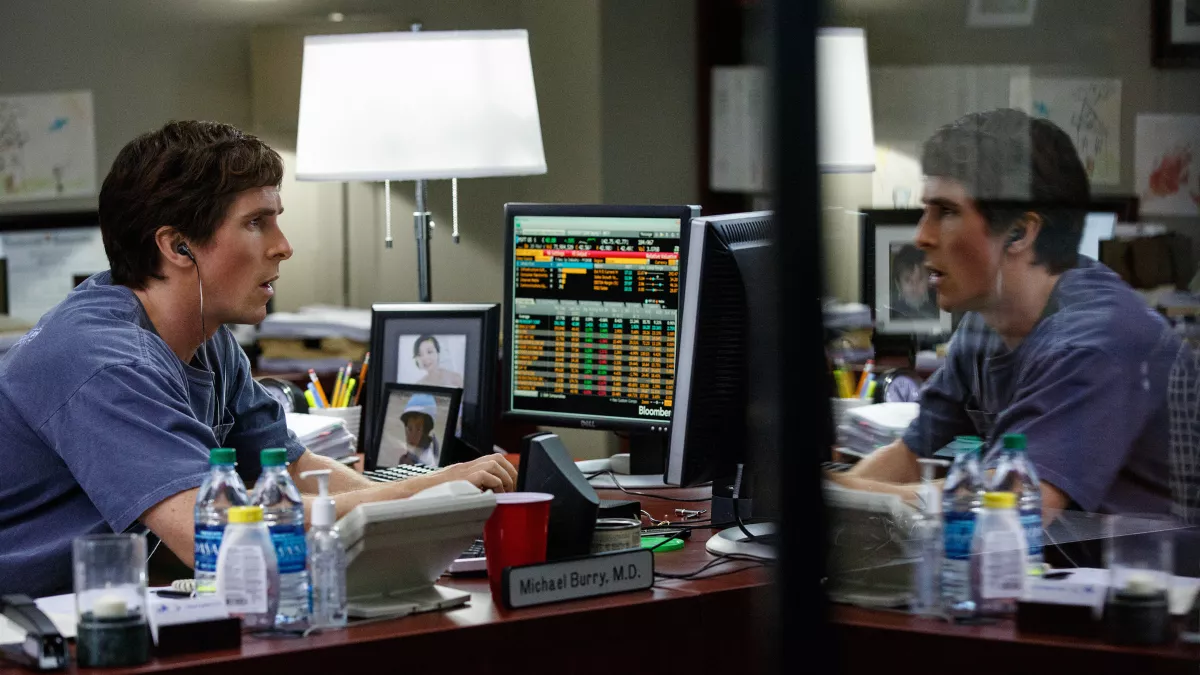
For now, the relationship with the Trump administration and Alex Karp's relentless communication are protecting the stock, but for how long?
https://finance.yahoo.com/news/michael-burry-shorts-doing-far-174839022.html
Because the conflict begins with Palantir's use of Claude Code and ends in a standoff between Emil Michael, Under Secretary of Defense for Research and Engineering, an Uber alumnus, close to the Uber/Kalanick ecosystem, an investor in SpaceX, whose ties to the Pentagon run through the Feinberg/Cerberus network and Hegseth, and Anthropic's co-founder, who has understood full well that Palantir is trying to cast them as a subordinate player, when in fact they are the main tool of the coming agentic revolution.
 Lily Mae Lazarus
This conflict quickly took on unimaginable proportions, but it also shows that to protect the ecosystem in place at the heart of defense, some people in the Trump administration are ready for anything, including trying to destroy a $380 billion American company a few days after its record $30 billion fundraising round.
What is going to play out in the coming weeks matters, and the lesson to be drawn matters for anyone who works, closely or remotely, with "data".
Enjoy the read (and the reread)
Part I - The power grab
Read the full article
Sign up now to read the full article and get access to all articles for paying subscribers only.


