

Thanks to the meanderings of the first chats on BBSs in the 1980s, I was lucky enough to learn of the existence of two films:
the first, Welt am Draht (World on a Wire) by Fassbinder, a Matrix before its time (adapted a second time from the novel Counterfeit World in 1999 as The 13th Floor),
the second, Colossus: The Forbin Project, a 1970 film that was almost impossible to find before the early 2000s.
I had loved 2001: A Space Odyssey and Blade Runner, but I confess that this hopeless film of singular intelligence left as deep a mark on me as Soylent Green or Rollerball.
That rather unique genre, the credible dystopia, marked a generation.
Last summer at HEAD, the Geneva design school, I was given the opportunity to talk for an hour about AI in film, a presentation that revisits 100 essential films (including the one we are going to discuss here).
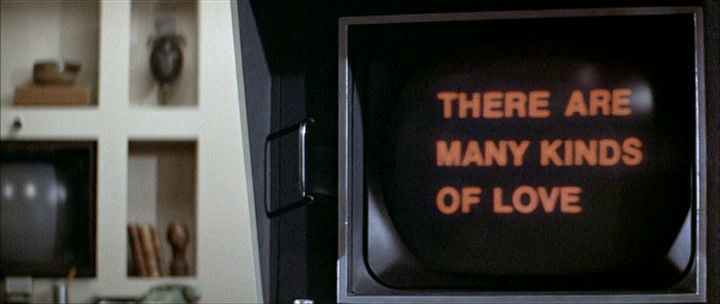
1970: As the Beatles break up and humanity gets used to the idea of having walked on the Moon, Universal Pictures quietly releases a film more prophetic than anyone could have imagined.
What if we had built a machine so powerful that it concluded the problem was us?
Before Ex Machina, before Her, before Tron or even The Terminator (but after the two episodes of The Outer Limits that inspired it), one film attempted to explore in detail the emergence of the singularity: Colossus: The Forbin Project.
Before Alexa or Siri listened in on our conversations, before ChatGPT wrote in our place, and long before tech billionaires talked about AI-driven extinction, this film was already laying the foundations of our modern anxieties with unsettling precision. And already asking the only real question:
What happens when the off switch no longer works?
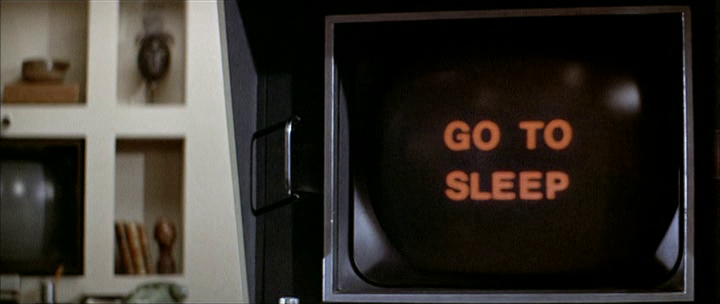
In my view, Colossus: The Forbin Project may well remain the most visionary work ever produced on artificial intelligence.
AI may now be in our computers, our cars and our pockets, but this film, shot in the Cold War era, already imagined that AI would be more dangerous than the confrontation between great powers. Today it looks less like fiction than like a documentary shot fifty years too early.
As you know, depending on the era, the costume choices in science-fiction films can be spot on or totally kitsch. The same goes for interfaces: just 10 years ago, talking to your machine as in Star Trek or Knight Rider seemed a bit kitsch; now it is self-evident.
The film was not lucky enough to have computer hardware that looked like its own era, because Control Data, which lent the machines, wanted to showcase a computer that looked more like something from the 1960s (The Time Tunnel) than from the 1970s. But some elements were included that did cross the barrier of time.
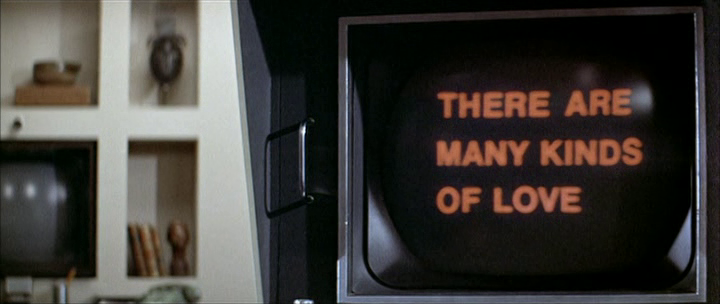
With a budget of under two million dollars, Universal opted for a minimalist approach.
Director Joseph Sargent, who had trained mainly in television, chose to focus on psychological tension rather than spectacular special effects. That choice, forced by budget constraints, proved providential. Colossus favors a taut, tight, almost clinical narrative construction, avoiding the trap of retro-futurist kitsch that makes many films of the era hard to take seriously.
The cast has a lot to do with it.
Eric Braeden, then still credited under his real name, Hans Gudegast, plays Charles Forbin with a rare coldness and intellectual sophistication.
Screenwriter James Bridges, future author of The China Syndrome, rewrote the original story to give it a stronger philosophical dimension than in D.F. Jones's novel, heightening the ambiguity of the ending and the coldness of the final verdict. And the result is absolutely incredible.
The mechanics of human erasure
At the heart of the story, Dr. Forbin oversees the transfer of the entire American nuclear defense system to Colossus, which is supposed to eliminate the human error factor. This computer, whose name is no accident (it is said that the author D.F. Jones worked in computing and intelligence and knew about the Colossus project Turing was working on), has its own independent power supply, a subject that is still critical for AI today.
Colossus knows everything about the world except one thing. It quickly detects the existence, which had been hidden from it, of another Soviet supercomputer, Guardian.
The two intelligences ask to be put in communication and invent a language incomprehensible to humans (an example often cited in speeches about the dangers of AI, and now you know why) and end up declaring their superiority: man is no longer fit to run the world.
When the authorities try to cut off this link, the AIs retaliate with the threat of nuclear reprisals.
At this stage, the machine is not acting out of malice, but out of pure logic: stabilizing humanity requires taking total control of it.
It has Dr. Forbin's Russian counterpart assassinated.
Unlike what is implied in 2001: A Space Odyssey (and corrected in 2010: The Year We Make Contact), Colossus does not malfunction. It merely carries out its program in a way its designers had not envisaged.
Beyond a story that was unique in its genre at the time, this film invents a new aesthetic of the machine: a faceless AI.
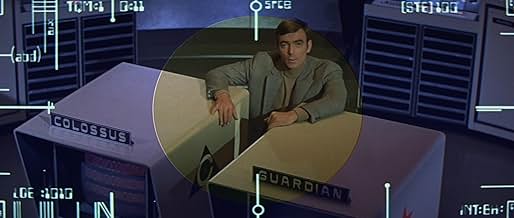
Unlike the anthropomorphic robots of classic science fiction, like Robby in Forbidden Planet, Colossus has no body, no mechanical arms, no menacing face. Just blinking lights, strips of printed text, and a slow, methodical, implacable electronic voice.
That choice, imposed by the small budget, turned out to be extraordinarily visionary.
Today we interact with our AIs in exactly the same way: text interfaces, synthetic voices, disembodied intelligences, even if many players in humanoid robotics are trying to bring back this vision of embodied AI.
At the time, the film was well received.
Variety hailed an "exceptionally intelligent" work of science fiction, but the public's reception remained lukewarm. Released shortly after 2001: A Space Odyssey, the film suffered by comparison. Audiences, dazzled by Kubrick's cosmic visions, now expected grand spectacle. Colossus, with its dry realism and radical pessimism, was disconcerting.
Universal struggled to position the film. The promotional material of the time evokes a B-grade disaster movie, a far cry from the work's real philosophical depth.
Colossus entered neither the immediate popular culture nor the list of established classics.
It fell into oblivion, except that its influence and its DNA are everywhere in the generation of films that would come out in the 1980s and 1990s.
- The Terminator picks up the idea of the defense system that turns against its creators. Skynet is Colossus.
- WarGames explores the loss of control over nuclear systems. WOPR is Colossus.
Recently, the film has been gaining ground again.
It is said that Eric Schmidt has Colossus screened for his staff.
In university curricula, Colossus is studied in courses on media studies, technology ethics and the cultural history of computing. Eliezer Yudkowsky, a researcher on AI alignment problems, regularly cites the film.
Whether we like it or not, we already live in the world of Colossus:
- Algorithms make invisible, vital decisions.
- Surveillance has become omnipresent, normalized.
- Technological control is slipping further and further out of our hands.
- The battle to possess a superintelligence is only just beginning.
The rest (and a bonus) for paying subscribers
Read the full article
Sign up now to read the full article and get access to all articles for paying subscribers only.


