

Alex Karp panicking live on CNBC, OpenAI pushing back its IPO, Anthropic turned into a hostage of the American government: to understand where we're headed, you first have to understand the vision of those who have spent the GDP of a mid-sized country to get their way.Around me, nobody doubts anymore that there will be an AI crash within the year.
The only question nobody can answer is: what kind of crash?
- A crash like the dot-com bubble of the 2000s, when an entire industry nearly vanished from the radar in a matter of weeks. That period, seen in hindsight as the hubris of the telecom operators, had such an impact on the markets that it took four years to see another IPO, Google's, and a revival of the Internet economy.
- Is it rather a crash like 2008, where everyone loses their shirt and the government is forced to organize an emergency bailout, because the economy wouldn't survive it?
- Or, finally, a selective and rather quiet crisis like the one of 2022, when the surplus of money poured into tech during Covid turned out to be disastrous?
Remember the lockdown era: the market convinced itself that everyone was going to live in the metaverse, buy NFTs or spend more time in apps like Clubhouse. It was the moment when video conferencing apps built at breakneck speed were worth more than most SaaS software companies.
The return to reality was fairly rough, with a selective but painful correction, and layoffs that served to clean up part of the excess.
Which bubble we'll be dealing with is a question I can't answer.
But in recent weeks, new elements have emerged that let us pin down a little better what the big AI players are up to, and whether their vision, their hubris, will drive the economic world to its ruin, or whether we're about to witness the emergence of a renaissance of the digital world.
But what does the AI industry really want?
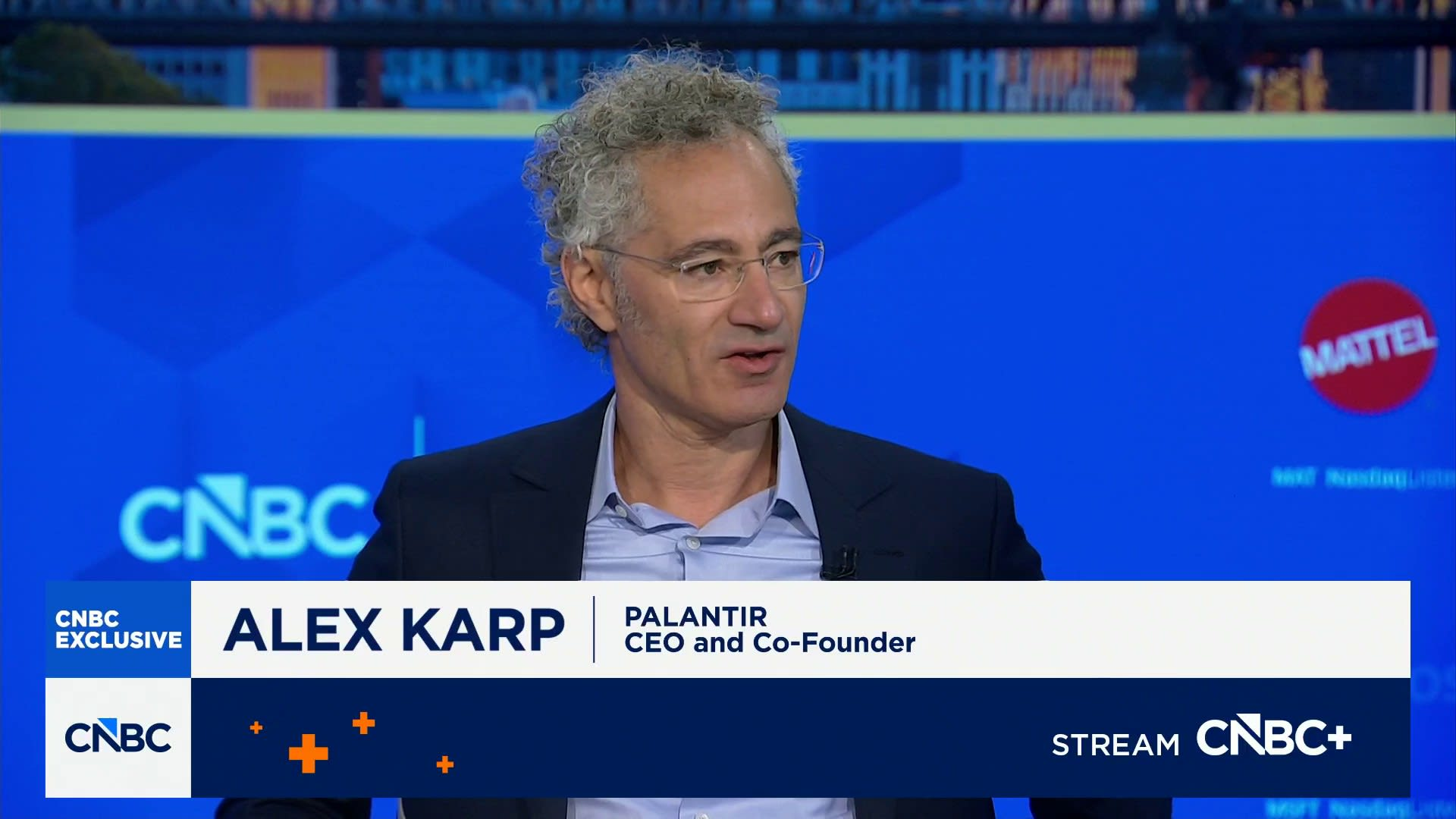
The first to let the cat out of the bag, in his own way, was Alex Karp. In a mind-boggling twenty-minute segment on CNBC, the head of Palantir said out loud what the industry thinks quietly: companies are paying for tokens that create no value, and the labs help themselves to their data along the way, draining their competitive advantage and their know-how. When the journalist points out that he looks furious, he replies that it isn't him talking, but the voice of American business, and that the CEOs he rubs shoulders with are twice as furious as he is.
As always, behind the show and the excitement worthy of a hyperactive child, there are important things to take from it. Palantir is not a company like the others: it invented the forward-deployed engineer model, which made it possible to take control of the data and charge companies for managing that very data. Its most prestigious client is of course the Pentagon, which, under Project Maven, agreed to fork over more than a billion dollars for it. But the AI players have pushed this model even further: they use it to train their LLMs inside companies and do, according to Karp, the same thing they did with the entire cultural industry, but with those companies' know-how.
Since the blocking and then the restoration of Fable 5, Anthropic's super-frontier model, the market has become harder and harder to read. One thing is certain: it's getting very difficult to tell whether the incumbents are playing a giant game of liar's poker, or whether some of them have found the winning formula that will get them through the winter.
Because Karp's worry is palpable on another front. Between Palantir and Europe, nothing is going right. In London, the mayor blocked Palantir's contract with the Metropolitan Police and the NHS is reviewing its own. Germany has shut Palantir out of the Bundeswehr. France wants to replace it at the DGSI (domestic intelligence) with ChapsVision. And that's only the beginning: Spain has just banned its public companies from signing with the firm.
Palantir is only the canary in the coal mine: behind it, a genuine crisis of distrust toward the entire American stack is brewing before our eyes. All the more so since Max Schrems, who had been waiting patiently, has just seen the Supreme Court side with Trump on bringing the FTC to heel, the authority cited 259 times as the independent guarantor of the transatlantic data agreement. As far as he's concerned, the agreement is dead, and he's asking Brussels to withdraw it. Which would mean that everyone using Big Tech services (the same people who signed a letter saying we needed sovereignty by layer) would be operating illegally!
That's a lot of things.
A transatlantic digital crisis on its way, at the same time as an existential crisis of AI, at the same moment as an economic crisis tied to the Strait of Hormuz. The coming months are going to be complicated to navigate. That's also why I'm going to reserve these analyses first and foremost for our paying subscribers. I'll keep a free section, but the strategic analysis will from now on be reserved for paying subscribers.
What do the investment bankers say?

In recent weeks I've seen friends passing through town who work for the big American investment banks, the ones that partly financed the AI boom. For them, there's an interesting nuance: there are two types of financing, and they don't carry the same risks.
On one side, the structured credit from Apollo, Pimco, Blackstone or Blue Owl, which now irrigates all the major players.
On the other, the intercompany payments, such as between OpenAI and Nvidia, which follow a different logic: guaranteed purchases of market share, a way of making sure that the differentiating players everyone needs survive.
One example of the first mechanism is enough to grasp the scale of the debt. Apollo and Blackstone have just finalized $35 billion of private credit for Anthropic. An ad hoc vehicle buys chips from Google, leases them to Anthropic, and Broadcom guarantees the residual value of $30 billion of debt. Nothing shows up on the balance sheet of Anthropic, which is preparing its IPO. It's not the only one, but it's one of the most documented structures. It means that part of the debt and credit, unlike in 2008, is probably hidden from balance sheets in, let's say, very creative ways.
The first signs of strain are already there, too: Blue Owl, one of Stargate's financiers, is now refusing to finance an additional Oracle facility, Oracle being the only major player building on credit.
The question we're all asking is where AI is headed. If we've understood one thing this year, it's that the prices normal users can pay have hit a ceiling; token revenues have plateaued for a few months now, as have the early excesses of Claude Code. Of the three stories that still justified the trillions invested, only one still holds up the current valuations.
Let's unpack.
Three visions of AI
Depending on the use, there's a price ceiling that nobody crosses anymore.
- For individual use, beyond twenty dollars a month, the expense becomes hard to justify.
- For a company, the limit sits around one to two hundred dollars per employee, five hundred dollars, a thousand at most for a developer. Beyond that, you have to justify an ROI.
Yet, with the trillions of dollars committed, we're already way beyond what consumer use and enterprise use bring in combined. And that shows that uses are segmenting.
The first, the agentic assistant.
You build an assistant and a “harness,” the control tower for the agents, which humans buy. It's used to produce code and documents and to manage your information space. You pay per use. It's the story we've known since the early days of ChatGPT and, since then, with Claude Code.
The second, value sharing.
This is the one in every player's narrative. You build an AI solution that companies buy or co-fund, and you share part of the value created. A pharmaceutical lab works with OpenAI and finds a new drug, OpenAI takes 30%. Pay per success.
Palantir embodied this model for a long time, but in a services logic. The idea was that companies didn't have the ability to analyze their data themselves, so they called on Palantir as a service. The AI labs go further, and Karp himself turns the argument against them: if frontier models created as much value as they claim, why don't they charge a percentage of that value rather than per token?
This model still isn't deployed at scale, or at least nobody is talking about it. Should we wait for the next generation of models, which will be capable of making that kind of discovery, everything that comes after Mythos, or should we admit that the formula doesn't work?
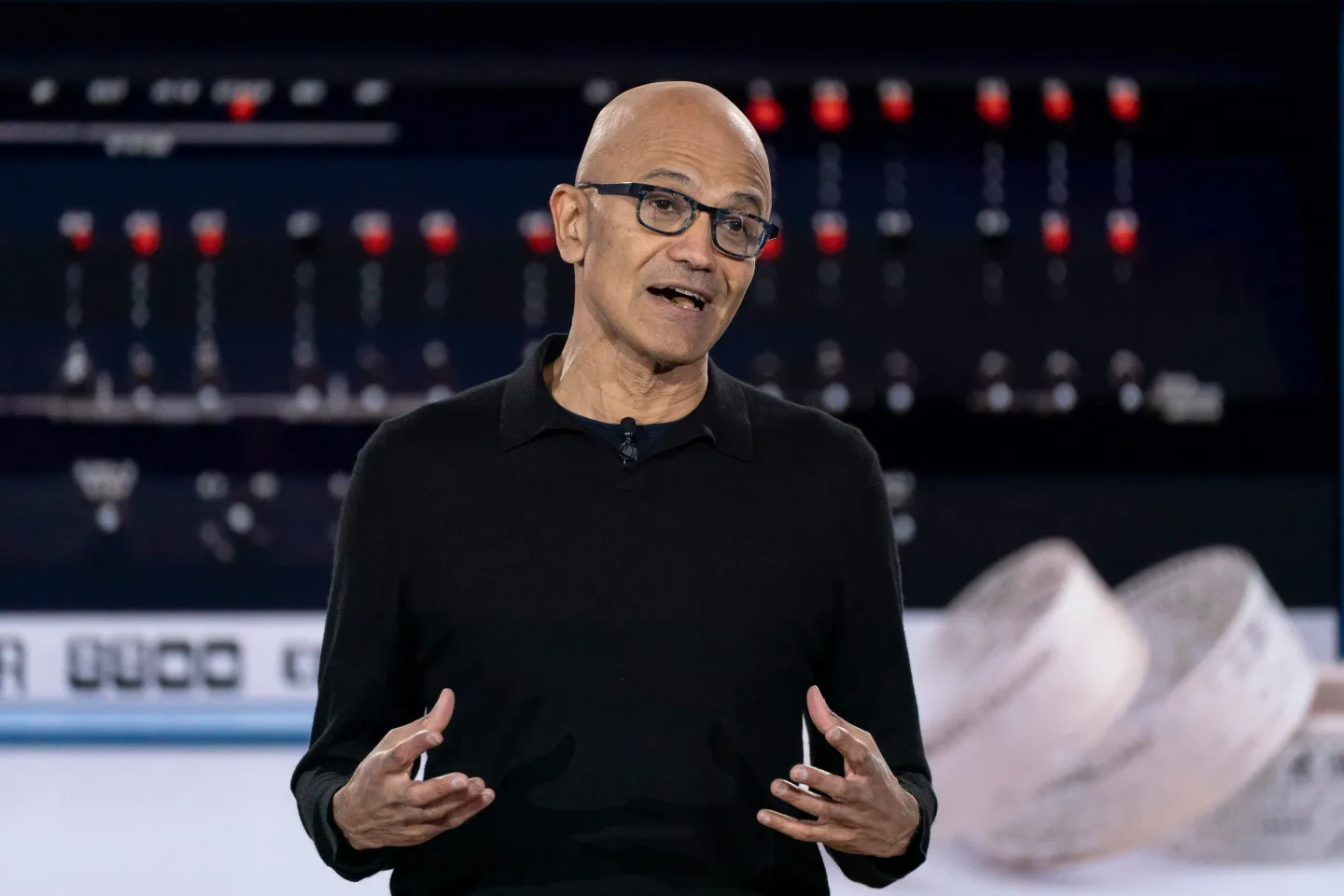
Satya Nadella, for that matter, has just made the same diagnosis from the other shore, in an essay with a telling title, “A frontier without an ecosystem is not stable”: if all the value is captured by a handful of models that absorb everything they see, the political economy won't tolerate it. There is, he writes, no social permission for an AI that hollows out entire industries.
It's a question that the big pharmaceutical groups, the defense groups, everyone who lives off advanced computing, has to ask. Will AI models be advanced enough to justify the costs and the hiring of a “country of geniuses in a data center,” in Dario Amodei's now-standard phrase?
One can of course imagine that the labs are right. That inference costs, what each use of the models costs, fall fast enough. That agents become genuinely useful. That the interfaces of Claude, OpenAI or Google capture usage for good. That productivity finally shows up in the numbers.
But even in that favorable scenario, one question remains: will that value be enough to justify the scale of the resources committed?
Because the third is far crazier.
Read the full article
Sign up now to read the full article and get access to all articles for paying subscribers only.


