

In recent weeks, initiatives on digital sovereignty and resilience have kept sprouting, as if everything had to be announced before the summer break. Since many people have pointed out to me the similarities (here and here) with what I have been saying and writing for years, notably in this newsletter, I had to address the subject.
Reading the press releases for all these announcements on digital resilience, I had the feeling of watching the Titanic's musicians compete for the last note, when the collision with the iceberg had already happened.
That is, in a way, the role of the Digital Resilience Council (Conseil de la Résilience Numérique, CRN) and of this newsletter: to take the threat seriously and to think, more quietly but also more concretely, about how to build something useful.
The question of digital resilience is an important one, a crucial one even: it is not just about occupying media space, but about thinking through the real survival of our companies and our organizations, now that a major geopolitical or cyber shock has become inevitable.
So this is no longer a theoretical subject. The choices that will be made by business leaders, by the heads of organizations and obviously by the state will have a colossal impact.
Their employees are already worried about the future of their jobs, threatened by AI, and this one-upmanship only needlessly increases the pressure on the technology leadership of organizations, who find themselves judged on the impact and quality of their work by people with no technical competence whatsoever.
In this pissing contest over who can flaunt the most sovereignty, it adds to that anxiety, and there is something almost unhealthy about it.
Because we are no longer in the phase of conferences and chatter, but in the thick of meticulous preparation and the rollout of concrete solutions.
Why I made digital resilience a priority
Digital sovereignty is what we should have done 20 years ago. Today, the only course of action left to us is resilience.
 Par Tariq Krim*
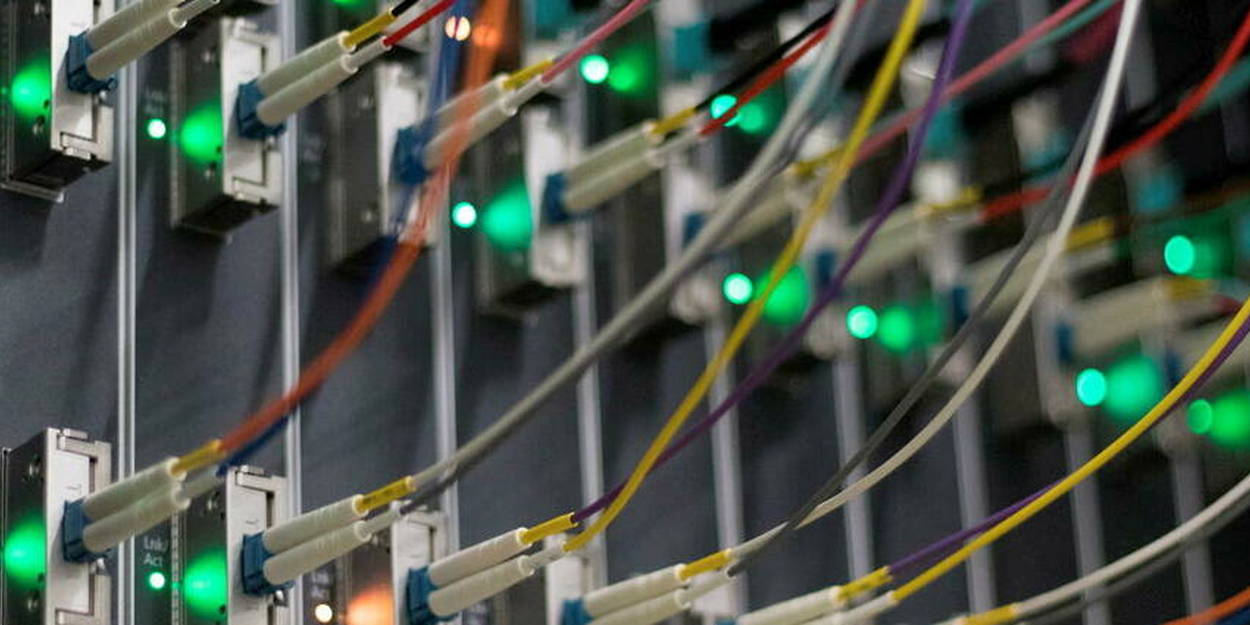
I will always remember the discussions with a former head of ANSSI (France's national cybersecurity agency), a former adviser to the President of the Republic and a former senior officer of ComCyber (the French military's cyber command): in France, if the Internet goes down, there is no plan B.
In 2020, at a conference for ComCyber, I had presented a scenario of an outage or severe degradation of Internet access, caused by the sudden rupture of several undersea cables.
That was only one example among other possibilities: a market reversal forcing some players to raise their prices abruptly, or a hiring squeeze preventing companies from assembling a team capable of withstanding a massive cyberattack like the ones Ukraine faces every day.
On top of the double geopolitical disruption and the cyber permacrisis, a third must be added: the disruption brought by AI, which is making an enormous share of companies' value obsolete, forcing them to refocus on their raw competence, the last thing that will still be valued when a high-level report or analysis can be generated in a few seconds by ChatGPT.
Never in history have a company's core business, security and operations been threatened at the same time by a recomposition of systemic risks.
This period is fascinating. On one hand, it offers incredible prospects; on the other, it calls into question the balances that hold our society together. That is why I have always preferred to anchor myself in the real world rather than in the bubble of cocktail receptions and endless meetings where nothing is ever really decided.

When I look at the people the government gives a platform on these questions, what I mostly see, with a few exceptions, is a big session of accelerated catch-up rather than a real command of the subjects.
I have always accepted the idea that there is a circuit in the tech world reserved for people who don't know how to build but love to talk. But I find that the circuit of competent people and builders no longer has any real visibility. And that is very worrying.
The question now is not whether a major crisis will happen, but when
If, on digital sovereignty, I believe people are fairly sincere in what they say, on digital resilience their opinion matters less than their expertise.
It was from that observation that the idea of the Digital Resilience Council was born.
In a major crisis, the priority will be knowing whom to call, and above all clearly identifying those who have the necessary skills. Because, as we saw during the Covid crisis, despite the dangers and the risks, the media circus does not fall silent; on the contrary, it gets louder.
I have always been both fascinated and disgusted by those who, even in the middle of a crisis, are ready to bet the survival of their company or their fellow citizens on questions of ego or talking points.
In a crisis, I personally know about a hundred people I know I could count on. And since I know that many readers are, or know, some of these people, the goal of the CRN is to bring together those who think that if a major crisis comes, we will have to stick together.
If a majority of people think the same things, it is not a lack of intelligence, but a lack of diversity in information sources and of access to thinking that departs from the ready-made ideas of French tech.
That is what we have been trying to do for almost two years with this newsletter and our 6,000 subscribers.
The snake pit of digital sovereignty
Twenty years ago, we were a handful.
Today, the initiatives are too many to count.
- Between Eurostack 1 (the original one)
- Eurostack 2 (the one founded by those who left the first)
- the initiatives of Cigref (the association of large French companies' CIOs), the Observatory of Digital Sovereignty (the government's)
- the Digital Resilience Index (the New Deal think tank's)
- the Strategic Sector Committee for “Trusted Software and Digital Solutions”
- the Campus Cyber (which is now playing the digital sovereignty card to the hilt)
- Gaia-X (which already wanted to build a sovereignty score 4 years ago!)
- the Direction du numérique (DINUM, the government's interministerial digital directorate), which wants to create its own software suite, against the companies of the sovereign digital workplace sector, which have themselves set up their own digital sovereignty collective
- not to mention the digital commons project, a front for the big tech platforms that tries to present itself as the future of digital sovereignty.
Good luck to anyone looking for a little clarity in this great plate of spaghetti, especially since, having followed and helped some of these initiatives, I am not sure I could tell you the notable differences in positioning between all of them.
For me, the subject lies elsewhere. The open question is that of vision and means.
Because if everyone more or less agrees on the diagnosis, it is in the execution and the answers to be provided that things get complicated.
When I wrote How France Sold Itself to Big Tech in 2019 in Le Point, the article that helped put the question of digital sovereignty back at the center of the debate, I told the tragedy of French digital in three acts.
 Par Tariq Krim *

I did not yet imagine at the time that there would be a fourth, an epilogue. The one in which, by dint of talking about sovereignty, the concept would be emptied of all substance.
From my experience as vice-president of the National Digital Council (Conseil national du numérique), I obviously observed up close the interaction between the political world and tech.
It made me think of a play that tries to be performed and re-performed endlessly, with worse actors at every new performance, and with a script whose power of conviction fades over time.
No one should be condemned to watch this show play out over and over. There is always another choice: to leave the theater and rejoin real life. There is a price to pay: no longer being invited to that theater. But being part of a captive audience has never been my cup of tea.
This newsletter and the Resilience Council are not, for me, instruments of power, but catalysts.
My personal quest, especially after November 13, whose tenth anniversary is coming up, is the desire to live in a digital world at peace, one that keeps its meaning. A world in which the main tools that set the rhythm of our lives, our personal digital lives, our work and the important things of our daily existence, can keep working the way they should.
Tools which, because we failed to make a convincing enough case for supporting us fifteen years earlier, now sit inside our phones and our computers, aligned with priorities beyond our control.
The technology stack is not just a word; it is a list of products and services that define, without us, the quality of our daily lives.
So when everyone talks about digital sovereignty and resilience, I would rather talk about the quality of everyday life, and about the values we are going to have to preserve at all costs, despite the crises, despite the risks, and despite the occasional inaction of those who are supposed to protect them.
We owe this fight first to ourselves, but also to the whole generation that is coming, which will have to live, if nothing is done, with the consequences of our non-choices, our renunciations, our laziness and therefore our mediocrity.
As I said in my very first newsletter: another web is possible.
Let's fight to build it, make it more pleasant and preserve it.
Consider becoming a paying subscriber to this newsletter and come join us at the Digital Resilience Council.
Section for paying subscribers!
Read the full article
Sign up now to read the full article and get access to all articles for paying subscribers only.


